Cats chirp and chatter at birds because they are watching prey they cannot reach, and the sight switches on a hunting instinct with nowhere to go. Nobody has proven exactly why the sound comes out, but the leading theories are excitement and frustration, an inherited bit of prey mimicry, and the jaw rehearsing a bite. It is normal, and in most homes it is harmless.
What chirping and chattering actually are
People use “chirp,” “chatter,” and “chitter” loosely, but two distinct things are going on. A chirp is a short, high-pitched vocal call that sounds a little like a bird. A chatter (sometimes called twittering) is the rapid clicking or smacking of the jaw, often with little or no voice behind it. Most cats do both at once when they spot prey, which is why the combined sound gets written as “ekekek.”
Veterinary behaviorist Dr. Alison Gerken, writing for PetMD, describes chirping as a sign of excitement, attention, or interest in something nearby, most common when a cat sees prey it cannot reach, like birds or squirrels outside a window. Chattering, by her description, signals excitement, focus, and frustration at out-of-reach prey, and it shows up even in well-fed indoor cats who have never caught a thing.
Chirps are not only for birds. Mother cats use a soft chirp as a contact call to their kittens, and adult cats chirp at people to get attention. That version is social; the window version is predatory. Body language tells you which you are hearing: a chattering cat is in a hunting posture, low crouch, wide pupils, ears forward, tail tip flicking. Our guide to cat tail language covers what the twitching means.
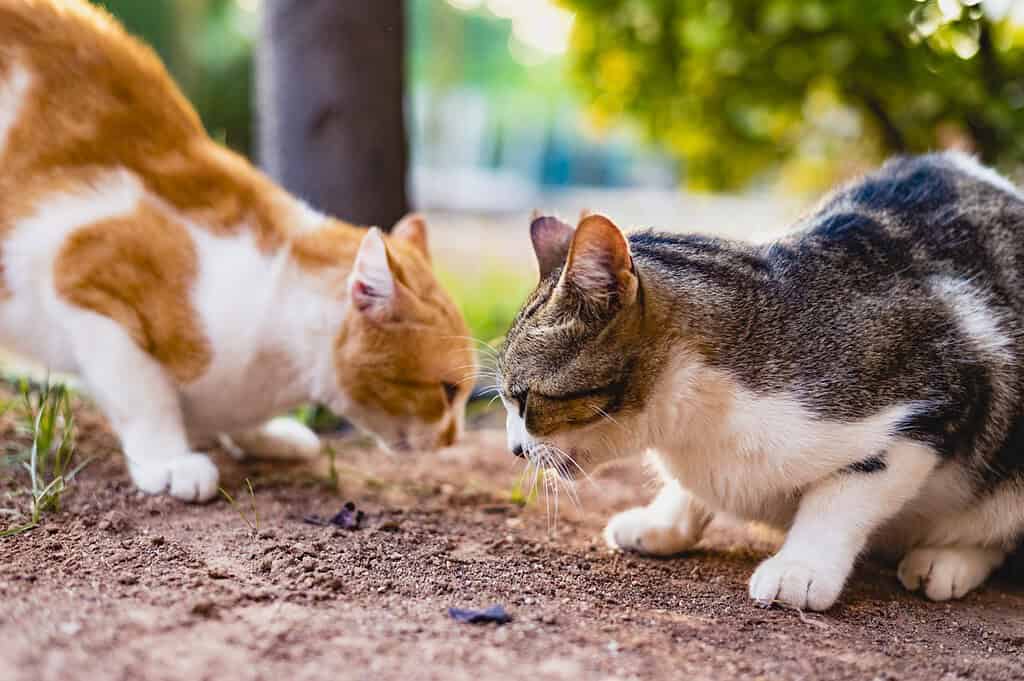
The leading theories on why cats chatter
No one has run the definitive study. What we have are several well-argued explanations, and they are not mutually exclusive. Chattering probably comes from more than one at once.
Excitement and frustration
This is the simplest explanation and the one most vets lean on. The cat sees prey, the hunting sequence switches on, and the body gets a surge of adrenaline. But there is glass in the way, so the energy has no outlet. Cats Protection, the UK’s largest feline welfare charity, describes exactly this, and adds that some cats learn chattering gets a door opened, so it can become partly a request.
Prey mimicry
The most intriguing theory came from the Amazon. In 2005, Wildlife Conservation Society researchers in Brazil’s Reserva Florestal Adolpho Ducke watched a margay, a small spotted wild cat, produce calls imitating the cries of pied tamarin infants while eight tamarins fed in a fig tree. A sentinel tamarin climbed down to investigate and four others followed. The margay then broke cover and advanced before the sentinel raised the alarm and the group fled.
The attempt failed, but the observation, published in Neotropical Primates in 2010, was the first recorded case of a wild cat in the Americas mimicking its prey’s calls. Amazonian residents had long reported similar tricks by jaguars and pumas.
Cats are known for their physical agility, but this vocal manipulation of prey species indicates a psychological cunning…
Fabio Rohe, Wildlife Conservation Society, 2010
Applied to your windowsill, the idea is that the chirp is a watered-down version of the same instinct: a sound that makes the hunter seem small and harmless so it can get close enough to pounce. Whether a house cat’s “ekekek” fools a robin is doubtful, but instincts do not need to work to persist.
Rehearsing the killing bite, or plain arousal
A third theory focuses on the jaw rather than the voice. Cats kill small prey with a fast, precise bite to the back of the neck, and some behaviorists suggest the chattering motion is a rehearsal of that bite. Cats Protection lists this one but calls it unlikely as a full explanation. The least romantic explanation may be the truest: the cat is simply very worked up, and a twitching jaw and squeaky voice are what high arousal looks like in a feline body. That fits with how many cats chatter at things they have no intention of hunting, including flies, laser dots, and the neighbor’s dog.
Is chattering a sign of stress or boredom?
On its own, no. A cat who chatters at the window for a few minutes, then stretches, grooms, and wanders off for a nap is doing something that feels good. Watching prey is one of the richest things an indoor cat’s day can hold. We would not try to stop it.
The picture changes when chattering is the only thing in the cat’s day. A cat who spends hours at the glass, paces the sill, cannot settle afterward, or swats at a housemate when pulled away has a hunting drive with nowhere else to go. That is not a problem with the window. It is a sign the rest of the environment is too quiet.
So the rule is simple. Chattering plus relaxation afterward is healthy. Chattering plus pacing, agitation, or aggression is a cat asking for more outlets.
How to enrich a cat who chatters at the window
The goal is not to take the window away. The goal is to let the cat finish the hunting sequence somewhere else: stalk, chase, pounce, catch, eat.
Give them a proper perch
A cat who chatters at birds is telling you the window is the best seat in the house, so make it a good one. A sturdy sill shelf, a suction-mounted hammock, or a cat tree pushed up to the glass lets your cat watch comfortably instead of balancing on a radiator. We compared the current options in our guide to the best cat window perches.
Set up a feeder, placed with the birds in mind
A bird feeder in view of the window turns a blank pane into a live nature channel while your cat stays safely inside. The risk to the birds is from other cats, so follow the Cornell Lab of Ornithology’s Project FeederWatch advice: keep feeders about 10 feet from trees and shrubs, since a strong nearby branch gives outdoor cats a launching point, and make the glass visible to birds with window markings no more than 2 inches apart or an outside screen, so a startled bird does not hit the pane.
Play like prey, every day
This is the piece that matters most. A wand toy with feathers or a fabric lure lets your cat do what the window will not allow: chase and catch. Move it the way prey moves, skittering along the floor for a mouse, fluttering through the air for a bird, pausing often so your cat can stalk. Let them catch it. Dr. Jenny Alonge, writing for PetMD, says most cats do well with two to three play sessions of 10 to 15 minutes a day. Our roundup of the best cat toys has wands that have held up to real claws.
Make them work for food
Puzzle feeders and food-dispensing balls give the hunting sequence its final step. A cat who has chased a wand and then bats kibble out of a puzzle has done the whole loop, and is far more likely to nap afterward than to go back to pacing the sill.
Not tagged yet?
A Shiloh’s House smart tag puts your phone number, your pet’s medical notes and a tap-to-call profile on their collar — no battery, no subscription. Even indoor cats slip out a door while chasing birds, and one tap of any phone lets a finder reach you.
Why cats also chirp at their humans
If your cat chirps when you walk in the door, that is not the window sound. It is a greeting, and one of the friendliest things a cat says. The social version is usually a trill: a rolled, rising “brrrp” made with the mouth closed, higher and softer than a purr. Dr. Gerken calls trilling one of the most amicable feline vocalizations. Cats trill when family members come home, when they want you to follow them, and sometimes after you hand over a treat.
The trill traces back to kittenhood, when mother cats use it to call their kittens, and many adult cats keep the habit for the people they consider family. If your cat trills, walks a few steps, and looks back, you are being asked to come along, usually to the food bowl.
Telling a trill from a chatter is easy once you look at the whole cat. A greeting trill comes with an upright tail, soft eyes, and a relaxed walk toward you. A prey chatter comes with a crouch, a fixed stare, and a twitching tail. If chirps at you turn into persistent, loud vocalizing, that is a different conversation, and we cover it in why does my cat meow so much.
When chirping is a concern
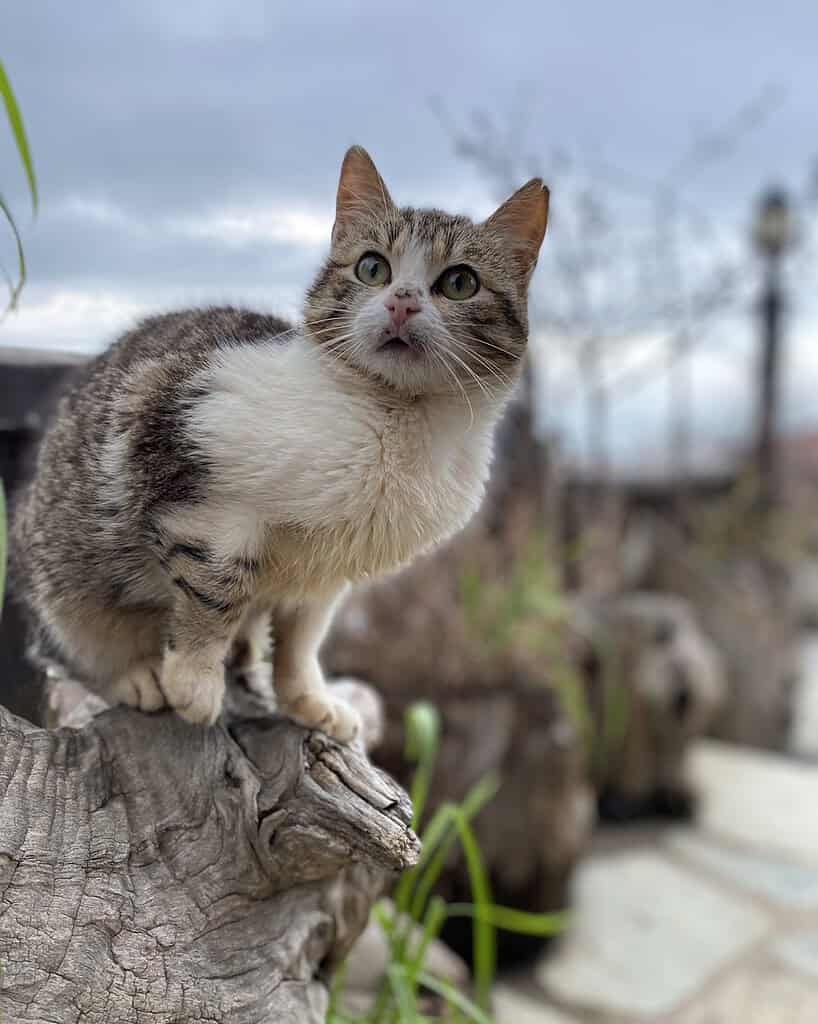
Chattering at a bird is normal. The things to watch are what happens around it.
Chattering paired with pacing and agitation
A cat who cannot step away from the window, vocalizes for long stretches, and stays tense long after the bird has gone is showing frustration rather than enjoyment. This is the cat who needs the enrichment plan above, starting today. If the window seems to make things worse, Cats Protection suggests temporarily blocking the lower part of the glass with opaque film or cardboard so the cat can reset.
Redirected aggression toward another pet
When a cat gets highly aroused by something it cannot reach and then attacks whoever is closest, vets call it redirected aggression. VCA Animal Hospitals lists outdoor cats seen through a window as a common trigger, especially in spring and fall. The attack is sudden, can be severe, and can damage the relationship between two cats who were friends an hour earlier.
If it happens, VCA’s advice is to avoid the aggressive cat until it calms down, confine it in a darkened room with water and a litter box, and check its body language before letting it out. Calming can take minutes, hours, or sometimes days, and Dr. Hannah Hart at PetMD adds that two cats involved in a serious incident should be reintroduced slowly, as if one were new. To prevent repeats, block the view where the outdoor cat appears and remove whatever draws other cats to your yard, which may mean moving the feeder.
New or excessive vocalizing in a senior cat
If an older cat suddenly becomes much more vocal, particularly at night, do not file it under chattering. The Cornell Feline Health Center lists seemingly unprompted episodes of loud vocalizing, often in the middle of the night, as a hallmark of feline cognitive dysfunction, which typically becomes noticeable around 10 years and older. Cornell also notes that nighttime vocalizing is common in cats with hyperthyroidism and high blood pressure, so the first step is bloodwork, not a behavior plan. Hyperthyroidism is common in older cats and very treatable; its most common signs are weight loss despite a good appetite, increased thirst and urination, and sometimes hyperactivity. A vet can usually confirm it with an exam and a thyroid hormone (T4) blood test.
Most of the time, though, the chirp at the window is exactly what it looks like: a hunter watching the hunt it cannot have, and loving every second.
Frequently asked questions
Why does my cat make a chattering noise at birds?
Your cat is watching prey it cannot reach, and its hunting instinct has switched on with no outlet. The chatter is most likely a mix of excitement, frustration, and instinct, possibly including mimicry of prey calls or a rehearsal of the killing bite. It is normal and seen even in indoor cats who have never hunted.
Is cat chattering a sign of frustration?
Partly. Vets describe chattering as excitement, focus, and frustration at out-of-reach prey. It only becomes a problem when it comes with pacing, agitation, or aggression toward other pets, which means the cat needs more ways to hunt, like daily wand play and puzzle feeders.
Should I stop my cat from chattering at the window?
No. Watching birds is good enrichment for an indoor cat. Add a comfortable perch and daily play so the cat can finish the hunting sequence. Only block the view if the chattering leads to redirected aggression or the cat cannot settle afterward.
What is the difference between chirping and trilling?
A chirp is a short, bird-like call, usually aimed at prey or used to get attention. A trill is a rolled, rising sound made with the mouth closed, and it is a friendly greeting. Trills come with an upright tail and relaxed body; prey chirps come with a crouch and fixed stare.
When is cat vocalizing a medical problem?
If vocalizing is new, loud, and frequent, especially at night in a cat over 10, or comes with weight loss or appetite changes, see a vet. Hyperthyroidism, high blood pressure, and cognitive dysfunction can all cause it, and the first two are easily tested for.
Sources
- PetMD — 9 Cat Noises and What They Mean (Alison Gerken, DVM, DACVB)
- Cats Protection — Why do cats chatter and chirp at birds?
- Wildlife Conservation Society — WCS Study Finds Wild Cat Mimicking Monkey Calls
- VCA Animal Hospitals — Cat Behavior Problems: Aggression, Redirected
- PetMD — Redirected Aggression in Cats: Why It Happens and What To Do (Hannah Hart, DVM)
- Cornell Feline Health Center — Cognitive Dysfunction
- Cornell Feline Health Center — Hyperthyroidism in Cats
- PetMD — Secrets to Keeping Your Indoor Cat Happy (Jenny Alonge, DVM)
- Cornell Lab of Ornithology, Project FeederWatch — Feeding Birds
- Nature Communications — The impact of free-ranging domestic cats on wildlife of the United States (Loss, Will & Marra, 2013)