Pet Scrapbook Ideas: How to Save Your Pet’s First Year
 Shiloh’s House Team
·
·
15 min read
The best pet scrapbook ideas follow your pet’s real first year: adoption or gotcha paperwork, the first vet visit, the vaccination record, a weight chart, a safe paw print, the first collar and tag, and a page for each big milestone up to the first birthday. Pick one format, physical or digital, add a little every month, and use acid-free materials or two backup copies so the memory book lasts as long as your pet’s story does.
Last updated: October 2025
Why make a scrapbook of your pet’s first year?
Most of us already have the raw material for a pet memory book. The problem is that it is buried in a camera roll between screenshots, receipts and blurry action shots. The same poll found that about a third of pet parents have more photos of their dogs and cats than of the humans in their lives.
A first-year scrapbook turns that pile into a story. Puppies and kittens change fast. The tiny animal who fit in one hand at eight weeks can look like a different pet by six months, and those in-between faces are easy to lose once they are buried under newer photos.
A scrapbook also does a practical job. When it holds the adoption papers, vaccine dates and weight checks next to the cute pictures, it becomes the one place you look when the vet, a groomer or a boarding kennel asks a question. You get a keepsake and a record in the same book.
If your photos need help before they go in a book, start with our guide on how to take good photos of your pet.

What should go in a pet scrapbook?
Think of the first year in two layers: the paper trail and the personality. The paper trail proves where your pet came from and how they grew. The personality pages are the fun part.
The paper trail
- Adoption or breeder paperwork. The adoption contract, shelter kennel card, breeder letter or a copy of the microchip registration. Keep originals in a safe file and put copies in the book.
- The first vet visit. The exam summary, the first weight and the clinic’s business card.
- The vaccination record. A copy of each update, so you can see the whole puppy or kitten series at a glance.
- A weight chart. One line per weigh-in with the date and weight.
The personality pages
- Homecoming day. The first photo in your house, the car ride, the bed they ignored. Our new puppy checklist and new kitten checklist double as a list of first-week photo ops.
- Paw and nose prints. One at homecoming and one at the first birthday shows how much they grew.
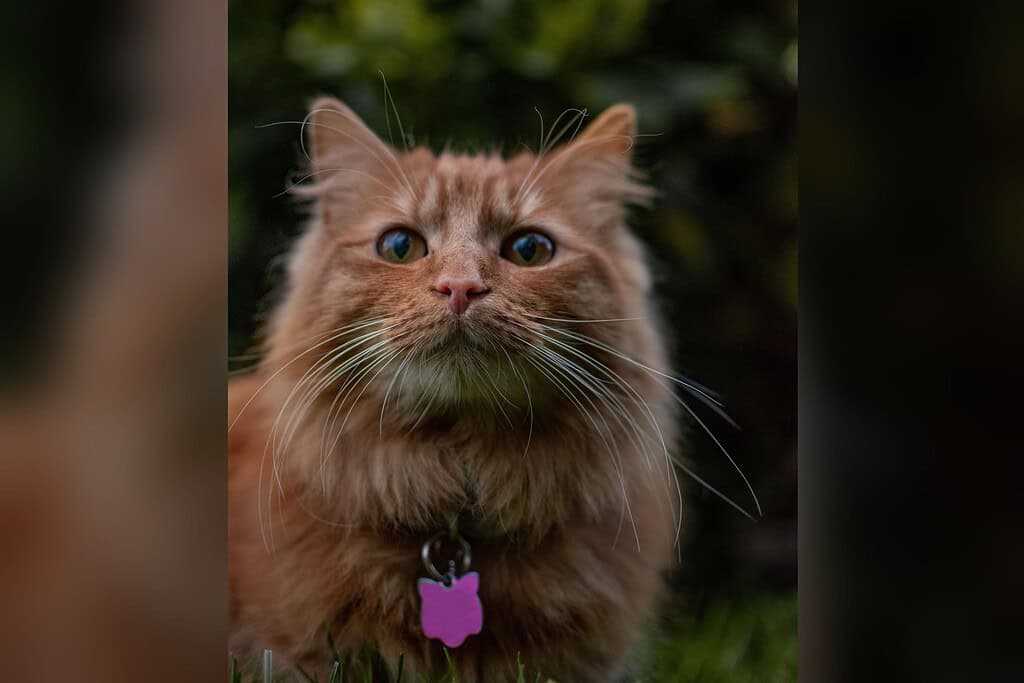
- The first collar and ID tag. Photograph it on day one and keep the outgrown collar in a pocket page. Our guide on when a puppy can wear an ID tag covers fit and what to engrave.
- Firsts. First bath, first snow, first trick, first friend.
- The first birthday or gotcha day. For party themes, see our gotcha day ideas.
Make the first tag a keepsake
A Shiloh’s House Smart Tag is laser engraved in premium acrylic, and a finder can tap it with a phone to see your pet’s live profile, so the tag in the scrapbook photo is also the one that helps bring them home.
What puppy milestones should you capture month by month?
The American Kennel Club breaks puppyhood into clear stages, and vaccine dates come from the American Animal Hospital Association (AAHA) canine guidelines. The “what to capture” column is our own suggestion for scrapbook pages, not a vet schedule. Every puppy moves at its own pace, and your vet sets the actual vaccine plan.
| Age | What is happening | What to capture (our suggestion) |
|---|---|---|
| About 8 weeks | Often the age a puppy goes to a permanent home (AKC) | Homecoming photo, first weight, adoption papers |
| 8 to 12 weeks | The “fear period,” when puppies are wary but very impressionable (AKC) | First car ride, first new friend, first vet visit |
| 6 to 16 weeks | At least 3 doses of a combination core vaccine, 2 to 4 weeks apart (AAHA) | A copy of each vaccine record, a photo after each visit |
| 12 to 24 weeks | More curious and independent; permanent teeth start coming in (AKC) | A smile photo, the most destroyed chew toy |
| About 16 weeks | Ready for training classes and basic commands like “come” (AKC) | Class certificate, first trick on video |
| 6 to 12 months | The “teenager” stage of boundary testing (AKC) | Side-by-side photo with the homecoming shot |
| 12 to 18 months | Most dogs reach emotional maturity; small breeds sooner, large breeds later (AKC) | First birthday page, a final weight and a new paw print |
AAHA also recommends a single booster within one year after the last puppy dose, and rabies vaccination as required by law, so the first-birthday vet visit often makes a natural closing page.
What kitten milestones belong in a first-year memory book?
Kittens run on a faster clock. VCA Animal Hospitals describes kittenhood in five stages, and the AAHA/AAFP feline guidelines give the vaccine timing. Most kittens come home after the earliest stages, so the first pages may be photos from the shelter, foster or breeder. Ask for them.
| Age | Stage or milestone | What to capture (our suggestion) |
|---|---|---|
| Birth to 2 weeks | Neonatal period (VCA) | Any baby photos from the breeder or foster |
| 2 to 7 weeks | Socialization period (VCA); AAHA/AAFP says the sensitive window may close by 9 to 10 weeks | Notes on the people and pets they met |
| From 6 weeks to 16-20 weeks | Core FVRCP vaccines every 3 to 4 weeks (AAHA/AAFP) | Each vaccine record and the first weight |
| 7 to 14 weeks | Active play period (VCA) | Mid-pounce photos, favorite wand toy |
| 3 to 6 months | Testing or ranking period (VCA) | First collar and tag, highest perch conquered |
| About 6 months | AAHA/AAFP suggests considering an FVRCP revaccination here | Half-birthday photo in the same spot as homecoming |
| 6 to 18 months | Adolescence (VCA) | First birthday page and a new paw print |
AAHA/AAFP also suggests kittens get 30 to 60 minutes of pleasant time with people each day. Jot down who visited; those names make a sweet “friends” page later.
How do you track weight and vet visits without it feeling like homework?
A weight chart is the most useful page in the book, and the easiest one to skip. Keep it simple: one table, a pen clipped to the cover, and a weigh-in on a set day.
Lisa M. Freeman, a board-certified veterinary nutritionist at Tufts, recommends weighing puppies at least monthly until 6 months of age, then every 2 to 3 months if growth is going well. She points owners to the WALTHAM Puppy Growth Charts, built from data on 50,000 healthy young dogs, where you plot each weight and watch whether your puppy follows a single curve. Jumping from one curve to another can mean growing too fast or too slowly, which is worth a talk with your vet.
“Besides being a useful resource for yourself, I like that the charts give you important information to discuss with your veterinarian during regular puppy visits.”
Lisa M. Freeman, DVM, PhD, DACVIM (Nutrition), Petfoodology, Tufts Cummings School of Veterinary Medicine (2022)
Freeman also cautions that holding your puppy on a bathroom scale and subtracting your own weight is too inaccurate. Use the clinic’s scale or a digital pet or baby scale.
For vet visits, slip a pocket page behind each month. Drop in the visit summary, then write one line of your own: what the vet said, how your pet behaved, and the treat that won them over.
How do you make paw and nose prints safely?
Prints are the page people remember. Done well, they take five minutes and a few treats.
For clay prints, the veterinary ClayPaws instructions say to start with clean hands and clean paws, because the modeling compound picks up fur, dirt and ink. They suggest recruiting a helper, since some pets have sensitive paws. Bring the clay to the paw instead of moving your pet, press the center pad first, then each toe. They also warn not to soften the clay in a microwave. If the print is not right, roll it up and try again.
For flat prints you can paste into a book, use a washable, nontoxic ink pad, press straight down, lift straight up and wipe the paw right away so your pet does not lick it. A nose print works the same way with a light dab. If your pet pulls away, stop and try another day.
How do you build a physical pet memory book that lasts?
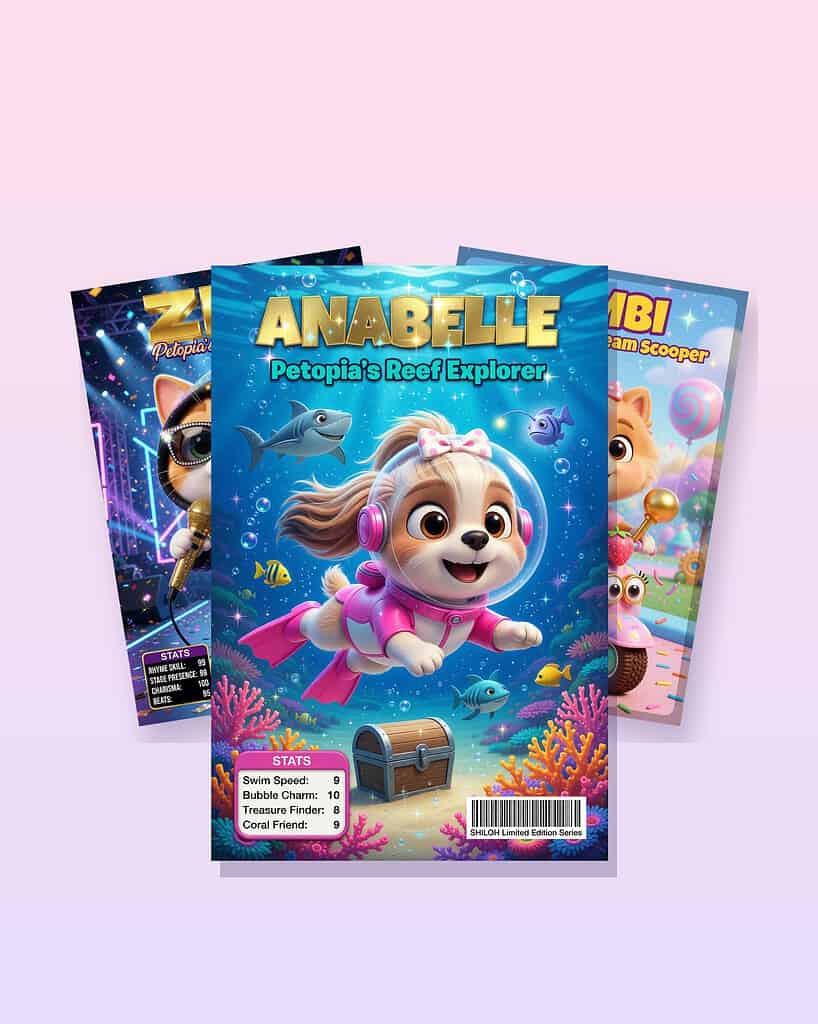
A paper scrapbook can last decades, or it can yellow and fall apart in a few years. The difference is almost entirely in the materials. The Library of Congress publishes a short list of rules for making a long-lasting scrapbook, and they apply just as well to a puppy book as to a family album.
Start with the paper. The Library recommends acid-free and lignin-free paper materials. Lignin is a natural compound in wood pulp that breaks down over time and turns paper brown and brittle. Many products say “archival” or “acid-free” on the label, but the Library warns that some still contain lignin, dyes or other additives. The best test is whether a product passed the Photographic Activity Test, often listed as PAT or ISO 18916 in supplier catalogs. Anything that touches a photo should pass it.
Next, choose your plastics with care. Sleeves and pocket pages should be polyethylene, polypropylene or polyester. The Library says never to store photos in polyvinyl chloride (PVC), so check the label on any binder or sleeve before you buy. The Library also says to avoid albums with colored pages and “magnetic” or sticky self-adhesive pages. It also warns that many over-the-counter adhesives are acidic and will eventually discolor, turn brittle and damage what they touch.
Then think about how things attach. The Library suggests wheat-starch paste instead of other glues, or no glue at all. Acid-free paper photo corners or polyethylene corners hold a print without touching its back, so you can move it later. Skip self-adhesive tape, rubber bands, paper clips and staples. All of them can damage a photo or page long after the craft session is over.
Pet books have a special problem: bulk. You will want to keep the outgrown collar, a tuft of fur from the first grooming, the shelter’s kennel card and maybe a favorite squeaker. The Library recommends heavy, thick stock for album pages so they can carry that weight, and an expandable format such as a 3-ring binder. A binder also lets you add pages each month without fighting a fixed spine. Put three-dimensional items in their own sealed polyethylene pocket so they do not press into the photos on the facing page.
Handling matters too. Turn pages by supporting the whole leaf, keep food and drinks away while you work, and do not force the book to lie completely flat. That last one is hard with a happy dog nosing at the table, so work at a desk and put the book away when you are done.
Finally, store it well. The Library suggests storing a scrapbook flat in a well-fitting box that keeps out light, dust and pests. The room should be cool, around room temperature or below, and fairly dry, about 35% relative humidity. Avoid attics, basements, exterior walls, radiators and vents, which bring heat, damp and leaks. A closet shelf in the main part of the house is usually a better home than the garage.
None of this has to be expensive. An archival binder, a pack of PAT-tested pocket pages, photo corners and one acid-free box will hold a full first year. Buy them once, and the hard part is just showing up each month.
Physical or digital scrapbook, which is better?
Both work. The best format is the one you will keep up with.
A physical book wins for touch. You can hold the paw print, smell the old collar and hand it to a guest. It is also the only place that real objects like a kennel card can live. The trade-off is time, cost and the fact that there is only one copy.
A digital scrapbook wins for ease. You already take the photos on your phone, so the work is mostly sorting. It also holds video, which a paper book cannot. The trade-off is that files are easy to lose. The Library of Congress personal archiving guide suggests you:
- Pick the photos that matter most and keep the highest-quality version of each.
- Give files descriptive names and put them in a clear folder structure, such as one folder per month.
- Make at least two copies, store them on separate media and keep them in different places.
- Check your photos at least once a year to make sure they still open, and make new copies about every five years.
Many families do both: a digital album for the everyday flood, then a printed book of the best 30 or 40 pictures at the first birthday. Our guide on how to make a video of your pet can help turn the extra clips into a short film.
How can the Lohji app turn your pet’s photos into a digital scrapbook?
If your first-year album lives on your phone, the free Lohji app (Lohji: Cartoon Your Pet on the App Store, Lohji: Cartoon Pet Avatar on Google Play) adds an illustrated layer to it. Made by Shiloh’s House, Lohji turns one clear photo of your pet into a Base Lohji, a 3D animated-movie-style character, and everything else is made from that character.
Here is how it can work as a running memory book:
- A library for each pet. Every creation lands in that pet’s own library. You can sort it into folders, for example one per month, and mark favorites.
- Rearrange mode. Drag and drop items into the order you want and the app saves it, so your album can read like a timeline.
- Milestone art. Make themed scenes, 4K collector cards and seasonal stickers, including a Birthday sticker for the first-birthday page.
- Birthday and age. Add your pet’s birthday in Pet Info and the app shows their age automatically.
- Slideshow. Lohji Slideshow mixes your stickers, cards, videos and images with an intro card showing your pet’s name, plus an in-app soundtrack in playful, dreamy or chill moods. Share as movie saves the show as an MP4.
- Mini Movie. Stitch 2 to 10 of your videos into one file.
Folders, favorites, rearranging, saving, sharing, Slideshow with movie export and Mini Movie are all free. You can Save to Photos or share from the native share sheet, which also makes it easy to print favorites for a paper book. For a single standout card, see how to make a trading card of your pet.
How do you keep the scrapbook going after year one?
The first year is the easy one, because everything is a first. After that, scrapbooks tend to stall. A few habits keep them alive.
- Switch to quarterly pages. Monthly is great for a puppy or kitten. For an adult pet, one spread per season is plenty.
- Repeat the same photo. Same spot, same angle, once a year. Over time it becomes the most moving page in the book.
- Keep the annual vet page. One weight, one vaccine update, one note from the visit.
- Do a yearly print. A fresh paw print each birthday shows how little, or how much, they still change.
- Plan the birthday page early. Our pet birthday ideas give you something to photograph every year.
Want new pages to fill? Our pet bucket list ideas give you 50 adventures to plan with your dog or cat, plus ways to adapt them for senior pets.
Frequently asked questions
What do you put in a puppy’s first year scrapbook?
Start with the paper trail: adoption or breeder papers, the first vet visit, each vaccine record and a weight chart. Then add the personality pages: homecoming day, the first collar and ID tag, paw prints, first bath, first trick, training class and the first birthday. A page or pocket for each month keeps it organized and easy to keep up with.
How do you make a pet memory book?
Choose a format first: an expandable 3-ring binder with archival pages, or a digital album with one folder per month. Gather photos and papers as they happen, label each with the date and your pet’s age, and add a short note to every page. Set a monthly reminder to sort new photos so the book never falls behind.
What kitten milestones should I record?
VCA Animal Hospitals describes five kitten stages: neonatal, socialization, active play, testing or ranking, and adolescence. Good pages include homecoming, the first vet exam, each core vaccine visit, the first collar, favorite toys and the first birthday. Ask the shelter, foster or breeder for any baby photos from before your kitten came home.
Is it safe to use ink for a paw print?
Use a washable, nontoxic ink pad or a pet paw print kit, keep the session short and wipe the paw right away so your pet does not lick the ink. Avoid homemade salt dough, which Pet Poison Helpline warns can cause salt poisoning. If your pet swallows craft materials, call your vet or ASPCA Animal Poison Control at (888) 426-4435.
What paper should I use for a pet scrapbook?
The Library of Congress recommends acid-free and lignin-free paper, polyethylene, polypropylene or polyester sleeves, and photo corners or wheat-starch paste instead of tape. Look for products that passed the Photographic Activity Test, often listed as PAT. Avoid magnetic or self-adhesive album pages, colored papers and PVC plastics, which can damage photos over time.
How do I back up a digital pet scrapbook?
The Library of Congress suggests keeping at least two copies of your important photos on separate media, stored in different places, such as a computer plus an external drive or online storage. Use descriptive file names and folders, open the files at least once a year to check them, and make fresh copies about every five years.
Sources
- People have more pics of pets than loved ones on phone: poll, New York Post (2022)
- A Puppy Growth Timeline: Transitions in Puppyhood, American Kennel Club (2021)
- Recommendations for Core and Noncore Canine Vaccines, American Animal Hospital Association (2022)
- New Kitten Guide: Vet Care, Training and Supplies, VCA Animal Hospitals (n.d.)
- Core Vaccines for Pet Cats, 2020 AAHA/AAFP Feline Vaccination Guidelines, American Animal Hospital Association (2020)
- Behavior and Environmental Needs: Kittens, 2021 AAHA/AAFP Feline Life Stage Guidelines, American Animal Hospital Association (2021)
- Growth Guide: Keeping your Puppy on the Right Track, Petfoodology, Tufts Cummings School of Veterinary Medicine (2022)
- How to Make a ClayPaws Print, Veterinary Wisdom (2020)
- Salt Dough Ornaments, Pet Poison Helpline (2020)
- Preservation Measures for Scrapbooks and Albums, Library of Congress (n.d.)
- Information Leaflet on the Care, Handling, and Storage of Photographs, Library of Congress (n.d.)
- Digital Photos: Personal Archiving, Library of Congress (n.d.)