Why Does My Cat Headbutt Me? 6 Real Reasons (and What It Actually Means)
 Shiloh’s House Team
·
·
6 min read
Shiloh’s House Team
·
·
6 min read
Cats headbutt you — behaviorists call it bunting — mainly to deposit their scent on you and mark you as part of their social group. Cats have scent glands on the cheeks, chin, lips and forehead, and pressing them against you leaves pheromones that say this one is mine, and safe. It is also a greeting, an attention request, a trust signal, and occasionally a demand for dinner. What it is almost never is aggression. A cat who headbutts you is a cat who has decided you belong to them.
The short answer
Bunting is scent-marking plus affection. Cats build a shared group scent by rubbing on each other and on the things they consider theirs. Being included in that scent profile is one of the highest-value compliments a cat gives out — they do not do it to strangers, and they do not do it to things they find threatening.
1. They are marking you as family
The primary function is scent exchange. Colony cats rub heads with each other constantly, blending individual scents into one group signature that lets them recognize members instantly. When your cat presses their forehead into your shin, they are running the same protocol on you. It is why the behavior often increases after you have been away — you came back smelling wrong, and they are fixing it.
2. It is a greeting
Watch the tail: a headbutt paired with a tail held straight up with a little hook at the tip is the full friendly greeting package. That upright tail is one of the clearest positive signals in the cat repertoire, and it is very hard to fake.
3. They are asking for attention — specifically, pets
Cats overwhelmingly prefer being petted around the face, cheeks and base of the ears — the same places the scent glands are — and much less so along the back or near the tail. If your cat headbutts and then bites your hand a moment later, you may be petting the wrong end. We wrote about that pattern in why does my cat bite me.
4. It is a trust signal
The head is a vulnerable part of a cat, and offering it to you says they do not expect anything bad to happen. This is why a shy or rescue cat bunting for the first time is such a milestone. It usually shows up alongside the other trust behaviors: slow blinks, sleeping in the room with you, and exposing the belly without meaning please rub it.
5. They are claiming territory (and you are territory)
Cats bunt on doorframes, chair corners, bags you bring home and, yes, people. In a multi-cat house you may notice the more confident cat headbutts you more often, especially right after the other cat has been near you. Nothing sinister is happening — scent is how cats negotiate space, and refreshing their mark on you is the polite version of that negotiation.
6. They want something practical, usually food
Headbutts that arrive at 5:45 every evening are a learned behavior, not a mystery. Cats are excellent at noticing which of their affection displays make humans stand up and walk to the kitchen. This is not manipulation in any negative sense — it is a cat successfully communicating with a different species, which is genuinely impressive.
Headbutting vs head pressing: know the difference
Bunting is an active, brief, social push. Head pressing is a cat standing with their head against a wall or furniture, holding it there, looking blank — and it is a neurological emergency. Head pressing can indicate brain disease, liver problems or toxicity, and it needs a same-day veterinary visit. If your cat is standing motionless with their skull against the baseboard, that is not affection. Call your vet.
Should you headbutt back?
Gently, yes — many cats respond well to a soft forehead touch, and it is a small piece of cat language you can speak back. Go slowly, let them initiate, and stop if they pull away. Offering a relaxed hand at nose height for them to rub against is the lower-risk version and works with almost every cat, including ones who do not want their heads touched.
What if your cat never headbutts?
Some cats simply are not bunters, and it does not mean they are unhappy or unattached. Cats vary enormously in how they express affection: some knead, some slow-blink, some just sit on your laptop. If your cat affection style has recently changed — a bunter who stopped, or a standoffish cat who suddenly cannot stop rubbing on you — that shift is worth mentioning to your vet, because pain and thyroid problems both change social behavior. Our pieces on why cats knead and why cats lick you cover the other big affection signals.
The flip side of being claimed
Here is our disclosed bias, since we sell pet ID tags: your cat has marked you as theirs, but a stranger who finds them has no way to know that. Indoor cats are the ones who slip out through a propped door on a moving day and end up two streets over with no collar and no way home. Our $38 designer acrylic NFC tag is tapped by any phone — the finder needs no app — and pulls up your contact details plus anything you have saved in the free Lohji app. The back is engraved as a fallback, and there is no subscription. If you want the case rather than the pitch, read do indoor cats need ID tags.
Frequently asked questions
Why does my cat headbutt me in the face?
Because your face is where your scent is strongest and where their glands can reach easily. Face-level bunting from a cat sitting on your chest is the most emphatic version of the behavior, not a different one.
Does headbutting mean my cat loves me?
It means your cat has categorized you as a safe member of their social group and wants your scent mixed with theirs. Whether that counts as love is a question about words, but it is the closest thing cats have to saying it.
Why does my cat headbutt me and then bite?
Usually overstimulation, or petting in a spot they did not ask for. The headbutt requests cheeks; a hand that drifts down the back or belly can flip a cat from enjoying it to done in seconds. Watch for tail flicking and skin twitching — those come before the bite.
Why does my cat headbutt my other cat?
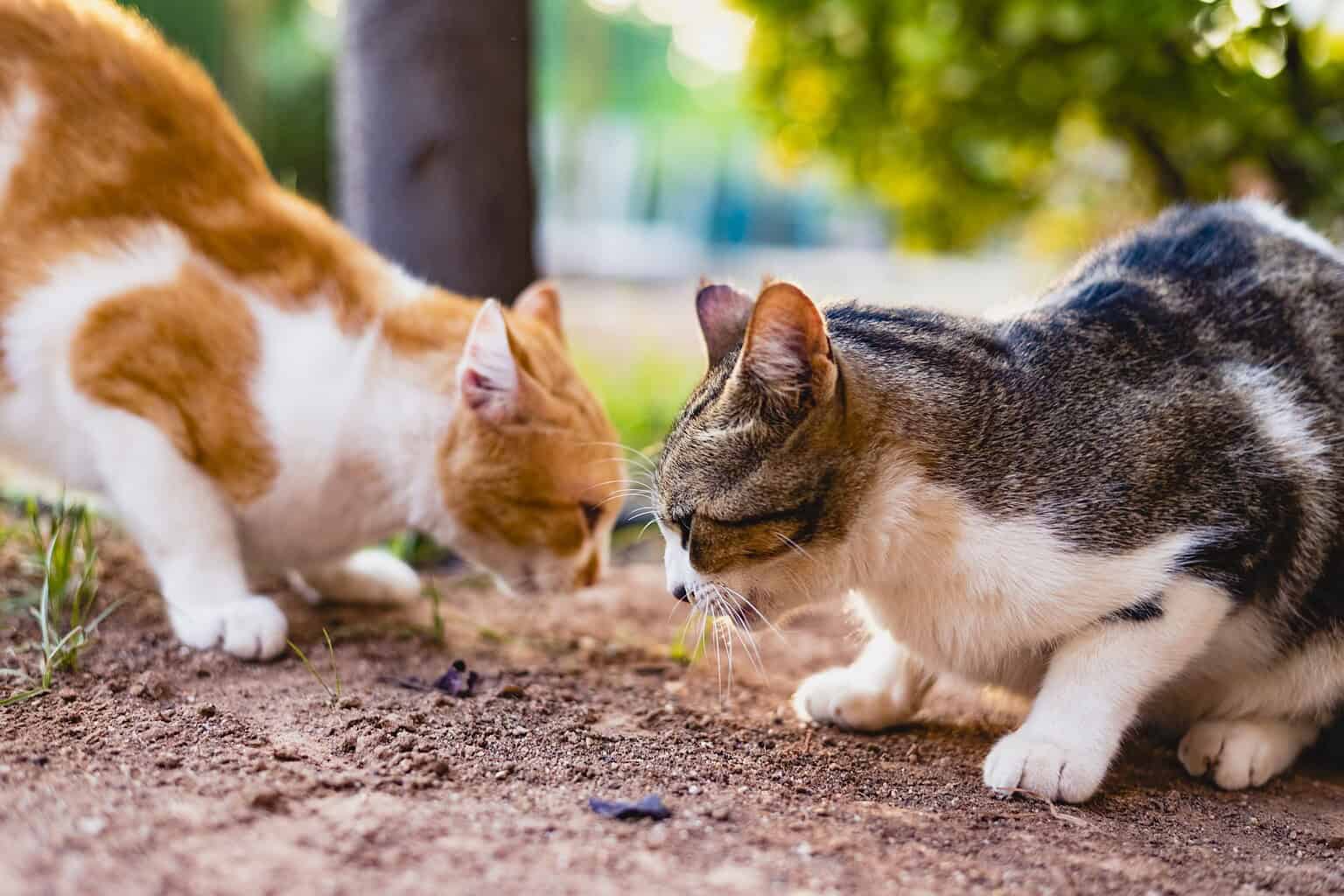
Same behavior, original audience. Cats bunt each other to maintain a shared group scent, and it is one of the most reliable signs that two cats in a household actually get along rather than merely tolerating each other.
Is headbutting the same as head pressing?
No, and the difference matters. Bunting is a brief, active push with a relaxed cat behind it. Head pressing is sustained, motionless, and often paired with disorientation or circling — it is a veterinary emergency.
Why does my cat headbutt me at night?
Cats are crepuscular, so their social and hunting drive spikes around dawn and dusk. Bunting at 4 a.m. usually means they are awake, you are the interesting object in the room, and breakfast feels overdue.
Get Your Tag
A $38 designer acrylic NFC tag that any phone can tap — no app, no subscription, engraved backup on the back.