Why Does My Cat Lick Me? 6 Real Reasons (and When to Gently Say No)
 Shiloh’s House Team
·
·
4 min read
Shiloh’s House Team
·
·
4 min read
When your cat licks you, it’s most often affection: licking is how cats groom the members of their social group, and you’ve made the roster. It can also mean attention-seeking, taste (you’re salty), comfort-seeking, marking you with a familiar scent, or — if it’s new and obsessive — stress or a medical issue. Here’s how to read those sandpaper kisses, why the tongue feels like a loofah, and how to redirect the habit kindly if it’s getting intense.
1. You’re part of the colony now
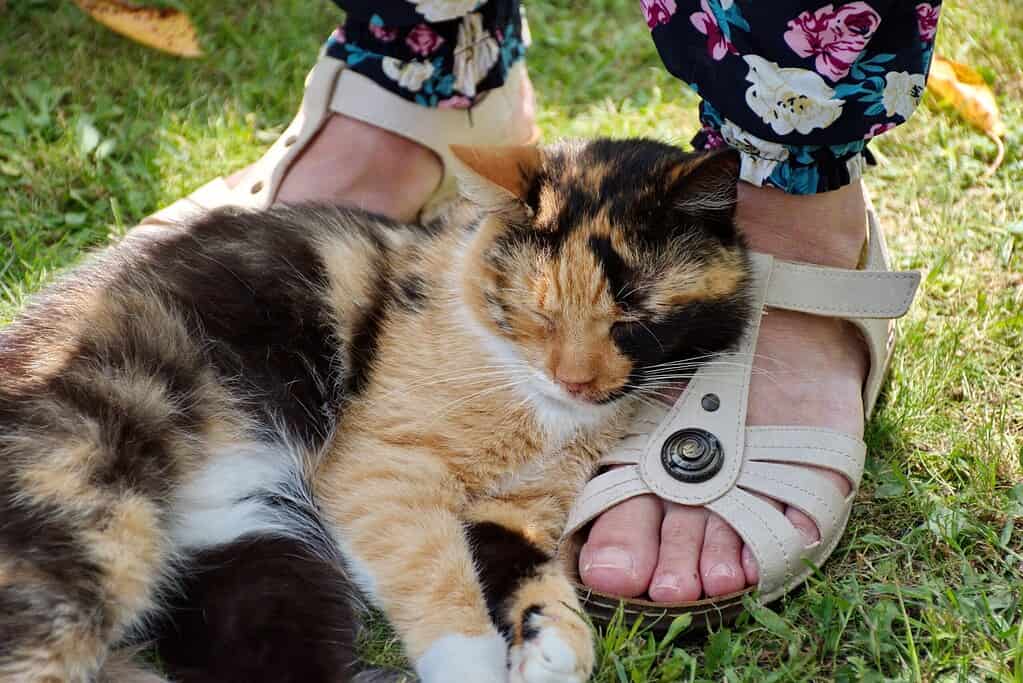
The main reason cats lick their humans is allogrooming — mutual grooming between cats that trust each other. In feline social life, grooming is reserved for family and close allies. A cat that licks your hand or hair is treating you like a bonded groupmate, not a food dispenser. It’s one of the clearest compliments a cat can pay you.
2. It’s a memory of kittenhood
Kittens are licked by their mothers from the moment they’re born — it’s soothing, warm, and associated with safety. Many adult cats keep a soft spot for that comfort and recreate it with the person they feel safest around, sometimes complete with kneading and purring. If your cat licks you while making biscuits on your lap, you’re basically home base.
3. You taste interesting
Less romantic, still true: human skin carries salt from sweat, plus traces of lotion, food, or whatever you last handled. Some cats simply like the taste. If the licking spikes after your workout, mystery solved. (One caution: keep cats away from skin with medicated creams or ointments on it — some, like certain pain-relief and hormone creams, are genuinely dangerous if licked.)
4. It gets your attention — every time
Cats learn fast. If licking your arm reliably makes you look down, talk, or hand out breakfast, the behavior gets reinforced. A lick aimed at your face at 6 a.m. is rarely about affection and usually about an empty bowl — a cousin of the 3 a.m. zoomies and midnight meowing playbook.
5. Scent-mixing: you smell like family
Grooming spreads a shared group scent. When your cat licks you and then rubs her cheek on you, she’s blending her scent with yours — a territorial hug that tells other animals (and reassures her) that you belong together.
6. When licking means stress — or something medical
Sudden, compulsive licking — of you, of herself to the point of bald patches, or of fabric and plastic — can signal anxiety, nausea, or pain. If the behavior is new, frantic, or paired with appetite changes, hiding, or over-grooming, it’s worth a vet visit rather than a behavior fix. The same rule of thumb applies to sleep changes, which we cover in why is my cat sleeping so much.
Why does a cat’s tongue feel like sandpaper?
A cat’s tongue is covered in backward-facing keratin spines called papillae — the same material as claws. They act like a built-in comb that pulls loose fur and debris out of the coat. Wonderful for grooming, slightly exfoliating for your forearm. It’s not personal.
How to redirect licking without hurting her feelings
Don’t punish it — she’s being affectionate by cat standards. Instead, calmly move your arm away, offer a soft toy or a brushing session as a substitute, and give attention when she’s not licking so the habit stops paying off. Interactive play before her usual licking hour drains the energy behind attention-licks. Consistency wins in about a week or two for most cats.
FAQ: cat licking, answered quickly
Why does my cat lick me then bite me?
The lick-then-nip combo is usually overstimulation or play — grooming that tipped past her tolerance threshold. Watch for a twitching tail or flattened ears and end the petting session before the nip arrives.
Why does my cat lick my hair?
Hair-grooming is prime allogrooming — it’s what bonded cats do to each other’s heads. Take the compliment, and gently redirect if it becomes a nightly ritual you didn’t sign up for.
Is it safe to let my cat lick me?
On intact skin, generally yes. Avoid letting cats lick wounds, your face if you’re immunocompromised, or skin with creams and ointments on it. Basic hygiene covers the rest.
Why does my cat lick me and not my partner?
Grooming is rationed to the individuals a cat feels most bonded to — often whoever feeds, plays, or simply sits still the most. It can shift over time. Your partner shouldn’t take it personally (she probably still likes them).
A cat this bonded to you deserves a way home if she ever slips out a door or window screen. We make the Shiloh’s House smart tag — a light, $38 designer acrylic NFC tag a finder taps with any phone, no app required, engraved as backup — and our free Lohji app keeps her vaccine records and vet notes in your pocket. We’re biased, of course, but affectionate lap cats are exactly the ones worth tagging; here’s our honest take on whether indoor cats need ID, and more decoded behavior in the internet’s most-googled cat questions.
Get Your Tag
She gives you sandpaper kisses. Give her a tap-to-call tag that gets her home if she ever wanders.