How to Get Rid of Litter Box Smell: 9 Fixes That Actually Work (2026)
 Shiloh’s House Team
·
·
6 min read
Shiloh’s House Team
·
·
6 min read
The fastest way to get rid of litter box smell is to scoop twice a day, add a second box, use unscented clumping clay at a depth of three inches, and replace the box itself once a year. Nearly every persistent odor problem comes down to one of four things: not enough boxes, not scooped often enough, litter too shallow to clump properly, or a plastic box that has absorbed urine into scratches. Air fresheners and scented litter mask smell for an hour and often make cats avoid the box, which makes the problem worse.
Why litter boxes smell worse in summer
Closed-up air conditioning also stops the air exchange that was quietly helping you all spring. If your box suddenly got worse and nothing else changed, this is usually why – and it means scooping frequency needs to go up in hot months, not stay the same.
1. Scoop twice a day, every day
Nothing else on this list matters as much. Urine clumps left in the box are the odor source; scented litter does not neutralize them, it sits next to them. Twice a day is the standard for a single cat, and more with multiple cats. If you cannot commit to that, this is the strongest argument for an automatic box.
2. Add a box – the n+1 rule
Two cats, three boxes. Under-provisioning concentrates waste, overloads the litter’s clumping capacity, and increases the chance a cat starts going outside the box entirely – which is a much harder smell to remove.
3. Use unscented clumping clay, three inches deep
Shallow litter is the most common invisible cause of odor, because urine reaches the bottom of the pan and forms a stuck slab instead of a liftable clump. Three inches gives the clump room to form and be removed intact. Unscented is not a purity preference: many cats dislike fragrance and will hold urine or eliminate elsewhere, and the fragrance itself does nothing to the ammonia. Sodium bentonite clay still outperforms most alternatives on pure odor control. Our full cat litter comparison goes deeper on the trade-offs.
4. Replace the box once a year
Plastic scratches, and scratches hold urine that no amount of cleaning reaches. If a clean, empty, dry box still smells when you put your nose near it, that box is finished. This is cheap to fix and people almost never do it.
5. Wash the box with unscented soap and water – not bleach or ammonia
Wash monthly with mild dish soap and hot water, rinse thoroughly, and dry completely before refilling. Ammonia-based cleaners smell like urine to a cat and can encourage marking. Bleach reacts badly with urine residue. Strong pine or citrus cleaners drive many cats off the box. Boring is correct here.
6. Put a thin layer of baking soda under the litter
Baking soda under the litter absorbs some odor without adding fragrance a cat will object to. A light dusting on the bottom of the pan, then litter on top. Do not pour it over the surface where paws land – some cats dislike the texture and the dust.
7. Rethink where the box lives
Boxes in closets, cabinets and small bathrooms concentrate smell because there is no airflow, and boxes with lids trap it against the cat. Covered boxes smell better to you and worse to your cat, who has to stand inside the concentrated air. If you use a covered box, expect to scoop more often. An open box in a ventilated, low-traffic spot is the better default.
8. Deal with the floor around the box
Tracked litter and micro-splashes on the wall and floor around the box are frequently the actual smell, not the box. A large mat, wiped weekly, plus an enzyme cleaner on the surrounding floor. Enzyme cleaners break down uric acid crystals; ordinary cleaners just move them. See our enzyme cleaner comparison for what actually works on set-in urine.
9. Consider an automatic box if the schedule is the problem
A self-cleaning box removes waste within minutes of use, which is the single most effective odor intervention available – it beats every additive. The trade-offs are cost, noise, proprietary waste drawers, and the fact that some cats need weeks to accept one. Our automatic litter box comparison covers which models are worth it.
What works, ranked honestly
| Fix | Effort | Cost | Impact on smell |
|---|---|---|---|
| Scoop twice daily | Daily, 2 minutes | Free | Very high |
| Add a box (n+1) | One-time | Low | High |
| Three inches of clumping clay | One-time habit | Low | High |
| Replace the box yearly | Yearly | Low | Medium-high |
| Automatic litter box | Setup plus upkeep | High | Very high |
| Baking soda under litter | Monthly | Very low | Low-medium |
| Scented litter or plug-in air freshener | Low | Low | Masks only – can cause box avoidance |
When the smell is a medical sign
A sudden, sharply stronger ammonia smell, unusually large clumps, or an unmistakably foul odor different from normal can mean a urinary tract infection, diabetes, or kidney disease. Very concentrated urine smells stronger; very dilute urine in unusually large volume points at kidney disease or diabetes. Diarrhea in the box that persists for more than a day or two is also worth a call. And a male cat straining without producing urine is an emergency the same hour – a blocked urethra is fatal within a day or two.
One more thing, while you are near the box
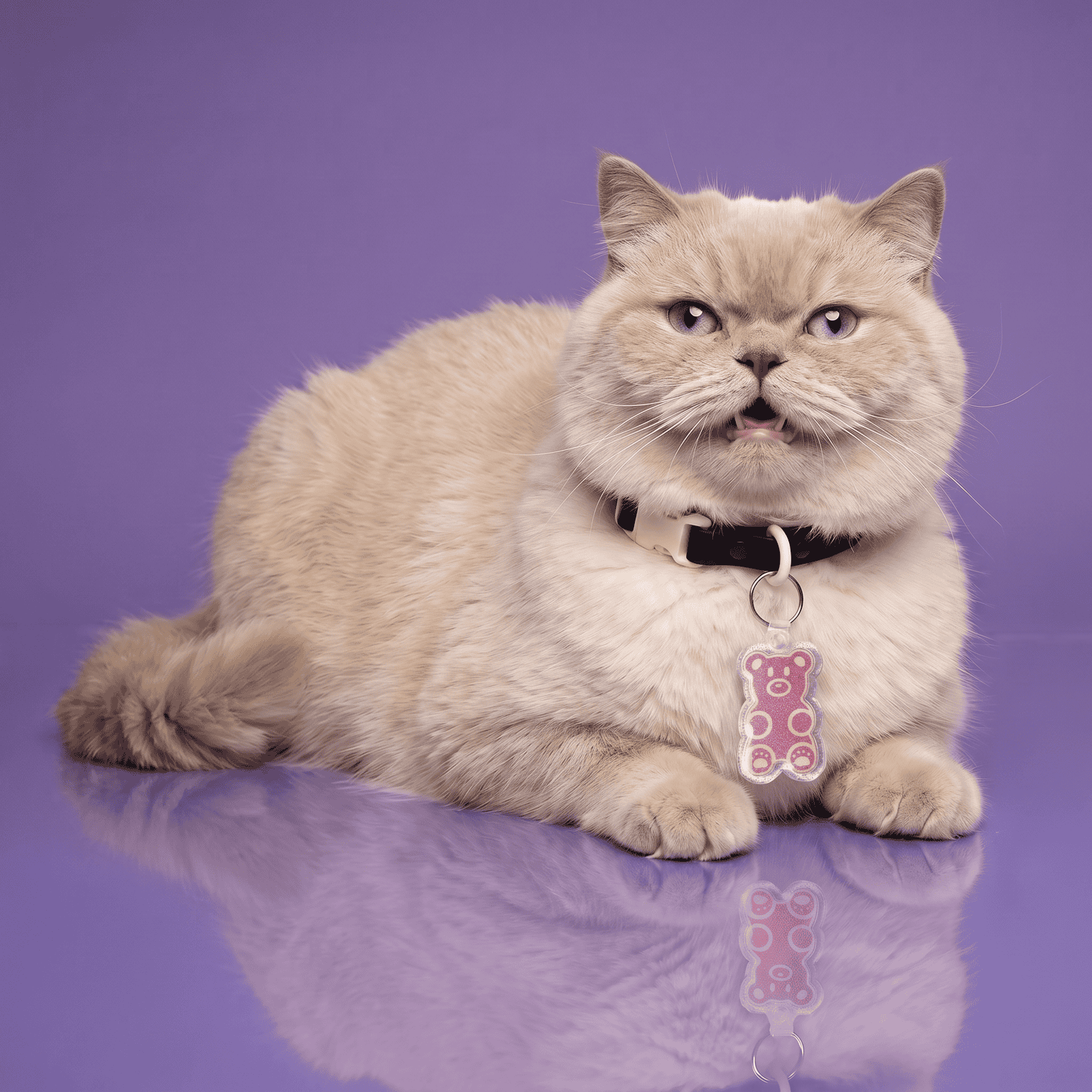
Litter box changes are one of the most common reasons a cat bolts out a door – a stressed cat looking for a better bathroom often decides outside is it. We are biased here because it is what we make, but a visible ID tag is the difference between a neighbor who can reach you in one tap and a cat nobody can identify. Our designer acrylic NFC tags open your cat’s profile from any phone with no app on the finder’s end, and carry engraved contact details as a backup for when the battery is dead or the phone is old.
Frequently asked questions
How often should you change cat litter completely?
With clumping litter and daily scooping, a full change every two to four weeks for one cat is typical. Non-clumping litter needs full changes about twice a week. Top up between changes to keep depth at about three inches.
What is the best litter for odor control?
Unscented clumping sodium bentonite clay remains the strongest performer for pure odor control. Silica crystal litters do well on ammonia but poorly on solid waste odor, and plant-based litters vary widely.
Does baking soda really help litter box smell?
Modestly. It absorbs some odor as a thin layer under the litter. It will not compensate for infrequent scooping, and heavy surface use bothers some cats.
Why does my cat’s pee smell so strong all of a sudden?
Concentrated urine from not drinking enough, a urinary tract infection, or an intact male marking are the common causes. If it is sudden and there is no obvious explanation, get a urine test.
Do covered litter boxes trap smell?
They keep smell away from you, which is different from removing it. Inside the hood, the concentration is much higher, and a fair number of cats respond by using the box less. Open boxes with good ventilation are usually the better trade.
Will an air purifier fix litter box smell?
A purifier with an activated carbon stage helps with what is already airborne, but it does nothing about the source. Fix the box first, then use a purifier as a finishing touch.
Get Your Tag
Indoor cats slip out too. A tap-to-call NFC tag with engraved backup means any neighbor with a phone can bring them home.