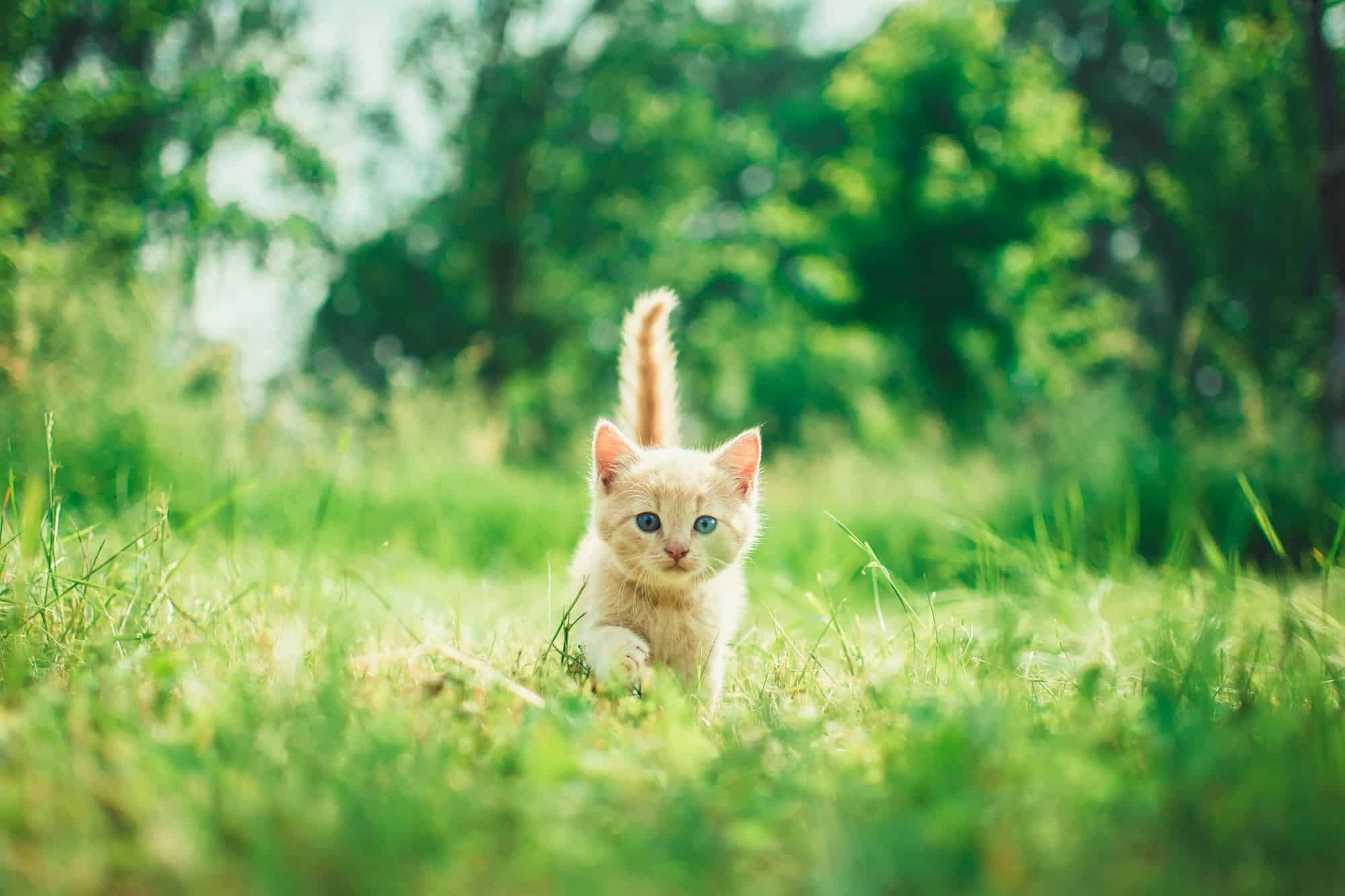
When a cat wags its tail it is almost never happy — unlike a dog, a swishing cat tail usually means agitation, overstimulation or intense focus. A slow swish is concentration. A fast thump against the floor is irritation, and it is the warning that comes right before a swat. The genuinely happy signals are different: a tail held straight up, a little hook at the tip, or a rapid quiver when you walk in the door. Here is how to read all of it.
Cat tail positions and what they mean
Read the tail’s height first, then its movement. Height tells you the cat’s confidence; movement tells you the intensity.
| Tail signal | What it usually means | What to do |
|---|---|---|
| Straight up, tip hooked | Friendly greeting, confidence | Say hello — this is an invitation |
| Upright and quivering | Delight, usually at you | Enjoy it — it is the highest compliment |
| Slow, wide swish | Focus — hunting or assessing | Leave them to it |
| Fast thump or thrash | Irritation, overstimulation | Stop petting immediately |
| Tip flicking only | Mild annoyance building | Give them space now |
| Puffed up like a bottle brush | Fear or threat display | Back off, remove the trigger |
| Tucked under the body | Anxiety, submission, sometimes pain | Reduce stress; vet if it persists |
| Wrapped around you or another cat | Affection and social bonding | Nothing — you have arrived |
Why does my cat wag its tail while lying down?
A relaxed cat thumping its tail on the sofa is usually mildly irritated or half-asleep and dreaming, not happy. If it happens while you are stroking them, the thump is a request to stop — cats build up petting-induced overstimulation quickly, especially along the back and near the tail base. If they are alone and dozing, a slow lazy sweep is closer to idle contentment. The difference is speed: slow and loose is fine, fast and stiff is not.
Why does my cat’s tail quiver when they see me?
An upright, vibrating tail is a genuine happy greeting. Cats do it when they are pleased to see someone they trust — often at the door, at feeding time, or when you get home. It is the same posture kittens use with their mother. It is one of the few unambiguously positive signals a cat gives you, and it usually comes bundled with a headbutt, which we explain in why does my cat headbutt me.
One caveat worth knowing: an unneutered male backed up against a wall with a quivering tail may be spraying. Context tells you which.
What does a puffed-up tail mean?
A bottle-brush tail means your cat is frightened and trying to look bigger. The hair stands up involuntarily — it is not a choice. Paired with an arched back it is a classic threat display; paired with a crouch and flat ears it is pure fear. Either way the answer is the same: stop approaching, remove whatever caused it, and let the cat come down on its own. Cornering a puffed cat is how people get bitten, a topic we cover in why does my cat bite me.
Reading the tail with the rest of the cat
The tail is only one sentence — ears, eyes and body do the rest. Forward ears plus an upright tail is a confident, social cat. Flattened ears plus a thrashing tail is a cat about to escalate. Slow blinking with a gently curled tail is as relaxed as cats get. Dilated pupils turn every other signal up a notch. Watch the whole animal and the tail stops being mysterious.
Cats also stack signals across channels: tail language runs alongside vocal cues, which is why a chatty cat and a swishing tail together often mean one specific demand. Our guides to why cats meow so much and why cats stare cover those channels.
When tail behaviour is a medical sign
See a vet if your cat’s tail suddenly hangs limp, if they cry when it is touched, or if they start over-grooming the base of it. A limp or dragging tail can mean nerve damage from a fall or a near-miss with a car. Obsessive licking at the tail base is a classic sign of fleas. A tail carried permanently low in a cat who normally carries it high is worth mentioning at a checkup — cats hide pain, and posture is often the only thing that changes.
The tail that tells you they are going out
Here is our honest bias, since we make pet ID tags. That confident, straight-up, hook-tipped tail is the posture of a cat who is going somewhere — and for indoor cats, the somewhere is often a door that got left open. Curious, confident cats are the ones who slip out, and most of them are found within a few streets by someone who has no idea whose cat it is.
That is the gap our $38 NFC smart cat tag closes. It is light designer acrylic, sized for a breakaway collar, and anyone who finds your cat can tap it with any phone — iPhone or Android, and no app needed on their end — to see your current phone number. Made in the USA, engraved on the back as a backup, no subscription ever. The free Lohji app keeps vaccine records and vet notes in one place too. If you are wondering whether an indoor cat needs one at all, we made the case in do indoor cats need ID tags. Other brands will also get your cat home — ours is simply the one we would put on our own.
Frequently asked questions
Do cats wag their tails when they are happy?
Rarely. Unlike dogs, a wagging or swishing cat tail usually signals agitation or intense focus. The happy equivalents are a tail held straight up, a hooked tip, or a quivering upright tail.
Why does my cat thump its tail when I pet it?
That is overstimulation. Cats tolerate a finite amount of petting, particularly near the tail base, and the thump is the polite warning before a nip. Stop, and try shorter sessions around the cheeks and chin instead.
What does it mean when a cat wraps its tail around you?
It is affection and social bonding — the feline equivalent of an arm around the shoulder. Cats do it with people and with other cats they are closely bonded to.
Why does my cat’s tail twitch while sleeping?
Usually dreaming, in the same way a dog’s paws twitch. It is only worth attention if it happens alongside other twitching, disorientation, or a change in behaviour when awake.
Is a low or tucked tail always a bad sign?
Not always — some cats simply carry their tails low. What matters is change. A cat who normally walks with a high tail and suddenly tucks it is telling you something is wrong, whether that is stress, illness or pain.
Get Your Tag
Tail up means they are going somewhere. A tap-to-call NFC tag makes sure they come back.