Why Does My Cat Meow So Much? 8 Real Reasons (and What to Do)
 Shiloh’s House Team
·
·
6 min read
Shiloh’s House Team
·
·
6 min read
Your cat is meowing so much because meowing works. Adult cats barely meow at each other — it is a language they developed almost entirely for humans, and every time a meow produces food, a door, or attention, it gets reinforced. The other common causes are hunger, boredom, a request to be let somewhere, heat cycles in unspayed cats, and — importantly — pain, hyperthyroidism, high blood pressure or cognitive decline in older cats. A sudden change in how much your cat vocalizes is worth a vet call.
Here are the eight reasons, roughly in order of how often they turn out to be the answer.
1. They learned it gets a result
This is the most common answer by a wide margin. Cats are excellent at operant conditioning — on you. If meowing at 5 a.m. has ever produced breakfast, even once, the behavior is now on an intermittent reinforcement schedule, which is the hardest kind to extinguish. The cat is not being manipulative. The cat is being correct.
The fix is uncomfortable: stop rewarding the meow, and reward the silence instead. Feed on a timer rather than on demand, and give attention in the quiet moments. Expect it to get worse before it gets better — that spike is called an extinction burst and it means it is working.
2. They are hungry, or think they are
Cats are crepuscular, which is why the loudest hours are dawn and dusk. If your cat is eating well but still shouting at the bowl, the issue is often meal timing rather than quantity — one big meal leaves a long hungry gap.
An automatic feeder breaks the link between your movement and food appearing, which is half the battle. We compared the reliable ones in the best automatic pet feeders of 2026.
3. They are bored and under-stimulated
Cats need short bursts of predatory play — chase, pounce, catch, eat — not a basket of toys they have already solved. Two ten-minute wand sessions a day changes the vocal behavior of a lot of noisy cats within a week.
Vertical space and window access help too. Our best cat toys guide covers the ones that actually hold interest.
4. They want a door opened
Door-related meowing is specific, repetitive, and stops the instant the door moves. Cats hate closed doors in their territory even when they have no intention of going through. If it is a bedroom door at night, the options are: let them in, soundproof your patience, or give them a genuinely appealing alternative on your side of the door — a warm bed near the vent works better than willpower.
5. They are greeting you
Chirpy, short meows when you walk in are social, not a complaint. Some breeds — Siamese and other Orientals especially — are simply talkers, and a chatty Siamese is not a problem to solve. If your cat has always been vocal and nothing has changed, that is a personality, not a symptom.
6. They are in heat, or looking for one
An unspayed female in heat yowls loudly, repeatedly, and often at night; an unneutered male yowls in response. It is unmistakable once you have heard it, usually comes with restlessness and rolling, and it will recur every few weeks through the breeding season. Spaying or neutering resolves it and has real health benefits — worth talking to your vet about.
7. They are stressed or something changed
New home, new baby, new pet, new furniture, a neighborhood cat visible from the window — cats narrate stress out loud. Look for what changed in the two weeks before the noise started. Rebuilding routine and giving them a hiding place they control usually settles it. If a new pet is the trigger, slow reintroductions beat waiting it out.
8. They are unwell — the one you cannot skip
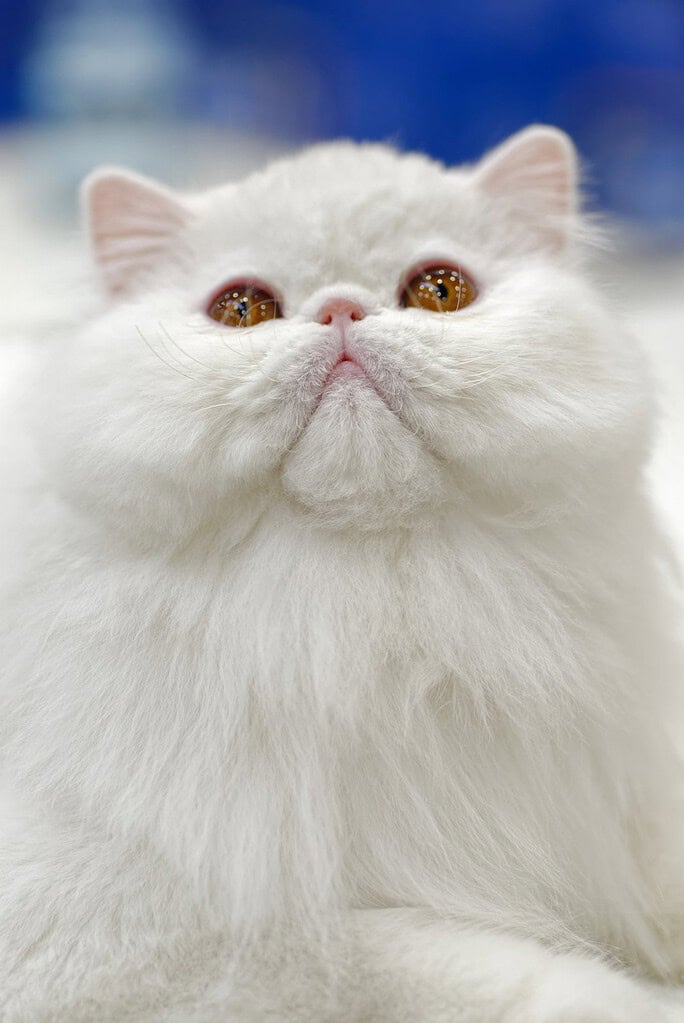
Call your vet if the meowing is new, sudden, louder at night, or comes with any other change. Excessive vocalization in cats is a recognized sign of several treatable conditions, and it is especially meaningful in cats over ten. Things a vet will want to rule out include:
- Hyperthyroidism — often paired with weight loss despite a big appetite
- Pain — arthritis, dental disease, urinary problems
- High blood pressure or kidney disease
- Cognitive dysfunction — the classic pattern is an older cat howling in an empty room at 3 a.m., disoriented
- Hearing loss — deaf cats get louder because they cannot hear themselves
We are not vets and this is not a diagnosis. But “my old cat suddenly started yowling at night” is a genuinely common way that thyroid disease and cognitive decline first get noticed, and it is worth taking seriously rather than waiting it out.
How to get a noisy cat to quiet down
| If the meowing is… | Most likely cause | First thing to try |
|---|---|---|
| At dawn, near the bowl | Learned food request | Timed feeder, stop hand-feeding on demand |
| All evening, following you | Boredom | Two wand-play sessions daily |
| At a closed door | Territory access | Better bed on your side, or open the door |
| New, loud, at night, senior cat | Possible medical cause | Vet appointment, bloodwork |
| Yowling, restless, unspayed | Heat cycle | Talk to your vet about spaying |
One thing not to do: punishment. Spraying, shouting or shutting a cat away raises stress, and stressed cats get louder, not quieter.
The meow you should worry about most
The one at the door. Cats who yell to go out sometimes get their way, and a cat outside without ID is a cat nobody can return. We make a $38 designer acrylic NFC smart tag — light enough for a breakaway cat collar, tapped by any phone with no app needed on the finder’s end, with your details engraved on the back as backup, no subscription, made in the USA. The free Lohji app keeps vaccine history, medical records and voice notes in one place, in 54 countries and 16 languages. That is our product and our bias, stated plainly.
Cat meowing FAQ
Why does my cat meow at night?
Usually hunger, boredom, or a request to be let somewhere — cats are naturally most active at dawn and dusk. In cats over ten, night yowling can also signal cognitive dysfunction, hyperthyroidism or high blood pressure, so a new night-time habit in an older cat deserves a vet visit.
Why is my cat suddenly meowing so much more than usual?
Sudden change is the key word. Look for a recent change in the household, and if there is not one, call your vet. New vocalization is a symptom, not a habit.
Should I ignore my cat when it meows?
Ignore attention-seeking meows once medical causes are ruled out, and reward quiet behavior instead. Never ignore a cry that sounds distressed, comes with straining in the litter box, or is paired with hiding — especially in male cats, where urinary blockage is an emergency.
Do some cat breeds meow more?
Yes. Siamese, Bengal, Oriental Shorthair and Sphynx are widely described as talkative breeds. If you adopted a talker, some of this is not fixable and probably was not meant to be.
Why does my cat meow and then run away?
They are asking you to follow. Cats will lead people to a closed door, an empty bowl, or a litter box they want cleaned. Follow once and see where you end up.
More cat behavior decoded: why cats purr, knead and sit in boxes, and why your cat goes wild at 3 a.m.
Get Your Tag
If your cat talks their way out the door, one tap on their tag is all a neighbor needs.