Why Does My Cat Stare at Me? 7 Real Reasons (and What They Actually Want)
 Shiloh’s House Team
·
·
5 min read
Shiloh’s House Team
·
·
5 min read
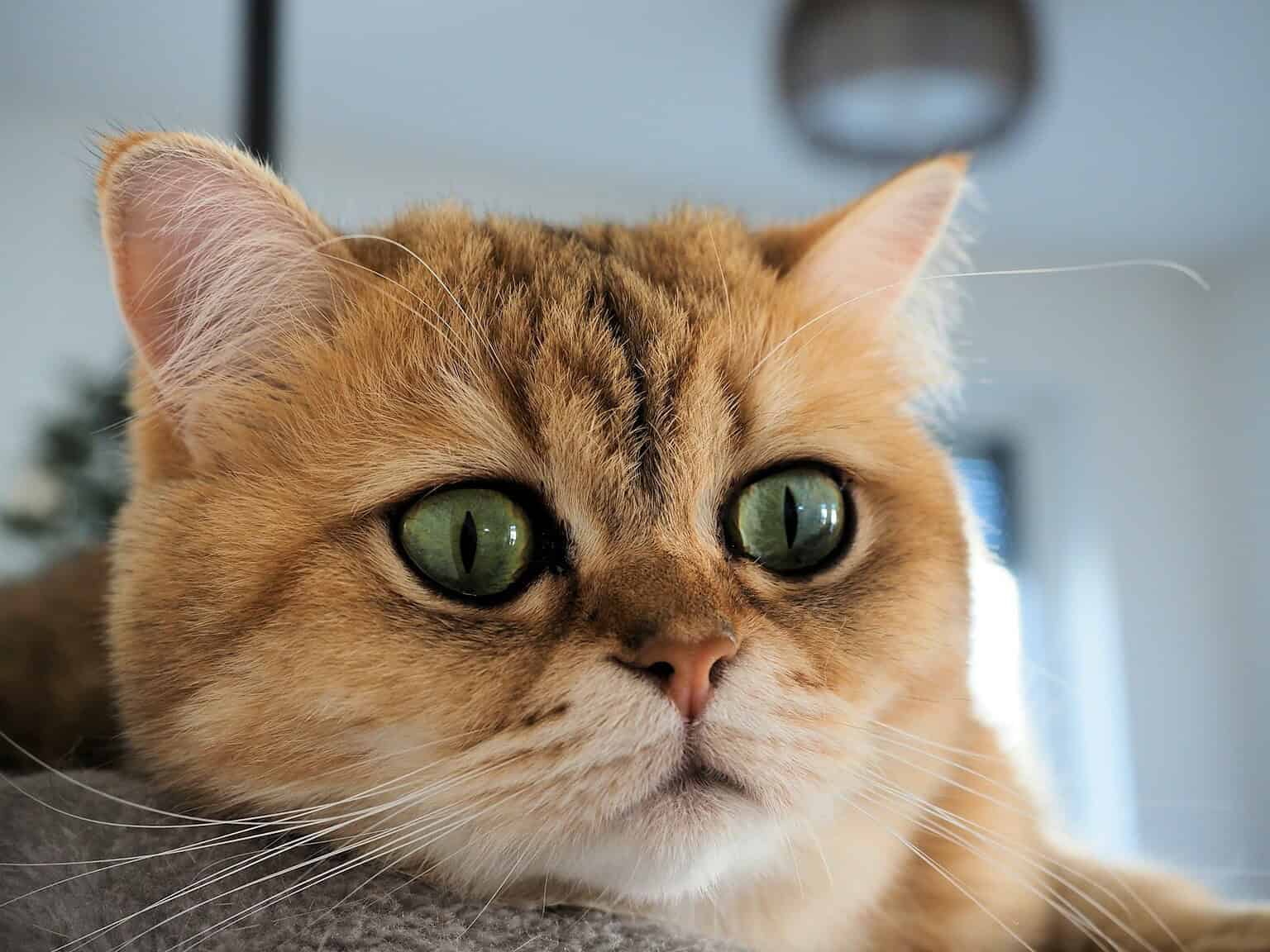
Most of the time, your cat is staring at you because they want something — food, attention, or a door opened — and staring is the request that has worked before. The rest of the time it is curiosity, affection, mild suspicion, or the plain fact that you are the most interesting moving object in the room. Staring is only a red flag when it comes with a blank expression, dilated pupils that never change, or a cat who seems to be looking through you rather than at you.
1. They want something from you
Cats are excellent observational learners. If staring at you from three feet away has ever produced dinner, a lap, or a door being opened, they have filed that away as a working strategy and will use it forever.
Look at where they are sitting. A cat staring at you from beside an empty bowl, from the doorway of a closed room, or from the exact spot where the treat jar lives is not being mysterious. They are pointing.
2. It is affection — check for the slow blink
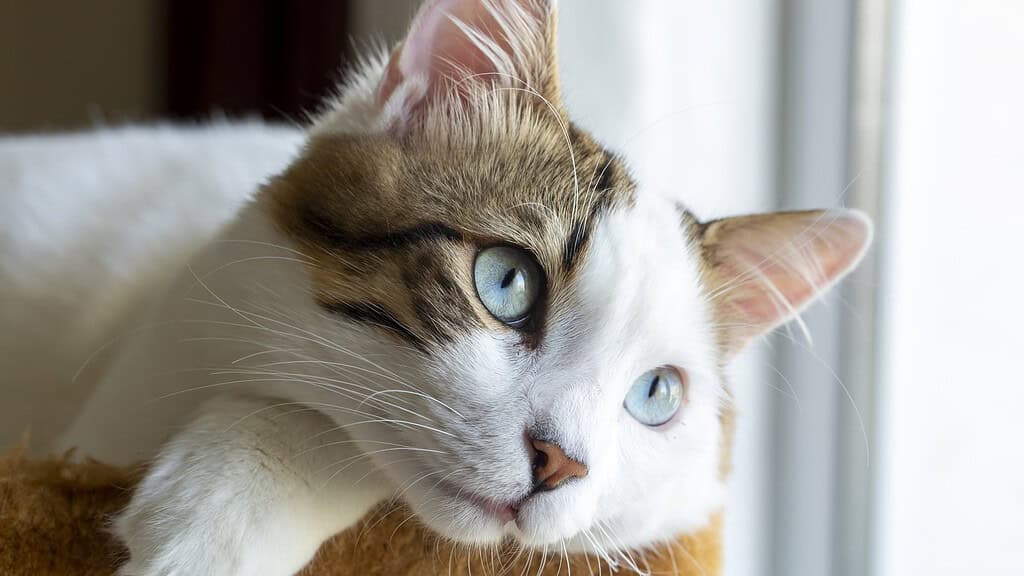
Research on human-cat communication has found that cats are more likely to approach a person who slow-blinks at them than one who does not. The whole gesture is a signal of non-threat: closing your eyes near another animal says you feel safe.
Try it. Catch their eye, narrow your lids, then close them slowly for a beat and open again. A good number of cats will return the blink. It is the closest thing to a mutual “we’re fine here” that the species offers.
3. They are hunting you — a little
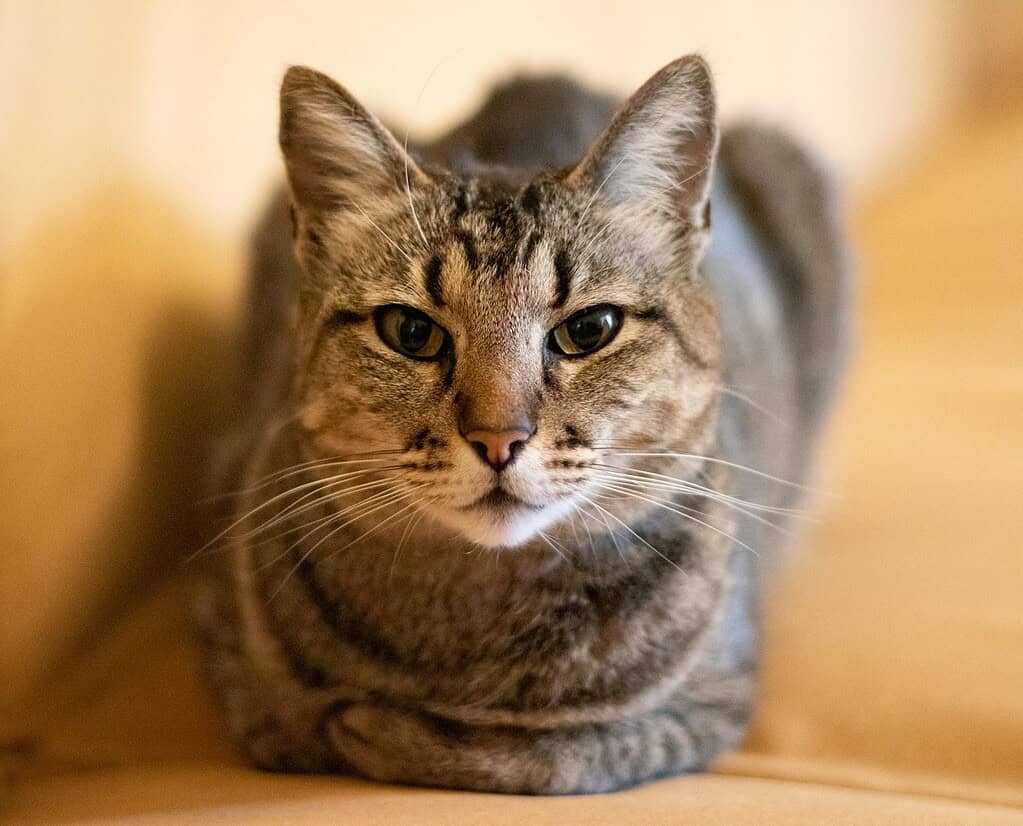
Fixed, low-bodied staring with a twitching tail tip is predatory focus, not affection. Your cat has spotted movement — your foot under a blanket, your hand on a keyboard — and the hunting sequence has switched on. The stare is the stalk phase.
If this ends in an ambush on your ankles, redirect it before it starts. A wand toy session that finishes with a real “catch” satisfies the sequence in a way that being told off never will. We covered good options in our roundup of the best cat toys of 2026.
4. You are new, or something about you is new
Cats stare at unfamiliar things while they gather information. A new haircut, unfamiliar shoes, a different perfume, a visitor on the sofa — all of it earns a long, unblinking assessment. This kind of staring usually comes with forward-facing ears and a still body, and it fades once they have decided you are still you.
5. It is a warning
A hard, unblinking stare with a stiff body, flattened or sideways ears, and a lashing tail is a request that you back off. In cat language, sustained direct eye contact between strangers is confrontational — which is exactly why cat-averse people who avoid eye contact often get approached first.
If you see this, look away and give space. Do not lean in, do not pick them up. It frequently shows up alongside overstimulation during petting, which is the same conversation from a different angle — we unpack it in why does my cat bite me.
6. They are watching you because you are their person
Cats keep tabs on the human who runs their day. Studies of feline attachment suggest most cats form secure bonds with their caregivers, and part of that is simply monitoring where you are and what you are doing. Staring from the doorway while you shower is not a judgment. It is a bond, expressed unnervingly.
7. Vision, age, or a medical reason
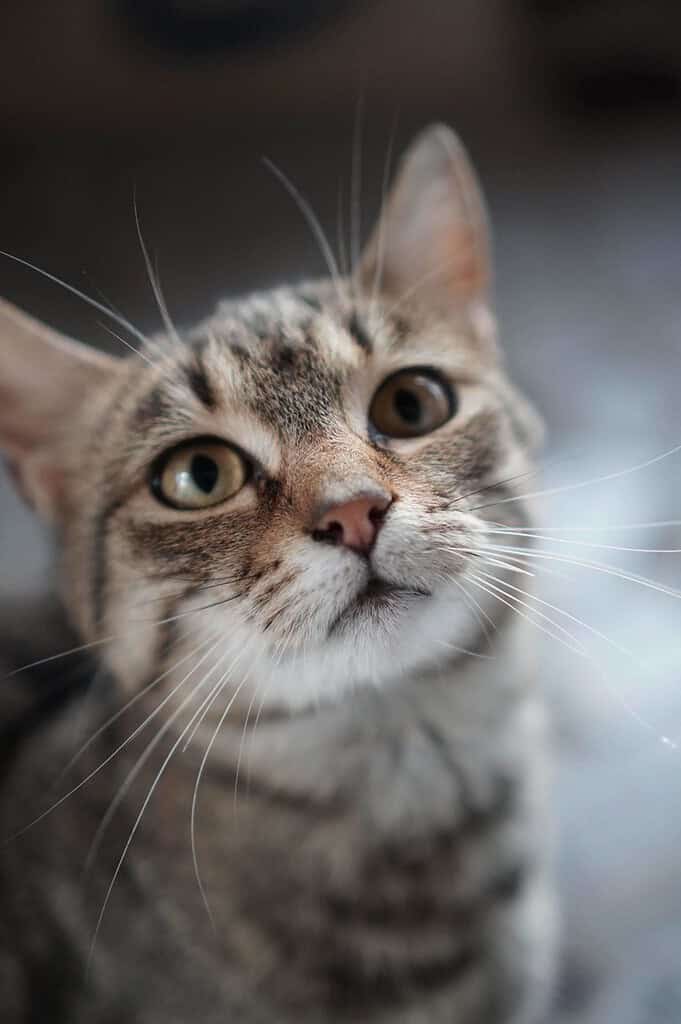
Blank staring — at a wall, into space, or through you — is the version worth taking seriously. Reasons to book a vet appointment include:
- Pupils that stay dilated in bright light, or one pupil larger than the other
- Staring at walls or corners, especially in a senior cat, which can indicate cognitive dysfunction
- Bumping into furniture, or a stare that seems to be aimed slightly off-target — possible vision loss
- Staring combined with sudden hiding, appetite change, or vocalising at night
High blood pressure and hyperthyroidism both show up in older cats and both affect vision. If the staring is new and the cat is over ten, it is worth a blood-pressure check.
Frequently asked questions
Why does my cat stare at me without blinking?
Unblinking usually means focus, not hostility — they are tracking you or waiting for something. Read the body underneath: relaxed and loose is fine, stiff with a twitching tail is a warning.
Why does my cat stare at me while I sleep?
Cats are crepuscular, so they are awake and active while you are not. You are the source of breakfast, and they are waiting. Some are also simply keeping watch over you.
Should I stare back at my cat?
Not with a hard, fixed gaze — that reads as a challenge. Soft eyes and a slow blink are the friendly version.
Why does my cat stare at me and meow?
That is a direct request, and the meow is aimed squarely at you — adult cats barely meow at each other. See why does my cat meow so much for what different meows tend to mean.
Why does my cat stare at nothing?
Cats hear and smell far more than we do, so a stare at an apparently empty wall is often a mouse in the cavity or a bird outside. Repeated blank staring in an older cat, though, deserves a vet visit.
The other thing worth watching
Cats who watch the door are often cats who eventually go through it. Even indoor cats slip out — and an indoor cat outdoors is the one least equipped to find their way home. A visible ID tag is what turns a found cat into a phone call. We make designer acrylic NFC smart tags at Shiloh’s House: light enough for a cat’s breakaway collar, tappable by any phone with no app needed for the finder, engraved on the back as a backup, no subscription. We are biased, of course — but our case for it is laid out in do indoor cats need ID tags, and you can see the tags themselves in the shop.
Get Your Tag
A lightweight designer acrylic NFC tag built for cat collars — tap with any phone, engraved backup, no subscription.