Why Does My Dog Sigh? What It Means and When to Worry
 Shiloh’s House Team
·
·
16 min read
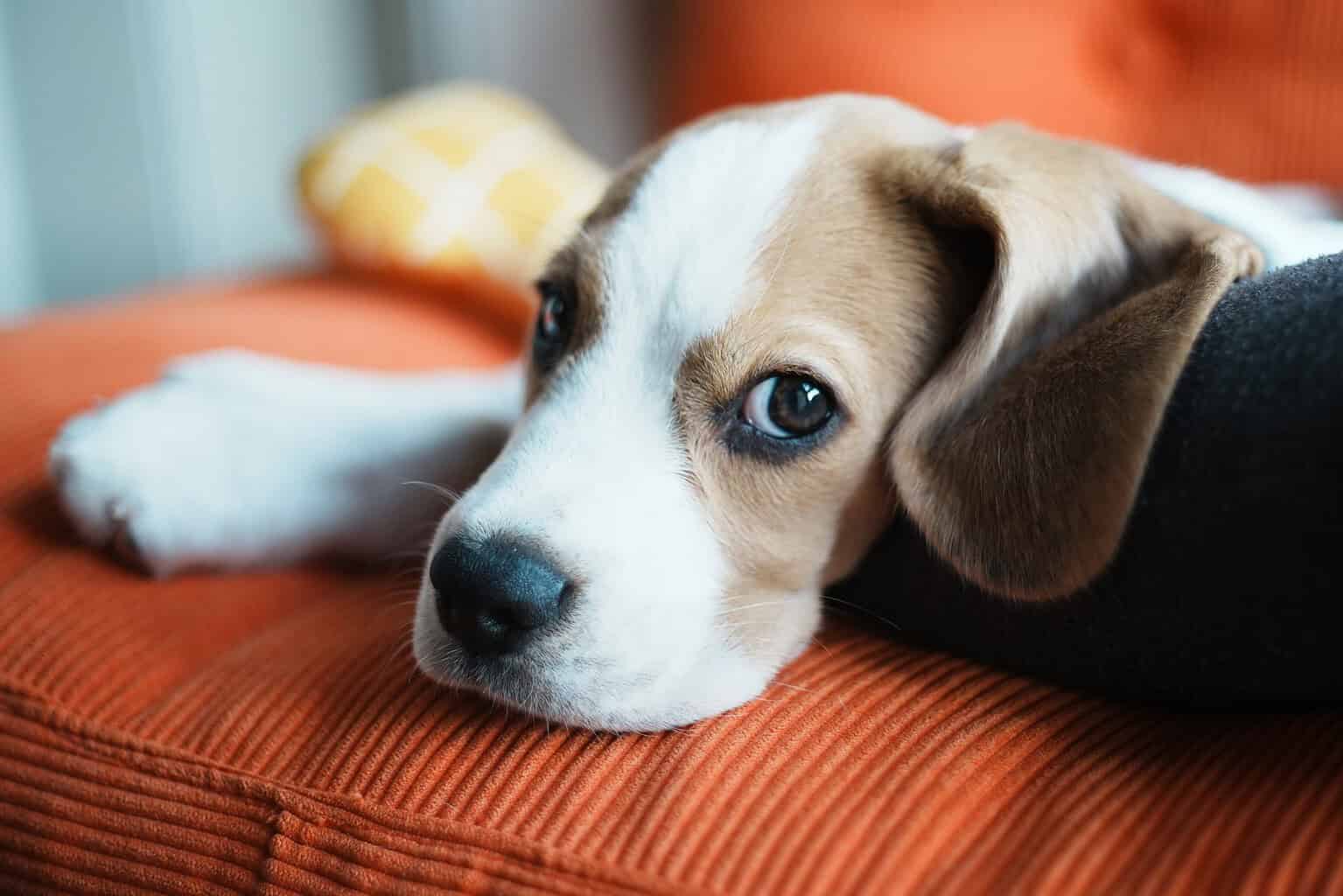
Most of the time, a dog sighs because they are relaxed and settling down, especially when the sigh comes with half-closed eyes and a head resting on the paws. A sigh with eyes wide open usually means mild disappointment, like a walk that did not happen. Dogs also sigh as a normal breathing reflex and sometimes when stressed. A sigh alone is rarely a problem, but sighing with coughing, labored or fast breathing, lethargy or signs of pain needs a vet.
Last updated: October 2026
Why do dogs sigh at all?
A sigh is a deep breath with a slow, drawn-out exhale. The American Kennel Club describes a dog’s sigh as an inhalation about twice the length of a normal breath, followed by a pronounced exhale. Sometimes it comes through the mouth, the way ours do, but dogs often sigh through the nose with the mouth closed.
Before it is ever an emotion, a sigh is a piece of basic lung maintenance. In 2016, researchers at UCLA and Stanford published a study in Nature that traced the sigh reflex to two tiny clusters of about 200 neurons each in the brainstem of mice. The team’s paper describes sighs as breaths that happen spontaneously every few minutes to reinflate alveoli, the tiny air sacs in the lungs where oxygen and carbon dioxide are traded. UCLA notes that people sigh on average every five minutes, or about 12 times an hour, mostly without noticing.
Dogs do the same thing. AKC explains that this reflex happens in all mammals, including dogs, multiple times every hour to keep the lungs working well. Those quiet maintenance sighs are easy to miss. The sighs you actually hear, the dramatic flop-and-exhale on the couch, are the ones that carry a message about how your dog feels.
The Nature authors also point out that sighing rises with stress and low oxygen, and they propose that the sigh circuit takes in emotional input as well as physical input. That fits what dog owners see every day: the same breath can mean “ahh, comfy,” “fine, no walk then” or “this place makes me nervous.” Context is how you tell them apart.
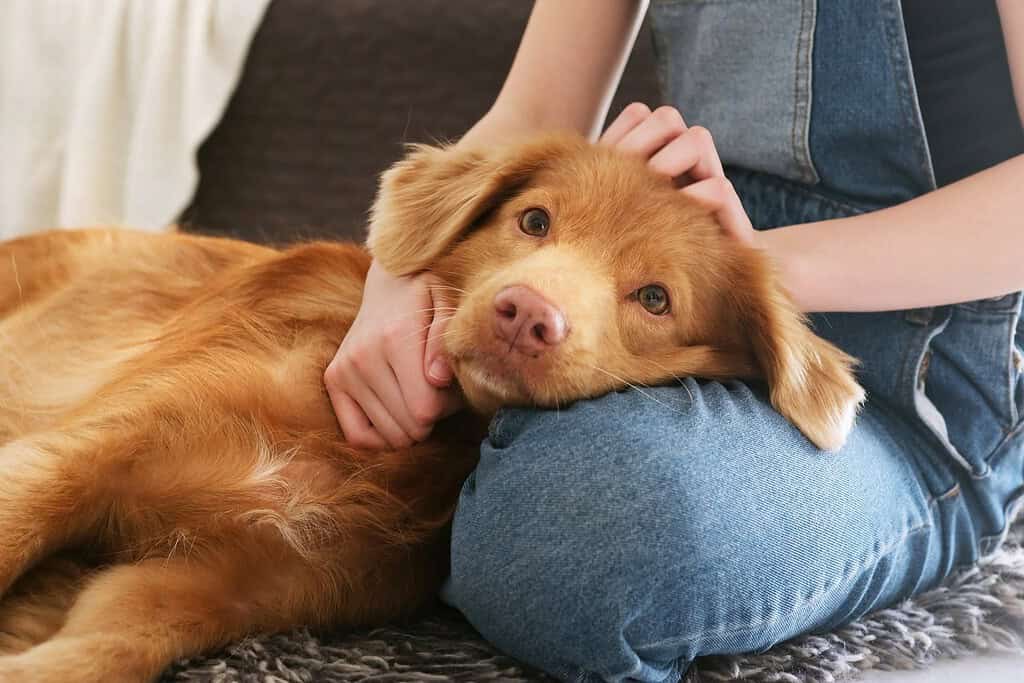
What does it mean when a dog sighs with half-closed eyes?
The single most useful clue is your dog’s eyes. In its guide to how the sounds dogs make reveal their emotions, AKC says moans and sighs are the most common sounds of pleasure in dogs. A contented sigh usually comes with the dog lying down, head on the front paws. AKC puts the rule simply: when the sigh is combined with half-closed eyes, it communicates pleasure, and with fully open eyes, it communicates disappointment, along the lines of “I guess you are not going to play with me.”
A contented sigh comes with a soft body overall. AKC lists loose ears, a neutral tail, a soft expression in the eyes and a slightly open mouth as typical companions. You will often hear it after a walk, after dinner, during a belly rub, or when your dog leans into you on the sofa. If your dog also presses their weight against you, our guide on why dogs lean on people covers what that extra contact usually means.
The disappointed sigh looks different. The dog is lying down or sitting, but the eyes are open and alert and often fixed on you, the door or the leash hook. Maybe you picked up the leash and then set it back down, or dinner is over and nothing fell off the table. The dog has given up on the thing they were hoping for, at least for now. If that open-eyed gaze lasts a while, our post on why your dog stares at you can help you sort out what they want.
“For example, if the dog is curling up in his bed, and upon settling down he sighs, this likely indicates the dog would like to rest.”
Dr. Vanessa Spano, Senior Veterinarian and Board-Certified Veterinary Behaviorist, Schwarzman Animal Medical Center (American Kennel Club)
Why does my dog sigh when lying down or falling asleep?
The big sigh as a dog hits the bed is the one most owners notice, and it has a simple physical side. Samantha Palermo, DVM, told PetMD that the physical act of lying down can push out a breath, which comes out as a sigh. She says it is usually a one-time event followed by normal breathing.
There is an emotional side too. Dr. Spano, quoted by AKC, says a dog that sighs while curling up in bed is likely telling you they would like to rest. She also notes that what sounds like a sigh may simply be the deeper, slower breathing of a dog sliding into a restful state. A Fear Free certified trainer told PetMD that when his senior dog stretches out, finds the perfect sleeping position and sighs, he reads it as contentment, and that puppies show the same happy sighs and low moans.
Older dogs with stiff joints add one more layer. AKC notes that a senior dog with arthritis may take a while to get comfortable and then let out a sigh of relief once they do. That sigh is a good sign in the moment, but a long, effortful search for a comfortable position is worth watching. A dog who circles, sits, stands up again and repeats the process night after night may be sore.
Dogs sleep a lot, so you will hear a lot of these settling sighs. If you are wondering whether your dog’s total sleep time is normal for their age, see why your dog sleeps so much.
Can sighing be a calming signal or a sign of stress?
Yes. Not every sigh is a happy one. Dr. Spano told AKC that if a dog is in a chaotic setting and also shows other signs of anxiety, such as yawning or lip licking, the sigh is likely telling you the dog is stressed. Because deep breathing helps counter stress, AKC suggests a sigh can be the body’s own calming response.
This is why it helps to look at the whole dog, not just the sound. PetMD lists pacing, trembling, a tucked tail, lip licking, yawning and hypervigilance as other signs of stress. AKC adds ears flat against the head, excessive panting and a hunched posture. A heavy sigh in the vet’s waiting room, next to a tense body and repeated yawns, reads very differently from the same sigh on your couch. If yawning is part of the picture, our guide to why dogs yawn so much explains when a yawn is tiredness and when it is a stress signal.
Sighs can also be a polite request to stop. A trainer quoted by PetMD says that if your dog sighs repeatedly while you are cuddling them, they may be uncomfortable and saying “that’s enough.” Signs of that include a stiff body, flattened ears and leaning or pulling away. Give them space and let them come back to you.
When stress is the cause, the fix is the situation, not the sigh. AKC recommends removing the dog from the stressful setting, and using desensitization and counterconditioning to change how they feel about it over time. For dogs who struggle with storms, travel or vet visits, our comparison of dog calming aids covers wraps, pheromones and supplements to ask your vet about.
What does each kind of dog sigh mean?
Use this table as a quick translator. Read the sigh together with the eyes, the body and what just happened.
| Sigh context | Likely meaning | What to do |
|---|---|---|
| Lying down, head on paws, eyes half-closed, loose body | Contentment or pleasure | Nothing. Enjoy it. |
| One sigh while flopping into bed, then slow, even breaths | Settling in to rest; the act of lying down pushes out a breath | Let them sleep |
| Eyes wide open, watching you, the leash or the door | Disappointment; the expected walk, game or food did not happen | Check that daily exercise and play needs are met |
| Repeated sighs on a quiet, rainy day | Boredom or frustration | Puzzle toy, sniff games or a short training session |
| Sighs that reliably get petting or play | Learned attention seeking | Harmless; reward calm behavior on your schedule |
| Repeated sighs during a hug or cuddle, stiff body | “That’s enough” discomfort | Stop and give space |
| New or busy place, plus yawning, lip licking, tucked tail | Stress or anxiety | Move to a calmer spot; work on desensitization |
| Senior dog sighs after a long struggle to get comfortable | Relief, possibly joint pain | Ask your vet about arthritis at the next visit |
| “Sighs” with coughing, wheezing, effortful or fast breathing | Possibly not a sigh; may be a breathing or heart problem | Count sleeping breaths and call your vet promptly |
The bottom two rows are the ones to take seriously. The rest are normal dog communication.
When does sighing mean it is time to see the vet?
A true sigh is rarely a medical problem by itself. AKC says sighing is usually not a cause for concern unless you suspect your dog is doing it because they are anxious or in pain. Dr. Spano also told AKC that sighing is not a typical sign of pain in dogs, although it is possible. The bigger risk is that something else gets mistaken for a sigh. AKC notes that other vocalizations and breathing problems are sometimes misread as sighing, and those can point to an underlying health issue.
So the question to ask is not “how often does my dog sigh?” but “what else is going on?” PetMD says it is hard to define excessive sighing, because normal varies so much between dogs, but that any new, frequent or unusual sighing is worth a vet visit to rule out medical causes. Pay close attention if the sighing shows up alongside any of these:
- Coughing or gagging. VCA lists coughing and gagging among the signs associated with heart disease and heart failure in dogs.
- Labored breathing. PetMD describes labored breathing as a pet that seems to be having a hard time getting air in and out, and says the dog should be seen right away. AKC adds that you should not delay calling your vet if your dog is breathing heavily or gasping.
- Fast breathing at rest or asleep. VCA says sleeping or resting rates that are consistently above 30 breaths per minute are abnormal.
- Wheezing. A high-pitched whistle can mean a blocked or narrowed airway, according to PetMD and AKC.
- Restless nights. VCA lists restlessness, trouble finding a comfortable sleeping position, and a new habit of sleeping sitting up or in a sphinx position as possible heart signs.
- Lethargy or a quiet, withdrawn mood. VCA includes a depressed attitude, weakness and reduced ability to exercise.
- Signs of pain. AKC and PetMD list limping, restlessness, panting, wincing when touched, hiding, shaking, changes in eating or sleeping, and new aggression or withdrawal.
- Blue or gray gums, collapse or fainting. These are emergencies.
Heart disease deserves a special mention. Cornwall Veterinary Cardiology explains that when dogs develop congestive heart failure, fluid builds up in or around the lungs and the breathing rate rises, even during sleep. Those extra-deep breaths can look like sighs at midnight. If your dog has a heart murmur or heart diagnosis, treat new heavy breathing in sleep as a reason to count and call.
Panting is another sound that can blur with sighing. Panting is normal after exercise, in heat or when excited, but PetMD flags panting at rest, panting in cool temperatures, difficulty breathing, and panting with lethargy, drooling or vomiting as reasons to contact your vet. Our guide on why your dog pants so much walks through normal and worrying panting in detail.
Whining and whimpering are the other sounds to separate out. Dr. Spano told AKC that dogs whine and whimper more often than they sigh, and that a whimper when you touch a sore leg likely means pain and calls for a vet check. If your dog’s sighs come mixed with whining, see why dogs whine so much for the common causes.
When you call, bring a short phone video of the breathing, your sleeping breath count and a list of anything else that has changed. If breathing is labored, the gums look blue or your dog collapses, go to an emergency clinic.
How do you count your dog’s sleeping breathing rate?
Counting breaths is the easiest way to tell a normal sigh from a breathing problem, and it takes one minute. VCA says a normal breathing rate while resting calmly or sleeping is between 15 and 30 breaths per minute for normal dogs, and lower rates are fine if your dog is otherwise acting normally. In the 2012 study of 114 healthy dogs, the average sleeping rate was just 13 breaths per minute, and no dog averaged more than 23.
- Wait until your dog is asleep in a comfortable room. Don’t count while they are panting.
- Watch the chest. One rise and one fall equals one breath.
- Count for 30 seconds and multiply by 2, or count for a full 60 seconds.
- Write the number down with the date. A notebook or phone note works.
If the number is above 30, Cornwall Veterinary Cardiology advises waiting a few minutes and counting again to see if it is consistently raised. VCA says to count a few times over the next couple of hours, and to contact your vet as soon as possible if the rate stays high. A raised rate plus other signs, especially after hours, may mean a trip to the emergency clinic.
Do flat-faced breeds sigh and snore differently?
Pugs, French bulldogs, English bulldogs and other short-nosed breeds can be noisy breathers, and owners often lump their snorts and huffs in with sighs. That is risky, because the noise itself can be a symptom. Cornell’s Riney Canine Health Center lists noisy breathing such as snoring, wheezing and snorting, along with labored breathing, open-mouth breathing, reduced ability to exercise, gagging when swallowing, bluish gums and collapse, as symptoms of brachycephalic obstructive airway syndrome, or BOAS.
The University of Cambridge BOAS research group puts it bluntly: dogs with a normal upper airway breathe quietly, and snoring and snorting are signs of airway obstruction. Cambridge also notes that brachycephalic dogs can develop obstructive sleep apnea, with periods of no breathing during sleep. UC Davis warns that loud breathing, snoring and snorting are often written off as “normal for the breed,” which can delay diagnosis.
For a flat-faced dog, a soft, single sigh as they settle is still just a sigh. But nightly loud snoring, gasping awake, pauses in breathing, or a dog who can only sleep sitting up or with a toy propping the mouth open should be checked by your vet. Surgery and medical management can make a big difference for moderately and severely affected dogs.
How can you keep track of your dog’s sighs, snores and health notes?
Once you start paying attention to your dog’s sighs, you will notice how expressive that sleepy, half-closed-eye face really is. It is worth saving. The free Lohji app from Shiloh’s House turns one photo of your dog into a 3D animated-movie-style character, so you can turn that blissed-out nap face into a sticker to send your family or a phone wallpaper. You can also make collector cards and short 6- or 10-second videos. Download Lohji on the App Store or Google Play.
Lohji also holds your dog’s pet profile, and that is the practical part. Its medical and behavior notes are a good place to record things like “French bulldog, snores loudly, avoid heat,” “on heart medication, normal sleeping breathing rate about 18,” or “nervous with strangers, may sigh and lick lips, approach slowly.” If your dog ever slips out the door, those notes travel with them.
That is because the profile connects to a Shiloh’s House Smart Tag. Anyone who finds your dog taps the tag with their phone, with no app needed, and sees your dog’s live profile with one-tap Call, Text and Map, voice messages from your family, up to three contacts, and the medical and behavior notes you wrote. For a dog with a heart or breathing condition, that context can matter a lot to the stranger holding the leash.
Let their profile speak for them
Shiloh’s House Smart Tags are laser-engraved premium acrylic with a “Tap Phone Here” NFC back. A finder taps it to see your dog’s live profile, including medical and behavior notes and one-tap Call, Text and Map. Waterproof, made in the USA, $38.
Frequently asked questions
Is it normal for a dog to sigh a lot?
Usually, yes. Dogs sigh as a breathing reflex several times an hour and also as a way of showing contentment, boredom or disappointment. What counts as normal varies from dog to dog. PetMD advises a vet visit if sighing is new, frequent or unusual for your dog, and especially if it comes with coughing, fast or labored breathing, lethargy or signs of pain.
Does a dog sigh mean they are happy?
Often it does. AKC says moans and sighs are the most common sounds of pleasure in dogs. A sigh with half-closed eyes, a head on the paws and a loose, relaxed body usually signals contentment. A sigh with eyes wide open and watching you is more likely disappointment that a walk, game or treat did not happen.
Why does my dog sigh when I stop petting them?
That open-eyed sigh is usually mild disappointment, the dog version of “oh, we’re done?” Some dogs also learn that sighing gets attention, because people respond with more petting. It is harmless. If you would rather not reinforce it, wait for a calm, quiet moment before you go back to petting so the sigh itself does not become the trigger.
Why does my dog sigh when I hug them?
It depends on the body language. A soft body and relaxed face during a cuddle suggest contentment. But a trainer quoted by PetMD says repeated sighs during cuddling can mean your dog feels squished and is politely saying “that’s enough.” A stiff body, flattened ears, turning the head away or pulling back are signs to loosen your hold and let them choose.
How many breaths per minute is normal for a sleeping dog?
VCA says a normal sleeping or resting rate is between 15 and 30 breaths per minute, and lower is fine if your dog is otherwise well. A study of 114 healthy dogs found an average sleeping rate of 13. Rates that stay above 30 when counted several times are considered abnormal, and you should contact your vet as soon as possible.
Can sighing be a sign of heart disease in dogs?
A normal sigh is not, but deep, effortful or fast breathing that looks like sighing can be. VCA lists fast breathing while sleeping, labored breathing, coughing, restlessness at night, trouble getting comfortable, weakness and a quiet, withdrawn mood among signs of heart disease and heart failure. If you see these, count your dog’s sleeping breaths and call your vet promptly.
Sources
- American Kennel Club — Why Do Dogs Sigh? What the Sound Means, and Doesn’t (2025)
- American Kennel Club — How the Sounds Dogs Make Reveal Their Emotions (2014)
- PetMD — Why Do Dogs Sigh? 5 Common Reasons (2024)
- VCA Animal Hospitals — Home Breathing Rate Evaluation (n.d.)
- Research in Veterinary Science — Rishniw et al., Sleeping respiratory rates in apparently healthy adult dogs (2012)
- Cornwall Veterinary Cardiology — Canine Sleeping Respiratory Rate Chart (2018)
- UCLA Newsroom — UCLA and Stanford researchers pinpoint origin of sighing reflex in the brain (2016)
- Nature — Li et al., The peptidergic control circuit for sighing (2016)
- Cornell University College of Veterinary Medicine — Brachycephalic Obstructive Airway Syndrome (n.d.)
- University of Cambridge Department of Veterinary Medicine — BOAS Recognition and Diagnosis (n.d.)