How to Keep a Dog Warm at Night: Beds, Blankets and Safe Room Temperatures
 Shiloh’s House Team
·
·
16 min read
Keep your dog warm at night with a thick bed raised off the floor, a washable blanket to burrow into, and a sleeping room that stays above about 60°F for most dogs and closer to 68°F for small, short-coated, senior or very young dogs. Add a self-warming pad or a low-voltage heated pad with a chew-resistant cord for dogs who run cold. Skip space heaters near bedding, use straw (not blankets) in outdoor shelters, and call your vet if shivering turns into weakness or confusion.
Last updated: December 2025
How can you tell if your dog is cold at night?
Dogs run warmer than people, but that does not make them immune to a chilly bedroom. PetMD notes that a dog’s average temperature sits around 101.5°F, give or take a degree, and that hypothermia sets in when it drops to about 98 to 99°F.
Most dogs tell you when they are cold. Watch for these signs, many of which Cornell’s Riney Canine Health Center also lists:
- Curling into a tight ball with the nose tucked under the tail
- Shivering or trembling, even while lying down
- Seeking you out, pressing against you or other pets, or trying to get under the covers
- Restlessness, getting up and resettling over and over
- Whining or a hunched posture with a tucked tail
Curling up is a heat-saving reflex, not just a cute sleep position. A veterinary behaviorist explained it this way:
“When dogs sleep in the wild, especially where it’s cold, they’ll dig a nest and curl up into it. This gives them warmth — tucking into a ball conserves body heat.”
Dr. Margaret Gruen, DVM, NC State University College of Veterinary Medicine Animal Behavior Service, Vetstreet
The flip side is useful too. A dog who sprawls out flat on its side is usually comfortable, or even a bit warm. A dog who stretched out in October but sleeps in a tight knot in December likely needs more warmth.
Which dogs need extra help staying warm at night?
Some dogs can sleep comfortably in a cool house. Others start losing heat the moment the thermostat drops. Cornell’s canine health experts say cold tolerance depends on age, size, nutritional status, health and coat, and they single out a few groups:
- Small dogs. More skin surface relative to body mass means faster heat loss.
- Short or thin coats. Greyhounds, Whippets, Boxers and similar breeds have little natural insulation.
- Puppies. They cannot regulate body temperature well and carry little body fat.
- Seniors. Cornell notes older and underweight dogs may struggle to regulate body temperature.
- Dogs with arthritis or medical conditions. The AVMA says pets with diabetes, heart disease, kidney disease or hormonal imbalances such as Cushing’s disease may have a harder time regulating temperature.
Arthritic dogs deserve a special mention. The AKC notes that warmth can help ease sore muscles and stiff joints, which is why a warm, supportive bed matters more for them than for a young Labrador.
A dog in two or more groups, such as a 12-year-old Italian Greyhound, deserves the warmest spot in the house. For the outdoor side of the same question, see our guide on how cold is too cold for dogs.
It also helps to write these needs down. If a cold, arthritic senior ever slips out on a winter night, whoever finds them should know right away that they need warmth and gentle handling. You can add medical notes like “arthritis, needs a warm bed, on daily pain medication” to your dog’s free Smart Tag profile in the Lohji app (App Store · Google Play), and edit them any time. While you are in there, you can turn one photo of your dog into a cozy cartoon wallpaper for those long December evenings.
Let a finder know your dog needs warmth
A Shiloh’s House Smart Tag opens your dog’s live profile with medical notes and one-tap calling when anyone taps it with a phone, no app needed.
What is the best room temperature for dogs at night?
There is no single magic number, but there is a clear floor. The RSPCA advises keeping indoor temperatures between 10°C and 25°C (about 50°F to 77°F) and warns that dogs more susceptible to cold may start to struggle below that range. For dogs kept outside, it says a safe heat source should keep the sleeping area from dropping below 10°C (50°F).
Fifty degrees is a minimum, not a goal. Cornell’s rule of thumb is simple: if it is too cold for you, it is likely too cold for your dog. The table below gives our suggested starting points for the room where your dog sleeps, built around that RSPCA floor and veterinary guidance on which dogs chill fastest.
| Dog type | Suggested night room temperature | Extras that help |
|---|---|---|
| Healthy adult, thick or double coat (Husky, Golden) | 60–68°F | Bed off the floor; may prefer no blanket |
| Healthy adult, medium coat (Lab, Beagle) | 62–70°F | Bolster bed and a fleece blanket |
| Small or toy breed (Chihuahua, Yorkie) | 66–72°F | Cave or hooded bed, burrow blanket |
| Short or thin coat (Greyhound, Whippet, Boxer) | 66–72°F | Soft fleece pajamas, self-warming pad |
| Senior or arthritic dog | 68–72°F | Orthopedic bed, low-voltage heated pad |
| Puppy under about 4 months | 68–72°F | Draft-free crate, snuggle blanket, supervision |
| Any dog, absolute minimum | Above 50°F | RSPCA floor for a dog’s sleeping area |
Measure at dog level. Warm air rises, so a thermostat on the wall can read several degrees higher than the floor where your dog actually sleeps. A cheap digital thermometer set next to the bed tells you the truth.
Also watch for the other extreme. A dog who pants, moves off the bed, or sleeps on bare tile is telling you the room is too warm.
What kind of bed keeps a dog warmest overnight?

The bed matters more than the thermostat for most dogs, because the biggest heat thief at night is the floor. Tile, hardwood and concrete pull warmth out of a body lying on them, and cold air pools low in a room. Cornell’s winter guidance for dogs who must live outdoors calls for dry bedding elevated off the ground, and the same physics applies inside your house. Getting your dog even a few inches off the floor makes a noticeable difference.
Start with placement. Put the bed against an interior wall, away from exterior doors, sliding glass doors, drafty windows and floor vents that cycle hot and cold. An upstairs bedroom is usually warmer than a basement or a garage-adjacent laundry room. If your dog sleeps in a room with a lot of glass, closing heavy curtains at night cuts the draft that pours off cold windows.
Next, think about the bed’s shape. Different designs hold heat in different ways:
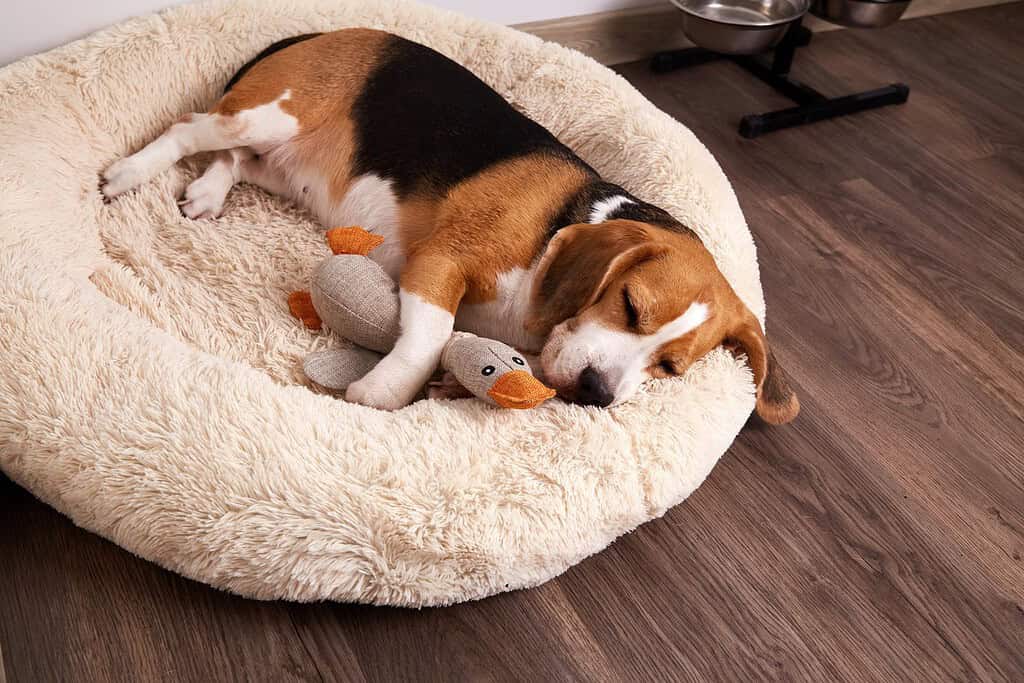
- Bolster or donut beds have raised sides that block drafts and give a curled-up dog something to press against. They suit dogs who naturally sleep in a ball.
- Cave, hooded or burrow beds have a fabric roof that traps a pocket of warm air. Small, short-coated dogs and anyone who likes to tunnel under covers tend to love them.
- Orthopedic foam beds put a thick layer of insulation between your dog and the floor while cushioning sore joints. They are the usual pick for seniors and arthritic dogs.
- Elevated cot beds lift a dog off cold ground but let air flow underneath. They are great in summer and less so in winter unless you add a thick pad or blanket on top.
Size matters as well. A bed that is too large leaves empty space your dog has to heat, while one that is snug enough for them to curl up with their back against the side holds warmth best. For specific models we have tested and compared, see our roundup of the best dog beds.
Blankets are the easiest upgrade. Many dogs circle, dig and push bedding around before they lie down, which is the same nest-building instinct Dr. Gruen described. A loose fleece blanket in the bed lets them build that nest and pull warmth around themselves. Burrowers will tunnel straight under it, and that is fine for a healthy adult dog who can get out whenever they want.
Choose blankets with care. PetMD advises a lightweight, breathable blanket that is not too large for the space, and warns against loose threads, tassels and fringe, which can be chewed and swallowed. Avoid thick, fuzzy fibers that tempt a puppy to suck or chew. Wash bedding regularly, because warm, damp, dirty fabric is where bacteria thrive.
Crate sleepers need the same thinking. A breathable cover or blanket over the top and three sides of a wire crate blocks drafts, but leave the front open for airflow and never pair a full cover with an electric pad, because heat builds fast in a closed crate.
Finally, consider sharing your warmth. Many owners let their dog sleep on or beside the bed in winter, and a dog pressed against a person is about as warm as it gets. If that is not your style, putting your dog’s bed in your bedroom still helps, because one occupied, closed room stays warmer than an empty hallway. Whatever you choose, make sure your dog can move away from the warm spot if they overheat. Every good warm-bed setup gives them a choice.
Are heated dog beds and pads safe to leave on overnight?
They can be, but not every warming product belongs in an unsupervised bedroom. It helps to separate the two main types.
Self-warming beds and pads use no electricity. A reflective or insulating layer, often a Mylar-style lining, bounces your dog’s own body heat back to them. They cannot overheat or burn, there is no cord to chew, and they are the safest choice for overnight use, crates and dogs who chew.
Electric heated beds and pads actively add warmth. The AKC recommends looking for a chew-resistant cord kept out of reach, an automatic shutoff, a non-skid bottom, and ideally a thermostat that adapts to your dog’s body temperature. Never share a human heating pad or electric blanket with your dog. Pet versions run on low voltage and heat to a temperature suited to dogs.
The risks are burns and chewed cords. AKC’s veterinary expert, Dr. Jerry Klein, says supervised use is always best and that regular dog beds should be the go-to for overnight sleeping. PetMD adds that a chewed electrical cord can cause mouth burns, electrocution or fluid in the lungs. Dogs who cannot easily get up, such as seniors with weak hind legs or dogs recovering from surgery, are most at risk of burns because they cannot move off the heat.
Comparing specific products? See our tested picks for the best heated pet beds.
Should your dog wear a sweater or pajamas to bed?
Sometimes yes, often no. Clothing is helpful for the right dog and a nuisance or hazard for the wrong one.
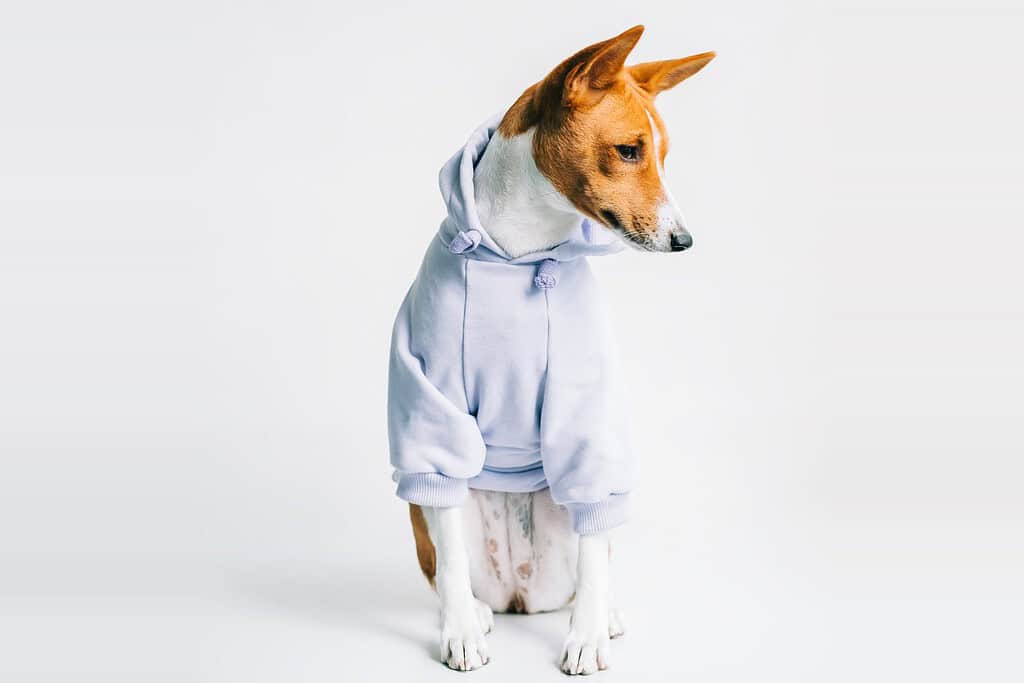
Sleepwear makes sense for dogs who genuinely struggle to hold heat: hairless breeds, Greyhounds, Whippets, Italian Greyhounds, Chihuahuas, and very lean or elderly dogs. For these dogs, a soft, stretchy fleece or knit layer can keep the core warm on cold nights when the room dips. Cornell recommends jackets or sweaters for smaller breeds, older dogs and thin-coated dogs in winter, and the same logic carries indoors.
Skip it for most dogs with a medium or thick coat. A Lab or Husky in pajamas is more likely to overheat than to benefit, and their fur already does the job. Also skip clothing on any dog who chews fabric, because swallowed pieces can cause a blockage.
If you do use sleepwear, follow a few rules:
- Choose something soft, breathable and stretchy, with no zippers, buttons, hoods or dangling ties.
- Make sure it fits snugly but lets your dog lie down, curl up and urinate normally.
- Check for rubbing under the front legs, which is where irritation shows up first.
- Take it off if your dog pants, scratches at it or seems restless.
The AKC cautions that clothing should never be used on an unattended dog as a substitute for proper care. Treat pajamas as an add-on to a warm room and a good bed, not a replacement. Winter fabrics can also aggravate itchy, flaky skin, so if your dog scratches more in the cold months, read our guide to dry skin on dogs in winter. For daytime layers, see our picks for the best dog sweaters.
How do you keep an outdoor dog warm at night?
The best answer is to bring them inside. The AVMA says dogs and cats should be kept inside during cold weather and that no pet should be left outside for long periods in below-freezing weather. Cornell adds that a dog who lives mostly outdoors must be acclimated to the cold, have a double coat, have fresh unfrozen water and have an insulated, wind-protected shelter.
If your dog spends nights outside, the shelter needs to be right:
- Sized to hold heat. The Humane Society of the United States says it should be large enough for your dog to move comfortably but small enough to hold in body heat.
- Raised off the ground. The floor should sit a few inches up, covered with straw or cedar shavings.
- Protected at the door. Cover the doorway with waterproof burlap or heavy plastic and face it away from the wind.
- Insulated. The Alberta SPCA recommends insulation in the walls, roof and floor.
Use straw, not blankets. The Alberta SPCA says straw is best because it repels moisture and insulates, while blankets and towels absorb moisture and can freeze. Hay is not the same as straw either, because it soaks up water. Check bedding often and replace any that is damp or packed down.
Outdoor dogs also need more food in winter to fuel body heat, and water that will not freeze. A heated, outdoor-rated bowl solves that, and any heated pad used outside must be rated for outdoor use. When temperatures drop sharply, bring your dog in. For indoor ways to burn energy on those nights, try our ideas for indoor exercise for dogs in winter.
Is it safe to run a space heater for your dog at night?
Usually not, at least not unattended. Dogs knock heaters over, drag blankets around and lie as close to heat as they can get.
The numbers are sobering. NFPA’s Home Heating Fires report found that space heaters accounted for about one-third of home heating equipment fires from 2016 to 2020 but nearly nine out of ten of the deaths. The same report found that heating fires between midnight and 6 a.m. were only 13 percent of the total but caused 43 percent of the deaths, because people are asleep when they start.
NFPA’s safety tip sheet is clear on two points. Keep anything that can burn at least three feet away from a space heater, and turn portable heaters off when you leave the room or go to bed. A dog bed, a pile of blankets or a curious dog inside that three-foot zone is exactly the scenario to avoid. PetMD likewise warns never to use a space heater near your pet, especially with a blanket.
What are the signs of hypothermia, and when should you call the vet?
Being a little cold and being hypothermic are different things. The AKC defines mild hypothermia as a body temperature of 90 to 99°F, moderate as 82 to 90°F and severe as anything below 82°F. PetMD says any dog with a rectal temperature under 98 to 99°F needs treatment.
Signs progress as the body cools:
- Early: shivering, curling up tightly, cool ears and paws
- Moderate: stiff muscles, lethargy, clumsiness or confusion, pale gums
- Severe: shivering stops, collapse, slow breathing and heart rate, dilated pupils, unresponsiveness
That last point matters. The RSPCA notes that shivering stops when a dog becomes severely cold. A dog who has stopped shaking but is limp and sleepy is getting worse, not better.
If you suspect hypothermia, move your dog somewhere warm and dry, towel them off if they are wet, and wrap them in warm blankets. Warm, not hot, water bottles wrapped in a towel can help. Do not put a heating pad directly on a hypothermic dog. PetMD warns it can cause burns and shift too much blood to the skin, which can trigger shock. Then call your vet right away.
For walks on frigid mornings that follow cold nights, see our tested best dog winter coats.
Warm to the touch, or running a fever? Only a thermometer can tell you. Our guide does my dog have a fever shows how to take a reading and which numbers need a vet.
Frequently asked questions
Is my dog cold at night if they curl up in a ball?
Often, yes. Curling into a tight ball with the nose tucked in is a classic heat-saving posture, especially if it comes with shivering, restlessness or cool ears and paws. Some dogs simply like to sleep curled, so compare with how they sleep in warmer months. A dog who sprawls flat in summer but balls up in December probably needs a warmer bed or room.
What temperature is too cold for a dog to sleep in?
The RSPCA advises keeping a dog’s sleeping area above 10°C, or about 50°F, and many dogs are comfortable only well above that. Small, short-coated, senior, arthritic and very young dogs usually do best somewhere around 66 to 72°F. Measure at floor level, because the floor is often several degrees cooler than the thermostat reading on the wall.
Should I put a blanket on my dog at night?
Offer one rather than tucking your dog in. A loose fleece blanket in the bed lets your dog dig, nest and burrow under it if they want, and move away if they get warm. Choose a breathable, washable blanket without fringe or loose threads, and supervise puppies who might chew it. Healthy adult dogs can safely burrow under a light blanket.
Can I leave a heated dog bed on all night?
Only with the right product and the right dog. Choose a low-voltage pet bed with a chew-resistant cord, a thermostat and automatic shutoff, and make sure your dog can easily move off it. The AKC’s veterinary expert recommends supervised use and regular beds for overnight sleeping. Self-warming beds, which reflect body heat and use no electricity, are the safer overnight choice.
Do dogs need pajamas at night?
Most do not. Pajamas can help hairless, thin-coated, toy and very lean or elderly dogs in a cool house, but thick-coated dogs are more likely to overheat. Choose soft, stretchy fabric with no zippers or ties, check for rubbing under the front legs, and remove it if your dog pants or fusses. Never leave clothing on a dog who chews fabric.
Should outdoor dogs have blankets in their doghouse?
No. Blankets and towels soak up moisture and can freeze, which makes the shelter colder. The Alberta SPCA recommends dry straw instead, because it repels moisture and insulates. Raise the doghouse off the ground, cover the doorway, check the straw often, and bring your dog inside when temperatures drop sharply.
Sources
- PetMD — Hypothermia in Dogs: Signs and Treatment (2021)
- Vetstreet — Why Does My Dog Curl Up in a Ball When He Sleeps? (2012)
- PetMD — Blanket Safety for Pets (2023)
- American Kennel Club — Hypothermia in Dogs: How Cold Is Too Cold? (2023)
- American Kennel Club — Heated Dog Beds: Safety and Choosing the Right One (2021)
- Cornell University College of Veterinary Medicine — Winter safety tips (n.d.)
- AVMA — Cold weather animal safety (n.d.)
- RSPCA — Winter and Cold Weather Care for Dogs (n.d.)
- NFPA — Home Heating Fires report (2022)
- NFPA — Heating Safety tip sheet (n.d.)
- Humane Society of the United States — How to keep pets warm in cold winter weather (n.d.)
- Alberta SPCA — Building a Proper Dog House (n.d.)