How to Keep Cats Off Counters: Humane Fixes That Actually Work
 Shiloh’s House Team
·
·
15 min read
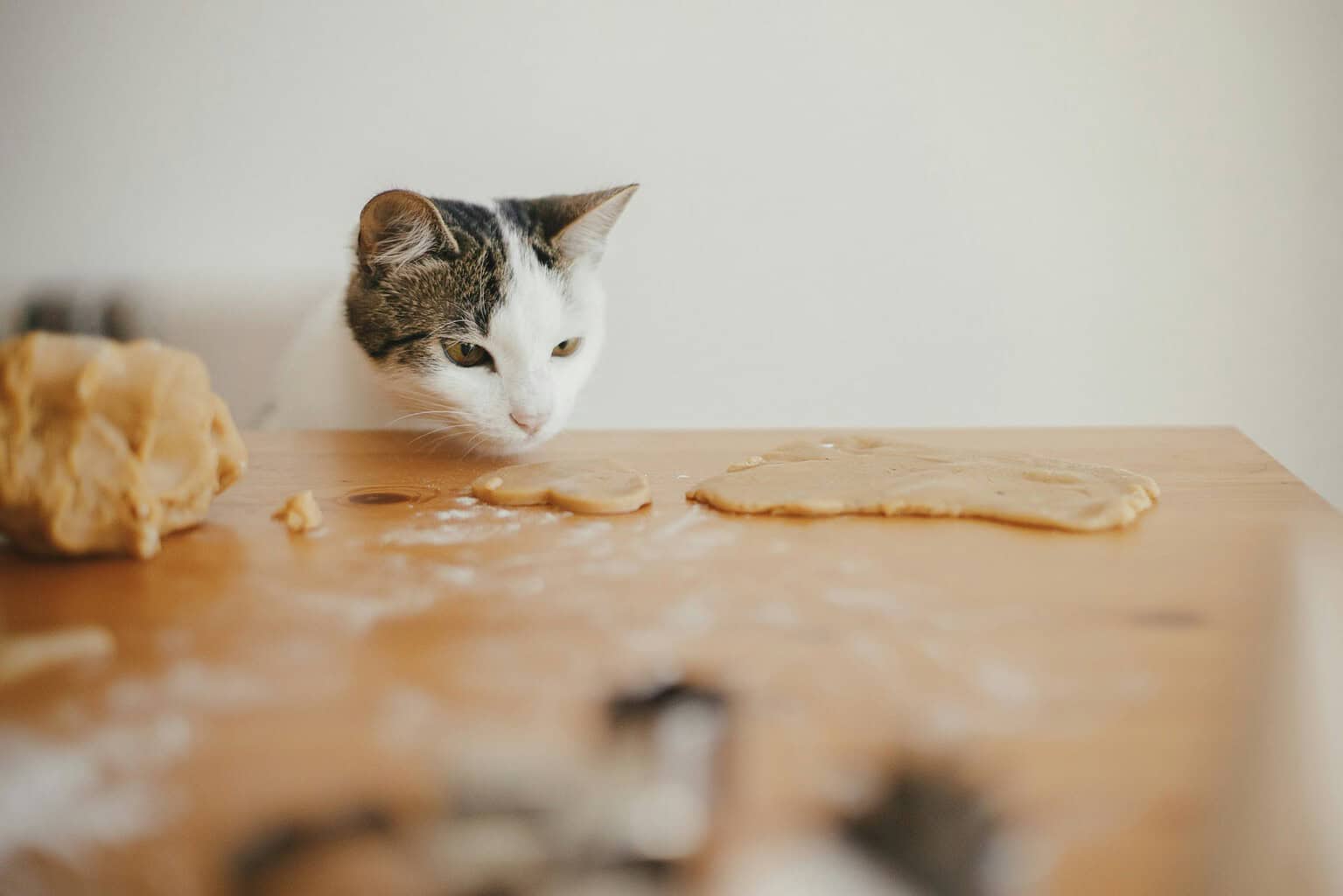
The humane way to keep cats off counters is to give them a better high spot nearby and make the counter boring, not to punish them. Cats climb for height, food, warmth and a view of the action, so a cat tree or shelf near the kitchen, spotless counters and rewards for using the new perch work far better than a spray bottle. Add gentle deterrents like double-sided tape while the habit fades, and keep stovetops and toxic foods out of reach.
Last updated: November 2025
Why do cats jump on kitchen counters?
Cats jump on counters because, from a cat’s point of view, the counter is one of the best spots in the house. It is high, it smells like food, it is often warm and it sits right where the people are.
That 60 percent figure comes from a small study of 60 cat owners by Melanie Morgan and Cornell veterinary behaviorist Katherine Houpt. Counter and table jumping topped the list, ahead of scratching furniture at 42 percent. They also found more counter jumping in single-cat homes than in multi-cat homes, which hints that boredom and a desire for company play a part.
Board-certified veterinary behaviorist Christine Calder, writing for Veterinary Partner, lists the usual motives:
- Height. Cats use vertical space the way their ancestors used rocks and trees. A high perch lets them watch the room and feel safe.
- Food. Even traces of food we cannot see or smell make the counter worth checking. Cats will gamble on a crumb.
- Water. A dripping tap or a sink full of water is a strong lure for some cats.
- Escape. The counter may be the one place a dog, toddler or another cat cannot reach.
- A view. Kitchen windows often offer the best bird watching in the house.
- Attention. Cats learn fast that a jump onto the counter gets a reaction, even a negative one.
The AAFP and ISFM feline environmental needs guidelines, written by feline veterinarians and behavior experts, explain why height matters so much. Access to an elevated area increases a cat’s vertical space and allows it to monitor its environment, and a safe place for a cat is often in a raised location. Your counter simply happens to be the highest, most interesting surface in the busiest room.
This is the same drive behind other “why is my cat sitting there” puzzles. Our guide on why your cat sits on your laptop covers how warmth and attention pull cats to the spot you are using.
Figure out which motive fits your cat, because the fix depends on it. A food-seeker needs clean counters. A view-seeker needs a window perch somewhere else. A cat hiding from the dog needs a safe high spot the dog cannot reach.

Is it dangerous for cats to be on kitchen counters?
Yes, it can be. Hygiene gets most of the attention, but the bigger risks are to the cat.
Burns. PetMD’s veterinary team notes that the most common thermal burns in cats are burned paw pads from jumping onto a stovetop. A burner that was just turned off still looks harmless, and glass cooktops give no visible warning. Burn damage can take up to three days to fully show, so a cat that limps or licks its paws after a kitchen jump should see a vet.
Toxic foods. Counters are where onions, garlic and chives get chopped. The Merck Veterinary Manual says cats are the most susceptible species to Allium poisoning, and toxicosis has been reported after a cat ate less than a teaspoon of cooked onions or about 5 grams of raw onion per kilogram of body weight. Garlic is 3 to 5 times more toxic than onion. Signs of anemia, like weakness, pale gums and collapse, may not appear for several days.
Grapes and raisins are best known as a kidney risk for dogs, but the AVMA lists onions, raisins and grapes among foods poisonous to pets in general, so keep them covered too. Our list of foods cats can’t eat covers chocolate, raw dough and the rest.
Lilies. Kitchen counters and tables are where bouquets land. The FDA warns that every part of a true lily or daylily is toxic to cats, including pollen and the water in the vase, and that a small nibble can cause fatal kidney failure in less than 3 days.
Sharp and breakable things. Knives, graters and glasses that get pushed off and shatter can cut paws.
Do spray bottles and punishment keep cats off counters?
No. Spray bottles, yelling and swatting may get a cat off the counter in the moment, but they rarely stop the habit and they can damage your relationship.
They are still very common. In a 2019 survey of 547 U.S. cat owners published in the journal Animals, Emma Grigg and Lori Kogan found that 51.4 percent had sprayed their cat with water in response to misbehavior, 77.0 percent had yelled and 85.2 percent had made a loud noise such as a hand clap. Owners who agreed with common misconceptions about cats were more likely to use punishment. Owners who knew more about cat behavior reported fewer behavior problems overall.
Why doesn’t punishment work? There are three problems:
- You are not always there. The counter still pays off with crumbs when you are at work or asleep. Intermittent rewards keep a behavior going.
- The cat learns about you, not the counter. A cat sprayed by a person learns that the counter is risky when that person is nearby.
- It adds fear. Calder notes that some cats become anxious because your behavior suddenly looks unpredictable and alarming.
“Often, the only thing these cats are learning from these strategies is to stay away from the “punisher”, who in this case is you!”
Christine Calder, DVM, DACVB, board-certified veterinary behaviorist, Veterinary Partner (2021)
Calder adds that spraying, yelling “no” and putting the cat back on the floor will probably not change the behavior, and in some cases may make it more persistent. The Pet Professional Guild’s cat committee says the same thing: punishing counter surfing will not stop your cat from jumping up when you are absent and can harm trust.
The AAFP and ISFM guidelines also call for positive, consistent and predictable human-cat interaction. A squirt from the person who feeds them is the opposite of predictable.
How do I keep my cat off the counter for good?

Give your cat a better place to be, remove every reward the counter offers, and pay your cat generously for choosing the new spot. Here is the plan, step by step.
Step 1. Find the motive
Watch when your cat jumps up. Right before dinner points to food. Mid-afternoon in a sunbeam points to warmth. Jumping whenever the dog walks in points to escape. Jumping only when you are cooking may mean your cat wants to be near you and see what you are doing. Write down two or three patterns before you change anything.
Step 2. Offer a better perch nearby
This is the step most people skip, and it matters most. Put a sturdy cat tree, wall shelf or even a bar stool with a bed on it close to the kitchen, ideally with a view of where you work. A perch in another room will not compete with a counter that has a front-row seat.
The Pet Professional Guild suggests making the new spot irresistible with a cat bed, a hidey-hole and a sprinkle of catnip or silvervine. The AAFP and ISFM guidelines add that perches should be wide and long enough for the cat to fully stretch, and that kittens and older cats with limited mobility need low perches or ramps. If your cat loves the kitchen window, set the perch in front of a different window, or put a bird feeder outside it, as Calder suggests.
If you are shopping, our guides to the best cat trees and best cat wall shelves compare sturdy options for small kitchens.
Step 3. Make the counter boring
Calder is blunt about food: make sure food is never left on the counter or table, not even a morsel, because any crumb reinforces the habit. In practice that means:
- Wipe counters after every meal and snack.
- Store bread, fruit bowls and cat treats in cabinets or the fridge.
- Do not leave dishes soaking or water in the sink, and fix any drip.
- Put away “toys” like hair ties, bottle caps, pens and twist ties.
- Close the kitchen blinds if a sunny counter is the draw.
- Prepare your cat’s own meals somewhere other than the counter.
If running water is the lure, a cat water fountain elsewhere can satisfy it. Calder also notes that many cats dislike citrus, so a citrus-scented cleaner may help, as long as you dry the surface so your cat cannot lick it.
Step 4. Pay for the right choice
Drop treats on the new perch when your cat is not looking, so the cat discovers that the perch pays. Feed some meals there. When your cat chooses the perch while you cook, praise and reward. If your cat does land on the counter, calmly call or lure it to the perch and reward it there, with no scolding.
Step 5. Fill the need for activity
Bored cats look for trouble. Two short play sessions a day with a wand toy, and a food puzzle during meal prep, give your cat something better to do while you work. See our guides on how to play with your cat and the best cat puzzle feeders for ideas.
Step 6. Be consistent and patient
Everyone in the house has to follow the same rules. One person who lets the cat lick a plate on the counter undoes a week of work. Expect a few weeks of progress, with setbacks around big cooking days. If your cat suddenly starts counter surfing far more than usual, or seems unusually hungry, talk to your vet, because behavior changes can have medical causes.
Which cat counter deterrents actually work?
Deterrents help most when they work alone, every time, whether or not you are home, and when your cat has a better perch to go to. Use them as a short-term bridge while the new habit forms, not as the whole plan.
| Deterrent | How it works | Approximate cost | Caveat |
|---|---|---|---|
| Double-sided tape strips (such as Sticky Paws) | Cats dislike the sticky feel under their paws | about $12 to $15 for a 24-strip pack | Test first; can mark wood finishes and paint; collects crumbs and dust |
| Aluminum foil | Crinkly, unfamiliar texture and sound | Low; most kitchens already have it | Some cats get used to it fast; must stay in place full time |
| Upside-down carpet runner or vinyl mat | Knobby underside is uncomfortable to stand on | Low; varies by size | Takes up counter space; remove before cooking |
| Motion-activated air spray (such as PetSafe SSSCAT) | Senses motion up to 3 feet away and releases a quick, odorless spray | about $60, plus refill cans | Can frighten anxious cats; triggers on people too; needs 4 AAA batteries |
| Clearing and blocking the surface | Nothing to find, nowhere to land | Free | Requires daily discipline from everyone in the house |
Prices are approximate retail prices and change often.
Texture deterrents are the gentlest choice. They are “remote” corrections, so the counter itself feels unpleasant and you are not the source. Cover the whole landing zone, and keep it covered for a few weeks while your cat learns to use the perch.
Motion-activated sprays are more divisive. PetSafe describes the SSSCAT as a gentle reminder and says the spray is harmless. The UK veterinary charity PDSA, however, advises against using anything that might scare a cat when it jumps onto a worktop, especially if it could panic and get hurt. If your cat is shy, older or already anxious, skip it.
How do I train my cat to stay off the counter?
Teach your cat a job that is incompatible with counter surfing, such as going to a mat or perch and staying there while you cook. Trainers call this “stationing.” A cat cannot sit on its perch and walk across the stove at the same time.
Yes, cats can be trained. In a 2017 study in the journal Animals, Lori Kogan and colleagues gave 100 shelter cats 15 five-minute clicker sessions over two weeks. By the end, 79 percent had mastered touching a target with their nose. Cats with more interest in food made bigger gains, which is good news for the counter surfers in your life.
Here is a simple way to start:
- Charge the clicker. Click, then hand over a tiny treat. Repeat 10 times. Your cat learns that the click means a reward is coming.
- Teach a target. Hold a chopstick or your finger near your cat’s nose. Click the moment your cat sniffs it, then treat.
- Move the target to the perch. Hold the target over the cat tree or stool. Click and treat when your cat hops up to touch it.
- Add duration. Once your cat is on the perch, click and treat every few seconds, then stretch the gaps.
- Practice during real cooking. Start with easy tasks, like washing vegetables, before trying a full holiday dinner.
Keep sessions to about five minutes and end on a success. Use very small treats and count them in your cat’s daily food so training does not lead to weight gain. If clicking is not your style, a word like “yes” said the same way each time can do the same job.
If your cat lands on the counter mid-session, do not scold. Simply cue the perch, reward the right choice and wipe the counter clean.
Holiday doors open, cats slip out
Shiloh’s House Smart Tags let anyone who finds your cat tap the tag with a phone, no app needed, to call or text you in one tap and see notes like “indoor only” or food sensitivities.
How do I keep my cat off the counter during holiday cooking?
Plan ahead, because big cooking days put more food, heat and flowers on the counter than any other time of year. With Thanksgiving leftovers still in the fridge and the winter holidays coming, now is a good time to set your rules.
- Give your cat a room of its own. The AVMA recommends that all pets have a comfortable, quiet place to retreat during gatherings. A bedroom with food, water, a litter box, a bed and a puzzle feeder keeps your cat safe during peak cooking hours.
- Guard the turkey. The AVMA warns that gravy, stuffing, poultry fat and skin can cause pancreatitis, and bones can cause choking or blockage. A cooling bird on the counter is a magnet, so cover it or keep it in the oven.
- Watch the Allium dishes. Stuffing, green bean casserole and gravy often contain onion and garlic. Merck notes that cats are the most sensitive species.
- Check every bouquet. Holiday centerpieces and hostess gifts often include lilies. Ask florists for lily-free arrangements and keep any you receive out of the house.
- Brief your guests. Ask visitors not to hand scraps to the cat or leave plates on low tables.
Busy holidays are also when cats sneak out a door left open for guests. The free Lohji app (App Store or Google Play) lets you build a free pet safety profile with your cat’s medical and behavioral notes, your veterinarian and up to 3 emergency contacts. You could add a note like “indoor only, do not feed onions or table scraps.” Paired with a Smart Tag, a finder sees it all in their phone’s browser. The app can also turn a photo of your cat into a cartoon “Lohji,” with seasonal stickers that include Thanksgiving designs.
Frequently asked questions
Is it unhygienic to let cats on kitchen counters?
It can be. Cats walk through the litter box and then onto other surfaces, and their fur and paws carry dirt. Many households simply prefer a cat-free counter. If your cat does get up there, clean and sanitize the counter before preparing food, and focus on giving your cat a better perch so it stops happening.
How long does it take to train a cat to stay off the counter?
It varies by cat and motive, but expect several weeks of steady effort. Clean counters, a rewarding perch and consistent rules from everyone usually show progress within a couple of weeks. Food-motivated cats often learn faster. Setbacks around big cooking days are normal, so keep deterrents and rewards in place until the new habit is solid.
Does aluminum foil keep cats off counters?
Foil works for some cats because they dislike the crinkly texture and sound, but many get used to it. It is most useful as a short-term tool while you teach your cat to use a nearby perch. Cover the whole landing area, keep it there whenever the counter is not in use, and remove it before cooking.
Are motion-activated spray deterrents safe for cats?
Motion-activated sprays use a quick burst of odorless air and do not cause injury, but they can frighten some cats. Shy, older or anxious cats may become more stressed, and a startled cat can fall or panic. Gentler texture deterrents and a rewarding perch are better first choices. Ask your vet before using any startle device.
Why does my cat only jump on the counter when I am cooking?
Your cat is probably drawn by food smells and by you. Cooking means interesting scents, possible dropped scraps and a chance to be close to its person at eye level. Offer a perch near your workspace, reward your cat for staying there, and give it a puzzle feeder while you cook.
Should I declaw my cat to stop counter jumping?
No. Declawing is major surgery and does not stop jumping. In fact, an older Cornell survey found that declawed cats were reported to jump on counters and tables more often than cats with claws. A good perch, clean counters and reward-based training address the real reasons cats climb without surgery.
Sources
- Anthrozoös — Feline Behavior Problems: The Influence of Declawing, Morgan and Houpt (1989)
- Animals — Owners’ Attitudes, Knowledge, and Care Practices, Grigg and Kogan (2019)
- Veterinary Partner (VIN) — Cats and High Places: Keeping Them off Counters and Tables, Christine Calder (2021)
- Journal of Feline Medicine and Surgery — AAFP and ISFM Feline Environmental Needs Guidelines (2013)
- Animals — Assessment of Clicker Training for Shelter Cats, Kogan, Kolus and Schoenfeld-Tacher (2017)
- Pet Professional Guild — Is Your Cat Counter Surfing? (2022)
- Merck Veterinary Manual — Garlic and Onion (Allium spp) Toxicosis in Animals (2024)
- U.S. Food and Drug Administration — Lovely Lilies and Curious Cats: A Dangerous Combination (2021)
- PetMD — Burns in Cats (2023)
- American Veterinary Medical Association — Winter Holiday Pet Safety