How to Tell If Your Cat Is in Pain: Signs Vets Look For
 Shiloh’s House Team
·
·
16 min read
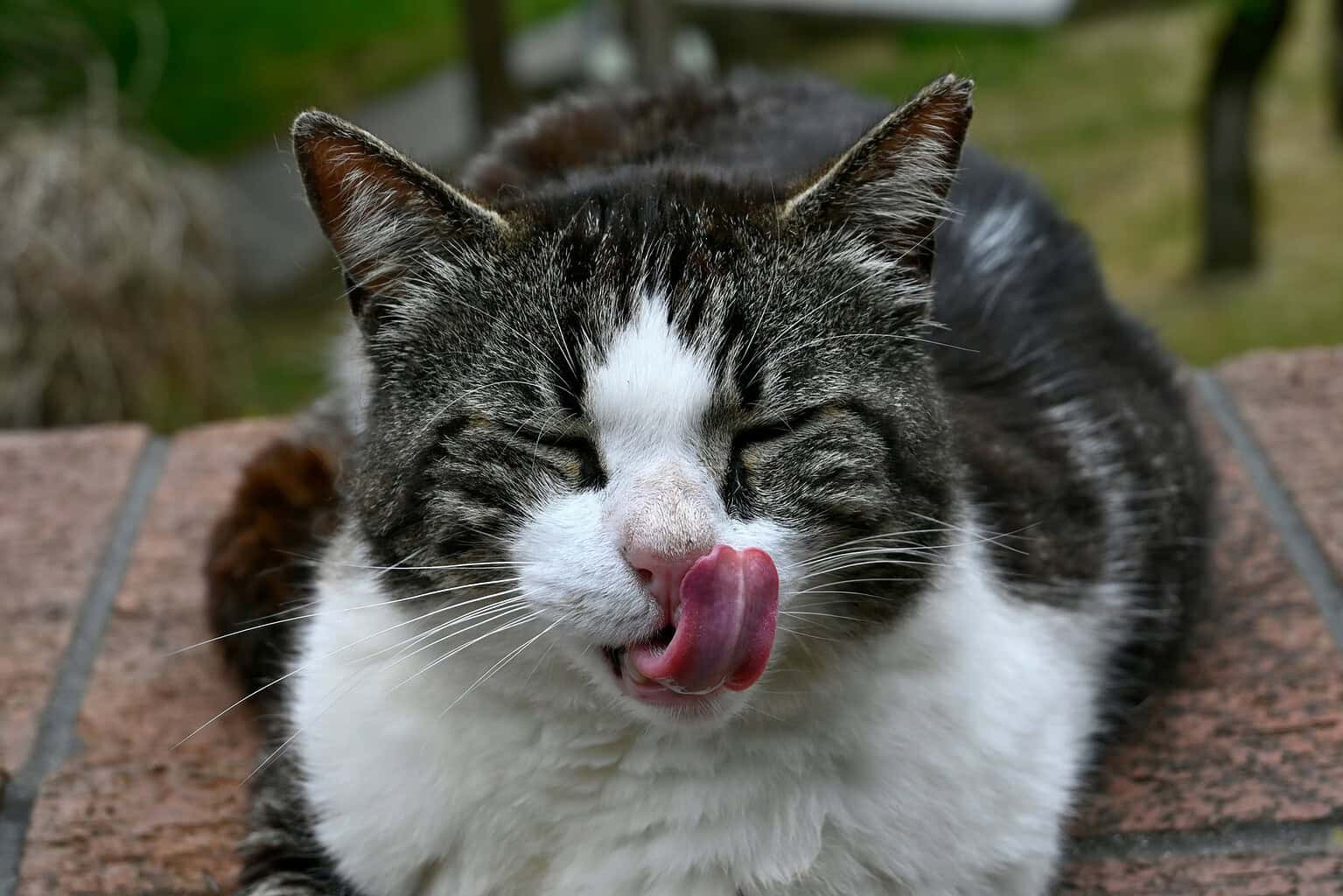
You can tell your cat is in pain by watching for changes, not cries. Cats hide pain by instinct, so the signs are usually quiet: hiding, skipping jumps, grooming less, eating less, missing the litter box or snapping when touched. Check the face too. Flattened ears, squinting eyes, a tense muzzle and a lowered head are the core of the Feline Grimace Scale. Straining with no urine, open-mouth breathing or sudden back-leg paralysis means go to an emergency vet now.
Last updated: November 2025
Why do cats hide pain so well?
Cats sit in the middle of the food chain. They hunt, but in the wild they are also hunted, and an animal that limps or cries is an easy target. Veterinary anesthesiologist Dr. Tamara Grubb puts it plainly in a 2023 lecture for the Canadian Veterinary Medical Association: cats can be both predators and prey, and as prey “their natural instinct is to hide any vulnerability that could increase predation, including pain.”
That instinct does not switch off on a living room couch. VCA Animal Hospitals notes that a cat can be in pain even if it does not cry, limp or show any other obvious sign, and offers a simple rule: if something would hurt a human, it would hurt a cat.
Three more things make cat pain easy to miss:
- Cats are sedentary. A cat that sleeps most of the day gives you a small window to notice how it moves.
- Cats are often active at night. Grubb points out that owners may be asleep when a cat struggles with stairs or jumps.
- Cats do not limp the way dogs do. Feline arthritis is often in both sides of the body at once, so instead of favoring one leg, the cat simply moves less.
The X-ray study above shows what this adds up to. Researchers at North Carolina State University found joint disease in 9 out of 10 senior cats, yet when dvm360 later summarized the work, it noted that only four of those cats’ medical records mentioned it at all. The pain was there. Nobody had seen it.
So your job is to notice a quiet shift from normal. You know your cat’s normal better than anyone, including your vet. That is the secret of how to tell if your cat is in pain: learn the signs, then compare against the cat you see every day.
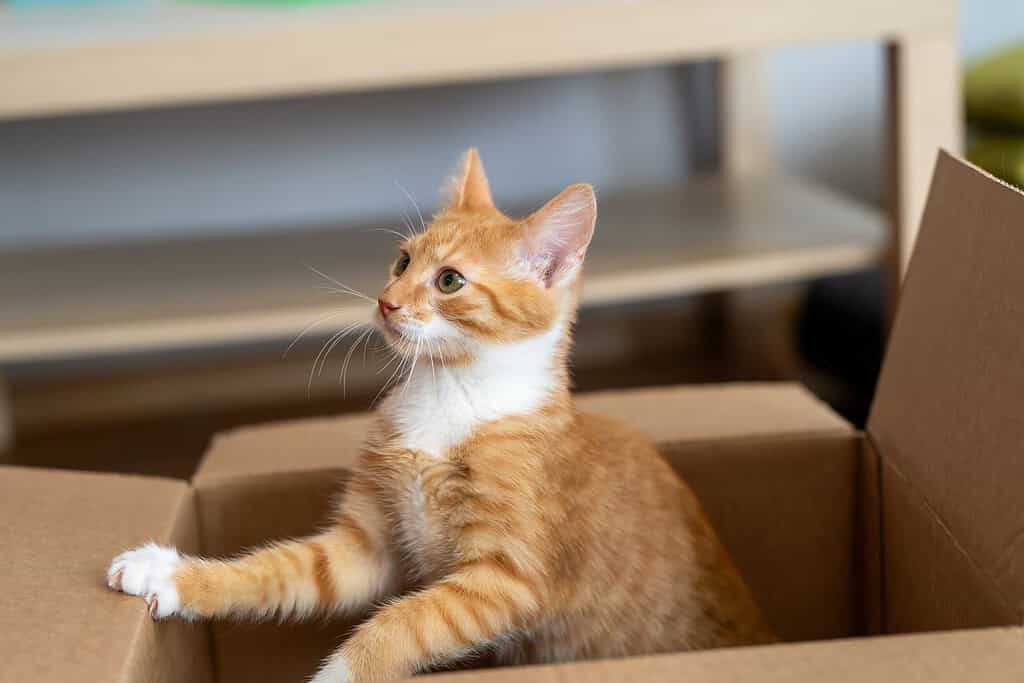
What is the Feline Grimace Scale and how do you use it at home?
The Feline Grimace Scale (FGS) is a scoring tool that reads pain from a cat’s face. It was developed at the Université de Montréal and published in Scientific Reports in 2019 by Marina Evangelista, Paulo Steagall and colleagues. The team video-recorded 35 client-owned cats with painful conditions and 20 pain-free control cats, then identified five facial “action units” that changed with pain:
- Ear position. Relaxed ears face forward. Painful cats flatten their ears and rotate them outward.
- Orbital tightening. The eyes narrow into a squint.
- Muzzle tension. The muzzle looks tight instead of soft and rounded.
- Whisker change. The whiskers stiffen and bunch together rather than curving loosely.
- Head position. The head drops below the line of the shoulders.
Each unit is scored 0 (absent), 1 (moderately present or unsure) or 2 (obviously present). Add the five together for a total out of 10. In the original study, a score above 0.39 out of 1.0, or roughly above 4 out of 10, was the point at which pain relief should be considered.
Can regular owners actually use it? The research says yes. A 2021 follow-up in Scientific Reports had cat owners, veterinary students, nurses and veterinarians score 100 cat images, and the owners’ scores agreed very closely with the vets’. A much larger 2023 survey in the Journal of Feline Medicine and Surgery collected 1,262 complete responses from caregivers in 66 countries. Their total scores were not significantly different from veterinarians’, with muzzle tension the one unit owners found harder to judge. In 2022 the Montréal team also released a free Feline Grimace Scale app.
“Cat owners are great because they know their cat so well when they see a change, they tend to spot it anyway. It’s just the interpretation of that change that’s not always that obvious.”
Daniel Pang, PhD, associate professor of anesthesia and analgesia, University of Calgary (UCalgary News, 2020)
Keep one limit in mind. The FGS was built and tested for acute pain, the kind that follows an injury, surgery or sudden illness. It is less proven for slow, chronic pain like arthritis, where behavior changes tend to tell you more than the face.
Which behavior changes are signs of pain in cats?

Behavior is the other half of the picture, and for long-term pain it is often the more important half. In 2016, researchers at the University of Lincoln asked 19 international veterinary experts to agree on which behaviors reliably point to pain in cats. They settled on 25 signs, including lameness, difficulty jumping, reluctance to move, hiding, absence of grooming, playing less, appetite decrease, a hunched posture, licking one body area, growling and straining to urinate. The experts also agreed that no single sign is required for pain. A cat can be hurting while showing only one or two of them, which is why it pays to look at the whole pattern.
Here are the changes owners notice most often, and what to make of them.
Hiding and withdrawing. A social cat that suddenly spends the day under the bed, stops greeting you at the door or avoids family activity may be protecting a sore body. Withdrawal and hiding made the expert list. Stress can cause the same thing, so look for other signs too. Our guide to why your cat is hiding walks through the other causes.
Litter box changes. Arthritic cats often find a high-sided box hard to step into, and a box in the basement can mean a painful trip down the stairs. A 2022 article in AAHA’s Trends magazine notes that cats with mobility problems may go right next to the box, while cats with bladder or urethral pain may start linking the box itself with pain and go elsewhere. If this is happening at your house, read our breakdown of why cats pee outside the litter box before assuming it is a behavior problem.
Grooming changes. A cat that hurts may stop grooming hard-to-reach areas such as the lower back and hips, leaving the coat greasy, matted or full of dander. The opposite also happens. Some cats lick one spot over and over, sometimes until the fur thins, because that spot hurts.
Jumping less. This is one of the clearest arthritis clues. Watch for a cat that no longer jumps to the windowsill or the back of the sofa, takes two or three small hops to get somewhere it once reached in one leap, or stays on one floor of the house.
Eating differently. Pain of any kind can dull appetite, and mouth pain changes how a cat eats. A cat with a sore tooth may chew on one side, drop food, gulp, or suddenly refuse dry kibble while still eating soft food. AAHA’s article lists an unwillingness to eat dry food as a possible sign of oral pain. A cat that stops eating entirely needs prompt attention, as we explain in why your cat is not eating.
Irritability and aggression. A gentle cat that hisses, growls, swats or bites when picked up or stroked over its back is often telling you exactly where it hurts. VCA lists resistance to handling and unexpected reactions when approached as signs of pain. Do not punish it. Pay attention to which spot set it off and tell your vet.
Sleeping and posture changes. Some painful cats sleep more, others cannot settle, and some sit hunched with their feet tucked under.
None of these signs proves pain on its own. Together, especially when they appear over a few days or weeks, they are a strong reason to book a vet visit.
How common is arthritis in older cats?
Far more common than most owners realize. Arthritis, which vets often call degenerative joint disease or osteoarthritis, is probably the biggest source of hidden, long-term pain in cats.
The 2002 Hardie study reviewed X-rays from 100 cats older than 12 and found joint disease in 90% of them, with severe changes in 17% of the elbow joints. A 2011 cross-sectional study from Utrecht University in the Veterinary Journal examined 100 client-owned cats aged 6 and older and found osteoarthritis in at least one joint in 61% of them, and in more than one joint in 48%. The shoulders, elbows, hips and ankles were most often affected. In that study, arthritis was linked to age, decreased mobility, less grooming and more inappropriate elimination, the same changes owners tend to blame on getting old.
Studies that include younger cats find lower numbers. One 2005 study of 218 cats of all ages found X-ray signs of joint disease in 33.9%. Across all of them, the older the cat, the higher the odds.
That matters because cats are living longer. If your cat has passed its tenth birthday, it is worth assuming some joint stiffness is possible and asking your vet to check. Our guide to how long cats live covers what to expect in the senior years.
Is my cat in pain or just getting old?
Slowing down with age is real, but pain often hides behind it. Grubb lists owners mistaking pain for “just getting old” as one of the main reasons chronic pain goes untreated. A useful test: if a change came on fairly quickly, involves only certain movements such as jumping or stairs, or comes with grumpiness when touched, it is more likely pain than simple aging. Extra naps on their own can be normal, which we cover in why your cat is sleeping so much.
The table below sorts common signs by how fast to act. The urgency column is our general guidance, based on the veterinary sources cited in this article. When in doubt, call your vet and describe what you see.
| Sign | What it can mean | How fast to act |
|---|---|---|
| Straining in the box with little or no urine | Urethral blockage, especially in males | Emergency, go now |
| Open-mouth breathing at rest | Respiratory distress, heart or lung disease | Emergency, go now |
| Sudden dragging or paralyzed back legs, crying | Blood clot (saddle thrombus), often from heart disease | Emergency, go now |
| Grimace score above about 4 of 10 | Acute pain that likely warrants pain relief | Same day |
| Not eating for 24 hours or more | Mouth pain, illness, nausea | Within 24 hours |
| Limping, or crying when picked up | Injury, abscess, joint pain | Within 24 hours |
| Sudden hiding plus any other sign | Pain or illness of many kinds | Within 1 to 2 days |
| Going just outside the box | Arthritis, bladder pain | Within a few days |
| Chewing on one side, avoiding dry food | Dental or mouth pain | Within a week |
| Jumping less, matted lower back, stiff after naps | Arthritis | Within 1 to 2 weeks |
Notice that the slow signs at the bottom are not “ignore it” signs. They are “book an appointment” signs. Chronic pain wears down a cat’s quality of life day after day, and arthritis pain can be treated.
When is cat pain an emergency?
Most pain signs give you time to make an appointment. Three do not.
Straining in the litter box with no urine. This is the big one, particularly in male cats, whose urethra is longer and narrower. Crystals, mucus plugs or small stones can block it completely. The American College of Veterinary Surgeons describes a blocked cat that tries to urinate but produces nothing, and may cry, pace or hide. PetMD warns that life-threatening problems can start within 24 hours and that an untreated blockage can kill in as little as 24 to 48 hours. International Cat Care says it can be fatal within 2 to 3 days. Many owners mistake it for constipation and wait. Do not wait.
Open-mouth breathing. Dogs pant all the time. Cats almost never should. PDSA notes that cats nearly always breathe through their nose, so a cat breathing through its mouth is either extremely stressed or really struggling to breathe. A few seconds of panting right after hard play that settles quickly is different from a cat at rest with its mouth open, its neck stretched out or its sides heaving. We explain the difference in why your cat is panting.
Sudden back-leg paralysis. A saddle thrombus, also called feline aortic thromboembolism, happens when a blood clot, usually formed in a diseased heart, lodges where the main artery splits to supply the back legs. It comes on suddenly. According to VCA and PDSA, the cat may drag one or both back legs, cry out in severe pain, breathe fast or with its mouth open, and have cold legs with pale or bluish paw pads. It is a life-threatening emergency.
Also go in right away after a fall or car strike, or for collapse or repeated vomiting.
Why can’t you give a cat human painkillers?
When a pet is hurting, reaching for the medicine cabinet feels like kindness. With cats it can be deadly. Cats process many drugs differently from people and dogs, and two of the most common painkillers in American homes are among the most dangerous for them.
Acetaminophen (Tylenol). According to Pet Poison Helpline, one regular-strength acetaminophen tablet may damage a cat’s red blood cells and limit their ability to carry oxygen. It can also cause liver failure. Watch for acetaminophen hiding in cold, flu, allergy and fever products, too.
Ibuprofen and naproxen (Advil, Motrin, Aleve). VCA explains that cats cannot metabolize ibuprofen well, so small doses can poison them. These drugs can cause stomach ulcers and kidney failure, and higher doses can damage the liver and nervous system. Pet Poison Helpline says even one or two pills can cause serious harm, and it notes that nearly half of all the pet poisonings it handles involve human drugs.
Leftover pain pills from a family member, or medication prescribed for your dog, are not safe shortcuts either. Only give your cat a pain medication your veterinarian prescribed for that cat, at the dose they set. Our list of foods cats can’t eat covers other common household hazards.
How do you talk to your vet about your cat’s pain?
Many cats freeze at the clinic. AAHA’s 2022 article notes that cats often do not react during the exam and will not walk across the room for the vet to watch their gait. They try to hide or escape. That means your observations from home are some of the best evidence your vet will get.
Before the appointment:
- Record short videos. Film your cat walking across the floor, going up and down stairs, jumping on and off furniture, getting in and out of the litter box, and eating. Thirty seconds of each is plenty. Film from the side at your cat’s level if you can.
- Take face photos. A few clear shots of your cat’s face at rest let your vet see what you are seeing on the grimace scale.
- Write a timeline. When did you first notice the change? Is it getting worse? Is it worse in the morning or after naps?
- List what changed. Use the signs above: hiding, grooming, jumping, litter box, appetite, temper. Specific examples help, such as “stopped jumping on the bed about three weeks ago.”
Ask directly: Is this pain? Where is it coming from? What are the options, and when should I call back?
Once your cat has a diagnosis, keep the details somewhere a stranger could see them if your cat ever slipped out. A cat with arthritis, a heart condition or a daily medication is far more vulnerable away from home. With a Shiloh’s House Smart Tag, anyone who finds your cat can tap the tag with a modern phone, no app needed, and see your contact buttons along with the medical notes, behavioral notes such as “painful hips, lift gently” and vet details you choose to share. You update that profile anytime in the free Lohji app, on the App Store and Google Play.
Put your cat’s medical notes where a finder can see them
Shiloh’s House Smart Tags are light, laser-engraved acrylic. One tap with any modern phone opens your cat’s profile with one-tap call and text, medical notes and vet info.
Not sure whether that hunched sit is pain or just a nap? Our guide to why cats loaf shows how to tell a relaxed loaf from the tense meatloaf posture that means a vet call.
Frequently asked questions
How do I know if my cat is in pain?
Look for changes from your cat’s normal routine rather than crying or limping. Common signs include hiding, jumping less, grooming less or licking one spot, eating less, missing the litter box, a hunched posture and irritability when touched. On the face, flattened ears, squinting, a tense muzzle, stiff whiskers and a lowered head all point to pain.
Why doesn’t my cat limp if it has arthritis?
Arthritis in cats often affects both sides of the body at once, so there is no “good leg” to favor and no obvious limp. Instead, affected cats tend to move less, jump less, groom their lower back less and sleep more. Watch jumping onto beds and counters for the clearest clues.
What is the Feline Grimace Scale?
It is a validated tool, published in 2019, that scores acute pain from a cat’s face. You rate five features from 0 to 2: ear position, eye squinting, muzzle tension, whisker position and head position. A total above about 4 out of 10 suggests pain that likely needs treatment. Studies show cat owners can use it with results close to veterinarians’, and a free app is available.
Can I give my cat anything for pain at home?
Not without your vet. Human painkillers such as acetaminophen and ibuprofen are toxic to cats, and a single tablet can cause serious harm. Comfort measures are safe, though: a warm bed, a low-sided litter box and ramps to favorite spots. Ask your vet about cat-safe pain medication.
Is it normal for an old cat to stop jumping?
It is common, but it is not something to accept as normal aging. A cat that stops jumping, or needs several small hops to reach a spot it once cleared easily, often has arthritis. One study found joint disease on X-rays in 90% of cats older than 12. Arthritis pain can be treated, so mention the change at your cat’s next checkup or sooner.
When should I take my cat to the emergency vet for pain?
Go right away if your cat strains in the litter box and passes little or no urine, breathes with its mouth open at rest, suddenly cannot use its back legs, collapses, has been hit or fallen, or may have swallowed a medication. A blocked urethra in a male cat can become fatal within a day or two, so never wait overnight to see if it passes.
Sources
- Facial expressions of pain in cats: the development and validation of a Feline Grimace Scale, Evangelista et al., Scientific Reports, 2019
- Agreement and reliability of the Feline Grimace Scale among cat owners, veterinarians, veterinary students and nurses, Evangelista and Steagall, Scientific Reports, 2021
- Can cat caregivers reliably assess acute pain in cats using the Feline Grimace Scale? A large bilingual global survey, Monteiro, Lee and Steagall, Journal of Feline Medicine and Surgery, 2023
- Cats’ faces reveal their hidden pain, University of Calgary News, 2020
- Feline pain assessment app launched by Montréal researcher, Veterinary Practice News Canada, 2022
- Radiographic evidence of degenerative joint disease in geriatric cats: 100 cases (1994–1997), Hardie, Roe and Martin, Journal of the American Veterinary Medical Association, 2002
- Cross-sectional study of the prevalence and clinical features of osteoarthritis in 100 cats, Slingerland et al., The Veterinary Journal, 2011
- Osteoarthritis in cats: Prevalence and pathophysiology, dvm360, accessed 2025
- Behavioural Signs of Pain in Cats: An Expert Consensus, Merola and Mills, PLOS ONE, 2016
- What Are They Hiding? Pain Assessment in Dogs and Cats, Tamara Grubb, Canadian Veterinary Medical Association, 2023
- Feline Pain: Can You Read the Signs?, Alison Gottlieb, AAHA Trends Magazine, 2022
- Pain Management for Cats, VCA Animal Hospitals, accessed 2025
- Urinary Obstruction in Male Cats, American College of Veterinary Surgeons, 2023
- Urinary Blockage in Cats, Veronica Higgs, DVM, PetMD, 2023
- Urethral obstruction in cats, International Cat Care, accessed 2025
- Breathing problems in cats, PDSA, accessed 2025
- Aortic Thromboembolism in Cats, VCA Animal Hospitals, accessed 2025
- Saddle thrombus (aortic thromboembolism) in cats, PDSA, accessed 2025
- Human Medications Are Poisonous to Pets, Pet Poison Helpline, 2011
- Ibuprofen Poisoning in Cats, VCA Animal Hospitals, accessed 2025