Why Do Cats Loaf? What the Cat Loaf Position Really Means
 Shiloh’s House Team
·
·
16 min read
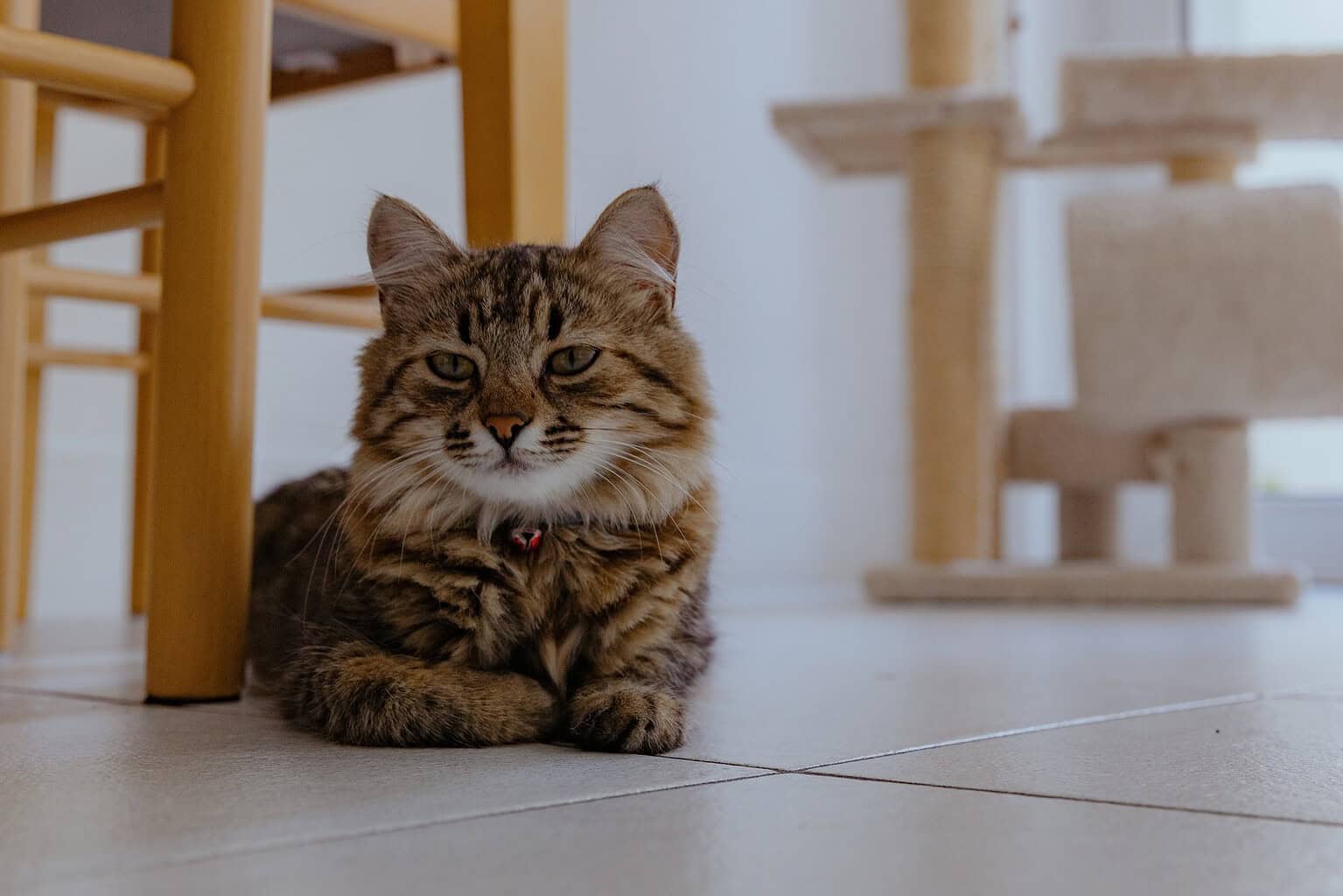
A cat loaf, with all four paws tucked under the body, head up and tail wrapped in, is usually a comfortable, heat-saving, alert-but-content resting position, and a cat who can fully tuck the paws is almost always relaxed. The posture to watch is the tense “meatloaf”: a hunched back, head held low, eyes half closed, nose toward the floor, and no interest in moving. That version can mean pain or nausea, and it deserves a call to your vet.
Last updated: October 2025
What is the cat loaf position?
The cat loaf is the pose where a cat settles onto its chest and belly, folds the front legs under the body, tucks the hind legs beneath the hips and wraps the tail around one side. From above, nothing sticks out, and the result looks like a loaf of bread on a counter. Veterinary behaviorist Leslie Sinn told Reader’s Digest that people call it loafing “because they look like a loaf of bread or a meatloaf.”
What makes the loaf different is that it is upright. A cat curled on its side with the belly showing is asleep or close to it. A loafing cat has its head up, its eyes at least partly open and its weight over its legs, so it can watch the room and rise in one motion.
Cats are both predators and prey, and a posture that keeps them warm while letting them react quickly is a good deal. Marielle Penyy, a veterinarian at The Cat Doctor in New York, put it plainly in the same article: when cats are truly asleep, they curl up on their side, so the loaf is a watchful position rather than a deep-rest one.
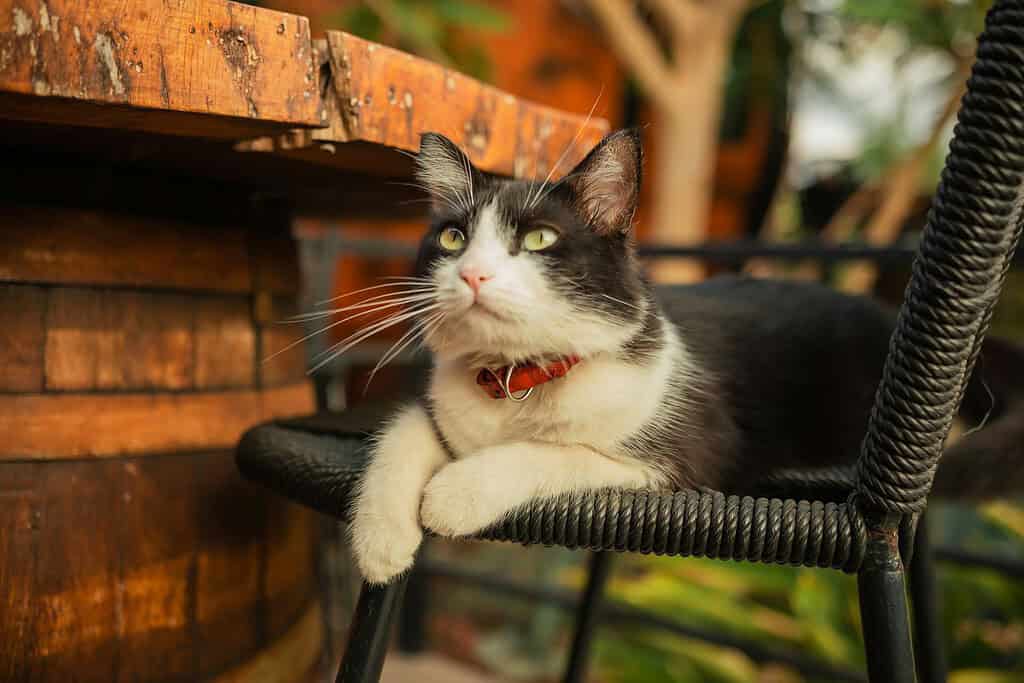
Why do cats loaf to stay warm?
The most consistent explanation for loafing is heat. The room you find comfortable is usually cooler than your cat would pick. The National Research Council’s nutrient requirements for cats list a thermoneutral zone of about 30 to 38 degrees Celsius, roughly 86 to 100 degrees Fahrenheit. That is the range at which an animal spends no extra energy warming up or cooling down. Dr. Aine Seavers, writing in the Veterinary Ireland Journal, notes that humans prefer 18 to 25 degrees Celsius and dogs about 20 to 30, so a house kept at 70 degrees is a mild chill for most cats. The Ohio State University Indoor Pet Initiative makes the same point: cats prefer 85 to 100 degrees Fahrenheit, most places cats live are not that warm, and bedding they can burrow into matters.
Where does the loaf come in? Paws, lower legs, ears and tail have a lot of surface area for very little mass and almost no fat, so they lose heat fastest. Bonnie Beaver, a veterinary behaviorist and professor at Texas A&M, explained to PetMD that a cat’s feet and lower legs, like our fingers and toes, get cold faster than the rest of the body, so tucking them under protects them. The wrapped tail does the same job, the compact shape traps warm air against the belly, and nothing is left exposed to a cold floor or a stray hand.
What are the different types of cat loaf?
The names below follow outlines from veterinarian Maranda Elswick at Great Pet Care and from Reader’s Digest.
The full loaf
All four feet tucked, tail wrapped or folded under, head upright. This is the classic shape and the one most tied to comfort. Dr. Sinn told Reader’s Digest that in a true bread-loaf position the cat is pretty relaxed, with no evidence of tenseness or rigidity.
The partial loaf and the sphinx
Here the front paws stay visible, either with elbows poking out or with the front legs stretched ahead like the Great Sphinx of Giza. Wailani Sung, a veterinary behaviorist, told PetMD to think of the sphinx position: cats may rest on their front paws or tuck them, with the body rounded. The sphinx is a touch more alert because the cat can push off instantly.
The loaf with wings
One or both elbows stick out like small handles. Dr. Penyy told Reader’s Digest that this often comes down to what the cat is lying on; a hard floor presses on the elbows, so the cat shifts a leg out.
The boat and the face loaf
Dr. Elswick calls it the loaf boat when one elbow extends farther than the other. In the face loaf, the head drops until the chin or nose rests on the surface. It can be innocent in a sleepy cat, but it also overlaps with the pain posture covered below, so the rest of the body and face decide what it means.
“Generally speaking, a cat who is lying with their paws tucked underneath them is considered relaxed. They aren’t preparing to defend themselves or run away.”
Mikel Delgado, cat researcher and postdoctoral fellow, UC Davis School of Veterinary Medicine (Inverse, 2017)
Delgado added a caution in the same interview: a cat still perched on its paws, rather than tucking them fully, may be in pain. That detail is one of the best quick checks you have.
How can you tell a relaxed loaf from a tense one?

Two cats can sit in nearly the same shape and feel completely different things. The posture tells you the cat has chosen to rest upright; the face, the muscles and the small movements tell you whether that rest is comfortable. Veterinarians have turned those details into scored checklists, and you can learn to read the same features at home.
Start with the ears. A relaxed loafing cat holds its ears upright and facing forward or slightly to the side, and they swivel lazily toward sounds. A tense cat flattens them, rotates them outward or pins them low against the head. Ear position is the first item on both the Feline Grimace Scale and the Glasgow Composite Measure Pain Scale-Feline, because it changes so reliably when a cat hurts or feels threatened.
Next, the eyes. Content cats in a loaf have soft, almond-shaped eyes, sometimes half closed, with normal pupils and the slow blink that cat owners love. In pain, the lids squeeze together, the eyes look narrowed or slanted, and the whole orbit seems tight. Researchers call this orbital tightening. Wide-open eyes with dilated pupils usually mean fear rather than pain, but either way the cat is not relaxed.
The muzzle and whiskers give you a third read. A comfortable cat’s muzzle is rounded and loose, and the whiskers fan out naturally to the side. In pain, the muzzle looks tense and more elliptical, and the whiskers either bunch forward stiffly or pull straight back along the face. Once you have seen a tense muzzle beside a soft one you will not unsee it.
Then look at the head. In a happy loaf the head sits up above the shoulders, or tilts a little as the cat watches something. In a painful cat the head drops below the line of the shoulders, the chin tucks, and the nose points at the floor. Sheilah Robertson, a veterinary anesthesiologist, described this in a dvm360 article on postoperative pain: a hunched posture with the head hung low, sitting quietly and seeking no attention, is likely a cat in pain.
Now the body. A relaxed loaf has a gently rounded, almost flat back, and the belly rests on the surface. A tense cat arches or hunches the back so the shoulders and hips look higher than the middle, and the abdomen draws up tight. If you gently stroke the cat, a comfortable one yields, leans or purrs. A painful one stiffens, flinches, shifts away or makes a low sound.
The tail finishes the picture. Wrapped neatly around the body or lying loosely alongside, it means calm. A tail clamped hard against the flank, held low and twitching at the tip, or thumping on the floor means irritation, fear or discomfort. Our guide to cat tail language goes deeper, but in the loaf context the rule is that a loose tail matches a loose cat.
Finally, watch what the cat does when you rattle the treat bag or say its name. A comfortable loafer will lift its head, chirp and come over. A cat that stays down or looks at you without moving is telling you more than its shape ever could. Dr. Sung made this point to PetMD: when a loafing cat has its face planted down or its body hunched and does not respond to gentle petting or talking, it may be very tired or it may be unwell. Reluctance to move is the detail that should push you to act.
What does the meatloaf position mean in a sick cat?
Veterinarians use “meatloaf” for the tense, hunched version of the loaf: feet under the body, back rounded upward, head hanging low, eyes half shut, the whole animal dull and withdrawn. Robertson’s dvm360 article notes that a hunched or tucked-up posture correlated with acute pain in cats after abdominal surgery, and that painful cats often sit quietly at the back of the cage rather than pacing or crying.
That is why the meatloaf fools so many owners. We expect pain to look loud; in cats, it usually looks still. A 2016 expert consensus led by Isabella Merola and Daniel Mills at the University of Lincoln asked nineteen feline specialists which behaviors indicate pain. They agreed on 25 signs, most of them quiet ones such as a hunched posture, a lowered head, reduced activity, hiding and squinting.
Nausea produces a similar picture: a tight meatloaf with repeated lip licking, a little drool and a head turned away from food. Abdominal pain, from constipation, pancreatitis or a urinary blockage, pushes cats into the same hunched shape because stretching out presses on a sore belly.
The Feline Grimace Scale, developed by Marina Evangelista, Paulo Steagall and colleagues at the Université de Montréal and published in Scientific Reports in 2019, scores five facial features from 0 to 2: ear position, orbital tightening, muzzle tension, whisker change and head position. Scores were higher in painful cats than in controls and dropped after pain medication. The WSAVA Global Pain Council notes the scale has also proved reliable when used by cat owners. It is free at felinegrimacescale.com.
Which cat postures mean what?
A quick reference, based on the sources above. These are likely meanings, not guarantees.
| Posture | Likely meaning | What to do |
|---|---|---|
| Full loaf, head up, soft eyes, ears forward, tail wrapped loosely | Relaxed, warm, watching the room | Enjoy it. Offer a warm bed if the room is cool. |
| Sphinx or partial loaf, front paws out, alert expression | Comfortable but ready to move; often guarding a doorway or window | Nothing needed. Normal daytime resting. |
| Loaf with wings or boat, one or both elbows out | Adjusting for pressure on a hard surface | Add a cushion where the cat likes to sit. |
| Loaf perched up on the toes, paws not fully tucked | Possible paw, nail or joint pain; may also be ready to flee | Check pads and nails; watch for limping; call the vet if it persists. |
| Meatloaf, hunched back, head low, eyes half shut, ears back, no response to food | Pain, nausea or illness | Call your vet today; same day if the cat is not eating, straining or vomiting. |
| Flat loaf, chest pressed to floor, elbows out, neck extended, fast or open-mouth breathing | Breathing difficulty | Emergency vet now. |
| Crouched low, tail tucked, pupils wide, ears flat, body rigid | Fear, not rest | Remove the stressor, give the cat a hiding spot and space. |
The rows that call for urgent action are the ones where the cat is hunched or flattened rather than rounded, and the face is tight rather than soft. Change is the signal. If your cat has also started disappearing under beds, read our piece on why your cat is hiding, because hiding and hunching often arrive together.
Where do cats like to loaf and why?
Once you know the loaf is mostly about warmth and a good view, the favorite spots make sense. Dr. Seavers points out that cats hog windowsills to soak up the sun because the rest of the house is cooler than they would like; the same instinct sends them to radiators and warm laundry.
Laptops are a modern version of the same thing: steady heat across a flat surface, right in front of the person the cat wants attention from. We cover the fixes in why your cat sits on your laptop.
Boxes are the third classic, and the reason goes beyond warmth. In a 2014 study at Utrecht University, Claudia Vinke and colleagues gave ten newly arrived shelter cats a hiding box and left nine without one. By days three and four, the cats with boxes had significantly lower Cat-Stress-Scores, and they reached a settled baseline by about day three that the box-free cats did not hit until day fourteen. A box gives a cat walls on three sides, so it can loaf without watching every direction at once. Our article on why cats like boxes has the full story.
And then there is you. A cat that loafs on your lap is choosing the warmest, safest spot in the house, and PetMD’s Dr. Beaver notes that loafing near you shows trust. If that becomes a cat that sleeps on you at night, our guide to why your cat sleeps on you explains the rest.
A tag that tells a finder your cat’s normal
Shiloh’s House smart tags open a live profile when tapped with a phone, including medical and behavioral notes you keep current in the free Lohji app. $38 one-time, no subscription, made in the USA.
Do dogs loaf like cats do?
Dogs rest upright too, but they rarely make a true loaf. The usual dog version is the sphinx: chest down, front legs stretched forward, hind legs folded to the side. Dogs have longer, less flexible limbs and much larger paws, so folding every foot underneath is not comfortable for most of them. Many sprawl flat with the hind legs kicked out behind, the opposite of a heat-saving shape.
Part of the difference is temperature. In the Veterinary Ireland Journal article, Dr. Seavers puts a dog’s preferred range at roughly 20 to 30 degrees Celsius, with far more tolerance for cold than cats have. A dog in a 70-degree living room can afford to stretch out; a cat in the same room is a little cool and folds up. Part of it is history: cats are small enough to be prey, so a posture that covers the belly and allows a fast launch has value. If you live with both, the dog’s bed can sit anywhere, but the cat’s should be warm, elevated and partly enclosed.
Your cat’s normal is worth recording somewhere a stranger could see it. In the free Lohji app, the Smart Tag profile behind a Shiloh’s House tag has fields for medical and behavioral notes, so you can write down that your cat has arthritis and loafs stiffly, or that she hides when scared. If an indoor cat slips out and a neighbor taps the tag with a phone, they see those notes right away. The app is on the App Store and Google Play.
When should you call the vet about a loafing cat?
Most loafing needs no action at all. Call your veterinarian when the loaf changes or comes with other signs. Pick up the phone if you see any of these for more than a few hours: a hunched back with the head held low; eyes squeezed half shut with the ears back; no interest in food offered by hand; repeated lip licking or drooling; a cat that stays in the loaf when you shake the treat bag; or loafing in odd places like the bathtub or a closet floor.
Go to an emergency clinic right away if the cat is loafing flat with its neck stretched out and breathing fast or open-mouthed, if it is straining in the litter box without producing urine, or if it cries when you touch its belly. Open-mouth breathing in a cat is never normal, and a male cat that cannot urinate can die within a day or two.
It also helps to know your cat’s baseline. Some cats loaf for hours every afternoon; others almost never do, so for them a day of loafing is a change. Our guide on why your cat is sleeping so much walks through it.
Frequently asked questions
Is cat loafing a sign of happiness?
Usually, yes, or at least of relaxation. Veterinary behaviorist Bonnie Beaver told PetMD that we cannot measure happiness, but cats are relaxed when they loaf, like a person in a reclining chair. A loaf with soft eyes, forward ears and a loose tail is a cat that feels safe. The exception is the hunched, tight-faced meatloaf.
Why does my cat loaf more in winter?
Because cats like it warmer than most homes are kept. The National Research Council lists a feline thermoneutral zone of about 86 to 100 degrees Fahrenheit, well above a typical 68 to 72 degree room. Tucking the paws, legs and tail under the body holds in heat, so many cats loaf tightly in winter and sprawl on cool tile in summer.
What is the difference between a loaf and a meatloaf in cats?
A loaf is upright and relaxed: head up, back gently rounded, eyes soft, ears forward, and the cat will get up for food. A meatloaf is the tense version: back hunched, head low with the nose toward the floor, eyes half shut, ears back, whiskers tight, and little response when you offer a treat. It is a common pain and nausea posture.
Why does my cat loaf with its paws sticking out?
Partial loaves, sphinx poses and the loaf with wings are mostly about comfort and surface. Veterinarian Marielle Penyy told Reader’s Digest that it often depends on what the cat is lying on, since a hard floor presses on the elbows. A cat that stays perched on its toes rather than tucking the paws, though, may have a sore paw or joint, so check the pads and nails.
Can a loafing cat be in pain even if it looks calm?
Yes. Cats hide pain by going quiet and still rather than crying out, and a hunched posture with a lowered head is a recognized sign of postoperative pain. Look at the face: squinted eyes, flattened ears, a tense muzzle and bunched whiskers are the features the Feline Grimace Scale scores, and they show even in a cat that is not moving.
Do cats loaf when they are cold or when they are sick?
Both, which is why context matters. A cold cat loafs tightly in a cool room, often near a heat source, and stretches out when it warms up. A sick cat loafs hunched regardless of temperature, often in a hidden place, and does not respond normally to food or attention. If a warm bed fixes it, it was cold. If nothing changes, call your vet.
Sources
- Facial expressions of pain in cats: the development and validation of a Feline Grimace Scale, Evangelista, Watanabe, Leung, Monteiro, O’Toole, Pang and Steagall, Scientific Reports (2019)
- Definitive Glasgow Acute Pain Scale for Cats: validation and intervention level, Reid, Scott, Calvo and Nolan, Veterinary Record (2017)
- Pain scales used for assessment of acute pain in cats, Beatriz Monteiro, WSAVA Global Pain Council (2021)
- Behaviors suggestive of postoperative pain in cats, Sheilah A. Robertson, dvm360 (2009)
- Behavioural Signs of Pain in Cats: An Expert Consensus, Isabella Merola and Daniel Mills, PLOS ONE (2016)
- The heat is on: the feline TNZ, Aine Seavers, Veterinary Ireland Journal (2023)
- Environmental Enrichment for Confined Cats, Ohio State University Indoor Pet Initiative (2012)
- Why Do Cats Look Like Loaves of Bread Sometimes? We Asked a Scientist, Rae Paoletta, Inverse (2017)
- Why Do Cats Loaf?, Shannon Willoby with Wailani Sung and Bonnie Beaver, PetMD (2025)
- Why Do Cats Loaf? Veterinarians Explain the Cute Pose, Cynthia Sanz Carstens, Reader’s Digest (2023)
- Cat Loafing: What It Is and Why They Do It, Maranda Elswick, Great Pet Care (2022)
- Will a hiding box provide stress reduction for shelter cats?, Vinke, Godijn and van der Leij, Applied Animal Behaviour Science (2014)