Why Does My Dog Sit on Me? 7 Real Reasons (and When It Is a Problem)
 Shiloh’s House Team
·
·
17 min read
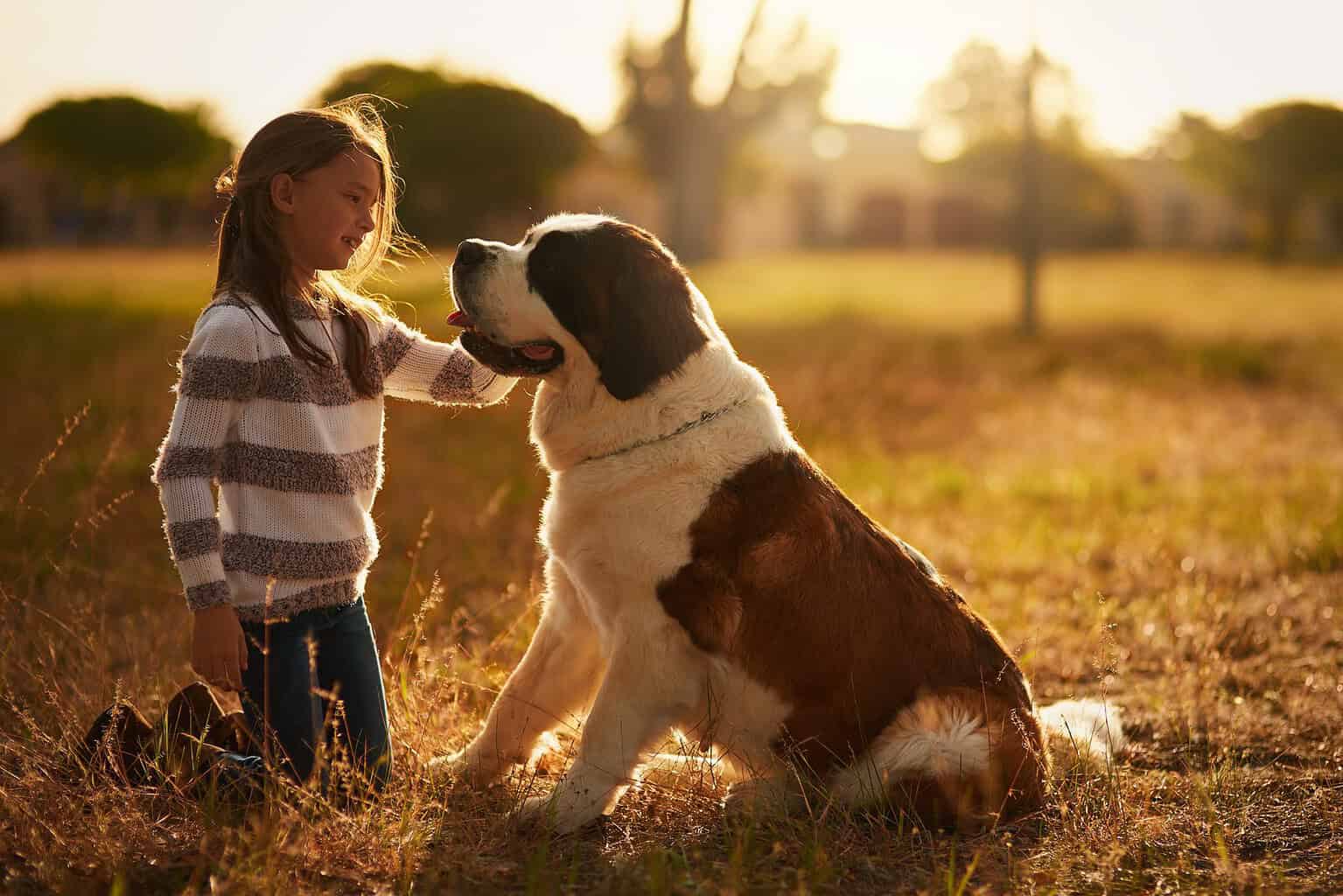
Your dog sits on you because you are the safest, warmest and most rewarding spot in the house, not because it is trying to outrank you. Attachment studies show dogs use their owners as a secure base, a few minutes of petting raises oxytocin in both of you, and every lap session gets paid in attention. Sitting on you is only a problem when it comes with growling at anyone who approaches, panic when you leave, or a sudden change in a dog that never used to do it.
Last updated: September 2025
Why does my dog sit on me?
Ask why a 70-pound Labrador climbs into a lap built for a Chihuahua and you will hear three stories: love, cold and “he thinks he owns you.” The first two hold up; the third does not.
The seven reasons the evidence supports, roughly from most to least common:
- Attachment. Dogs bond with their owners the way toddlers bond with a parent, and seek contact for the same reason.
- Oxytocin and touch. Petting and eye contact raise bonding hormones in both of you.
- Warmth and comfort. You are a heated cushion with a heartbeat.
- Breed history. Companion breeds were bred for centuries to do exactly this.
- Reinforcement. You pet and talk to the dog on your lap, so it comes back.
- Anxiety or separation distress. Some dogs sit on you because they cannot settle anywhere else.
- Guarding you. A few treat their person as a resource and warn others off.
Dominance is not on the list, and we explain why below. If your dog prefers to press its side into your legs rather than climb aboard, our guide to why dogs lean on their people covers that cousin behavior.
Is my dog sitting on me because it is attached to me?
In 1998, József Topál and colleagues at Eötvös Loránd University in Budapest put 51 owner-dog pairs through a modified Strange Situation Test, the procedure psychologists use to measure a toddler’s attachment to a parent. The dog waits in an unfamiliar room, a stranger comes in, the owner leaves and returns, twice. The dogs behaved like children: they stayed close to the owner, showed distress when the owner left, and could be sorted along the same secure-to-insecure spectrum used for infants, regardless of age, sex or breed.
A 2013 PLOS ONE study by Lisa Horn, Ludwig Huber and Friederike Range tested the piece that matters most for lap sitting, the secure base effect. Twenty pet dogs worked on a food puzzle under three conditions: owner absent, owner present but silent and blindfolded, and owner present and encouraging. Dogs worked longer whenever their owner was in the room, whether or not the owner said a word. Swapping in a friendly stranger did not help. The owner’s presence, not their coaching, gave the dogs the confidence to explore.
A dog on your lap is often topping up on security. It is the same system behind following you from room to room, and it is why a dog that sits on you at the vet or during fireworks usually calms within a few minutes.
“Often when dogs sit on our feet, it’s because they want to be close to us. It’s one way a dog shows affection. Think of your dog sitting on your feet as the canine version of a hug or cuddle.”
Mary Burch, PhD, certified applied animal behaviorist and director of the AKC Family Dog Program (American Kennel Club, 2023)
Does sitting on you change your dog’s hormones and yours?
Yes, in both directions. In Miho Nagasawa and Takefumi Kikusui’s 2015 Science paper, 30 owners spent half an hour with their dogs, petting and talking as usual, with urinary oxytocin measured before and after. In the pairs that gazed at each other most, owners’ oxytocin rose about 300 percent and the dogs’ about 130 percent. Pairs that barely made eye contact showed no rise, nor did the pet wolves tested alongside them. The authors argue dogs tapped into the mother-infant bonding circuit during domestication.
Touch alone does something similar. In a small Swedish study in Anthrozöos in 2011, Linda Handlin and colleagues had ten women stroke and talk to their own Labradors for three minutes while blood was drawn from both. The dogs’ oxytocin was significantly higher three minutes in, the owners’ peaked between one and five minutes, and heart rate had dropped in both within the hour. The footnote: the dogs’ cortisol also rose at 15 and 30 minutes, which the authors could not explain, and ten pairs is a very small sample. Suggestive, not settled.
| Study | Dogs | What it measured | Key number |
|---|---|---|---|
| Topál et al., J Comp Psychol, 1998 | 51 | Attachment in a Strange Situation Test | Dogs sorted secure or insecure, like infants |
| Horn, Huber & Range, PLOS ONE, 2013 | 20 | Time on a food puzzle, owner present or absent | Longer with owner present, silent or not; stranger no help |
| Nagasawa et al., Science, 2015 | 30 pairs | Urinary oxytocin after 30 minutes together | Up 300% in owners, 130% in dogs (long-gaze group) |
| Handlin et al., Anthrozöos, 2011 | 10 pairs | Blood oxytocin, cortisol, heart rate after 3 minutes of petting | Oxytocin up at 3 minutes in dogs, 1 to 5 in owners |
A dog that needs its person is a dog that needs to get home fast
Velcro dogs panic when they get separated. A Shiloh’s House Smart Tag is laser-engraved premium acrylic with a “Tap Phone Here” NFC back; a finder taps it with any modern phone and sees your live profile with contacts, medical notes and a voice message that can settle a frightened dog. About $38 one-time, no subscription, no battery, waterproof, scratch-resistant, UV-stable, made in the USA, 35 designs, 30-day returns.
Why do tiny lap dogs and big dogs both do it?
Part of the answer is simply heat. A short-coated dog on a tile floor in January loses warmth fast, and a human lap is the warmest surface in most living rooms. Dr. Burch told the AKC that a dog gets close to your body to stay warmer and that the habit likely begins in puppyhood, when a litter sleeps in a heap for warmth and safety. If your dog lives on your lap from November to March and sleeps on the floor in July, that is probably the whole story.
For some breeds, sitting on people is the job description. The AKC’s breed historian Denise Flaim traces the English Toy Spaniel and its Cavalier cousin to the small “comforter spaniels” of Italian and French courts, as much a must-have accessory for court ladies as a silk parasol, and describes the modern English Toy Spaniel as a lap-warming dog. Pugs, Pekingese, Maltese, Bichons, Havanese and Shih Tzu have similar resumes. Centuries of choosing the puppies that most wanted a lap left a strong pull toward contact, and a Cavalier that cannot relax unless it is touching you is behaving as designed.
Big dogs lack that pedigree, but they get the same reward every time they try. When your Great Dane backs into your lap, you laugh, say her name and rub her chest. The AKC article describes the sly look a dog gives from your feet and notes that the attention it earns makes the dog more likely to repeat the act. That is textbook reinforcement; the American Veterinary Society of Animal Behavior says most behaviors owners want to change exist because they were inadvertently rewarded. The habit usually starts in a puppy that fit, and nobody tells the dog when it stops fitting.
Then there is the claim on half the internet that your dog is sitting on you to spread its scent and “claim” you. We looked for evidence and found none. Dogs do have scent glands in their paws and face, and they can smell where other dogs and people have been. But no study we could find shows that dogs deposit scent on their owners to warn off rivals, or that a dog on your lap is marking territory. Dr. Burch does note that a dog sitting on its owner’s feet at a dog park may be signaling to other dogs that this is its person, which is a social statement about closeness and, in some dogs, guarding, not a scent ritual. The claiming story describes real behavior with an invented mechanism; if your dog wedges itself between you and others, read the guarding section below.
A few lap sitters have a physical reason. The AKC notes that arthritic dogs may prefer a raised seat such as your feet or lap because they do not have to fold their hips to reach the floor. A dog that starts climbing into your lap in middle age, especially one that also hesitates on stairs, deserves a vet visit before you assume it has become cuddly. The quieter signals, like where your dog chooses to sleep and whether it still puts a paw on you for attention, often change before the obvious ones do.
Is my dog sitting on me to show dominance?
No. This is the one explanation with a position statement against it. The American Veterinary Society of Animal Behavior defines dominance as a relationship between two animals, established by force and submission, that decides who gets first access to food, mates and resting spots. It then points out that priority access is not what is going on in most homes: the behaviors owners want to change, from jumping up to ignoring a recall, are usually not about resources and exist because they were accidentally rewarded. AVSAB recommends that veterinarians not refer clients to trainers who coach dominance theory and the confrontational methods it leads to.
The idea that a dog on your lap is “above” you borrows from old studies of captive wolf packs and does not survive dog data. John Bradshaw, Emily Blackwell and Rachel Casey of the University of Bristol reviewed the evidence in the Journal of Veterinary Behavior in 2009 and reported that in their own study of a freely interacting group of neutered male dogs, pairwise relationships existed but no overall hierarchy could be found. They concluded that learning, plus how much a dog values a given resource, explains dog behavior better than wolf-style rank.
This matters because the dominance story leads people to shove, pin or scold a dog for seeking contact. AVSAB warns that fear and anxiety are common causes of aggression, including behavior that mimics resource guarding, and that punishment can make them worse. The one lap sitter who needs firm boundaries, the guarder, is also the one most likely to escalate if you get physical.
When is sitting on you a sign of anxiety or separation distress?
Attachment is healthy; hyper-attachment is not, and the line is whether the dog can cope without you. In a 2016 survey of 3,284 Finnish dogs across 192 breeds, Katriina Tiira, Sini Sulkama and Hannes Lohi estimated that 17.2 percent had separation anxiety. A larger 2020 survey of 13,715 dogs by Milla Salonen and the same Helsinki group found 5 percent, but it only counted dogs showing the signs often or very often, and the authors note that looser definitions produce estimates two to three times higher. Somewhere between one dog in twenty and one in six, depending on where you draw the line.
Cornell’s Riney Canine Health Center describes the at-home picture: dogs with separation anxiety prefer to be in the same room as their owners and start getting stressed when they see the owner preparing to leave. A dog that can only settle on your lap, shadows you to the bathroom and paces when you pick up your keys fits the pattern, and our guide to separation anxiety when the household routine changes covers what to do.
The AKC’s signs of a scared rather than content lap sitter:
- Drooling, shaking or panting while sitting on you
- Crouching, or a tail tucked tight under the body
- Head hanging down and ears pulled back
- Whining that starts the moment you shift as if to get up
Filming your dog alone for an hour tells you which camp it is in. Cornell’s Katherine Houpt says that if the dog, you or the relationship is suffering, anti-anxiety medication from a veterinarian is a reasonable option alongside behavior work, and that by the time most owners reach a behaviorist, the dog needs it. If the sitting comes with constant vocalizing, our post on why dogs whine separates anxiety from demand whining.
When does sitting on you turn into guarding you?
This is the version that can hurt someone. Cornell’s behavior page explains that resource guarding, the growling, posturing or biting a dog does when another dog or person approaches something it values, usually involves food and toys, but dogs can also guard a resting spot or their favorite person. A dog on your lap that stiffens, hard-stares, lifts a lip or growls when your partner sits down or another dog walks up is not protecting you. It is protecting its access to you, and if the growl works, it learns that growling keeps the lap.
Most guarders are anxious rather than bold. AVSAB notes that fear and anxiety commonly drive aggression that mimics resource guarding, which is why punishing the growl backfires. Cornell’s suggested first step for a dog guarding its owner from other pets is management: keep the animals separate, give each equal one-on-one time, and only gradually bring them back together.
Our plan for a guarder:
- End lap privileges for now. The dog can lie on a mat beside you and earn treats there.
- Never punish the growl. It is the warning that keeps a snap from happening.
- Have other household members feed, walk and train the dog so you are not its only source of good things.
- Book a vet visit to rule out a medical cause, and ask for a referral.
Should I let my dog sit on me, and how do I teach an off cue?
For most dogs, let them. The dogs that should lose the privilege, at least for now, are guarders, dogs that cannot settle anywhere else, and dogs whose size or your health make it unsafe.
| What the sitting looks like | Likely reason | What to do (our suggestion) |
|---|---|---|
| Loose body, sighs, falls asleep, hops off when you stand | Attachment, comfort, habit | Enjoy it. Teach up and off cues so you decide when. |
| Only when the house is cold or you have a blanket | Warmth | Allow it, or add a heated bed beside you for a heavy dog. |
| Climbs up when you sit, paws or stares until you pet it | Reinforcement, attention seeking | Fine if you like it. If not, reward the dog on its mat instead. |
| Panting, shaking or tucked tail on you; cannot settle elsewhere | Fear or separation distress | Film the dog alone, build independence gradually, ask your vet. |
| Stiffens, stares or growls when a person or pet approaches | Resource guarding of you | No lap for now, no punishment, vet check, veterinary behaviorist referral. |
| New in an older dog, with stiffness or slower stairs | Possible pain or arthritis | Vet exam first; a raised seat may be easier on sore joints. |
Trainer Pat Miller, writing in Whole Dog Journal, teaches off as a pair with an up cue so the dog learns your lap is available by invitation. Say “up” and pat your lap; when the dog climbs on, mark it with a “yes” and give a treat. Then say “off” and toss a treat on the floor; when the dog jumps down, mark again. After several repetitions, give the cue and wait a beat before the treat appears, then fade the toss into a hand motion and finally the word alone. Last, swap in other rewards, praise, an ear scratch or a quick game, so the dog does not learn that jumping up is the fastest route to a cookie.
In the free Lohji app from Shiloh’s House, you keep a live pet profile with contacts, medical notes, behavior notes and voice messages that a Shiloh’s House NFC tag links to, so a sitter who taps the tag knows your dog needs a lap during thunderstorms. It also turns your pet’s photos into cartoon Lohji avatars, stickers and mini movies. Get it on the App Store or Google Play.
Frequently asked questions
Why does my dog sit on me and not my husband?
Dogs usually pick the person who feeds, walks and handles them most, because attachment forms around the caregiver. Topál’s Strange Situation study found dogs bond to a specific owner like infants to a parent, and Horn’s 2013 study showed a stranger could not substitute. Having your husband take over meals and walks for a few weeks often evens things out.
Why does my big dog think he is a lap dog?
Because it works. Every time a large dog climbs into your lap you laugh, talk and pet, which the AKC notes makes the behavior more likely to repeat. Most big lap dogs started as puppies that fit. Big dogs seek contact for security and warmth just like toy breeds; they were simply not bred for it.
Is my dog sitting on me to claim me or mark me with scent?
We found no evidence for this. Dogs have scent glands and can tell where other animals have been, but no study shows dogs scent-marking their owners to warn off rivals. A dog that wedges itself between you and other dogs is seeking closeness or, in some cases, guarding you, a social behavior worth addressing, not a pheromone ritual.
Is it bad to let my dog sit on me?
For most dogs, no. Studies show touch and eye contact raise oxytocin in both of you and lower heart rate, and AVSAB says the dominance worry is unfounded. Stop lap time if the dog growls at people or pets who approach, cannot settle anywhere but on you, or if its size could injure you or a child. An off cue keeps the choice yours.
Why has my dog suddenly started sitting on me?
A sudden change deserves a vet visit. The AKC notes arthritic dogs may prefer a raised seat, and Cornell’s behavior page says there is usually a specific cause behind anxious-looking behavior, including cognitive dysfunction in senior dogs. If the dog is healthy, look for a new stressor: a move, fireworks season, a new baby or pet, or a changed work schedule.
When should I see a veterinary behaviorist about lap sitting?
When the sitting comes with aggression or panic. The 2015 AAHA behavior guidelines say aggression should never go to a trainer for primary treatment and recommend a board-certified veterinary behaviorist for growling, snapping or biting, deep bites, or dogs not improving under your vet’s plan. Severe separation distress that does not improve with gradual training also warrants a referral.
Sources
- J. Topál, Á. Miklósi, V. Csányi and A. Dóka, “Attachment behavior in dogs (Canis familiaris): a new application of Ainsworth’s (1969) Strange Situation Test”, Journal of Comparative Psychology, 1998 — https://pubmed.ncbi.nlm.nih.gov/9770312/
- Lisa Horn, Ludwig Huber and Friederike Range, “The Importance of the Secure Base Effect for Domestic Dogs – Evidence from a Manipulative Problem-Solving Task”, PLOS ONE, 2013 — https://journals.plos.org/plosone/article?id=10.1371/journal.pone.0065296
- Miho Nagasawa, Shouhei Mitsui, Shiori En et al., “Oxytocin-gaze positive loop and the coevolution of human-dog bonds”, Science, 2015 — https://pubmed.ncbi.nlm.nih.gov/25883356/
- David Grimm, “How dogs stole our hearts”, Science (AAAS news), 2015 — https://www.science.org/content/article/how-dogs-stole-our-hearts
- Linda Handlin, Eva Hydbring-Sandberg, Anne Nilsson et al., “Short-Term Interaction between Dogs and Their Owners: Effects on Oxytocin, Cortisol, Insulin and Heart Rate—An Exploratory Study”, Anthrozoös, 2011 — https://www.tandfonline.com/doi/abs/10.2752/175303711X13045914865385
- American Veterinary Society of Animal Behavior, “Position Statement on the Use of Dominance Theory in Behavior Modification of Animals”, AVSAB, 2008 — https://avsab.org/wp-content/uploads/2018/03/Dominance_Position_Statement_download-10-3-14.pdf
- John W. S. Bradshaw, Emily J. Blackwell and Rachel A. Casey, “Dominance in domestic dogs—useful construct or bad habit?”, Journal of Veterinary Behavior, 2009 — https://research-information.bris.ac.uk/en/publications/dominance-in-domestic-dogs-useful-construct-or-bad-habit/
- Katriina Tiira, Sini Sulkama and Hannes Lohi, “Prevalence, comorbidity, and behavioral variation in canine anxiety”, Journal of Veterinary Behavior, 2016 — https://doi.org/10.1016/j.jveb.2016.06.008
- Milla Salonen, Sini Sulkama, Salla Mikkola et al., “Prevalence, comorbidity, and breed differences in canine anxiety in 13,700 Finnish pet dogs”, Scientific Reports, 2020 — https://www.nature.com/articles/s41598-020-59837-z
- Elaine Waldorf Gewirtz, with Mary Burch, PhD, CAAB, “Why Does My Dog Sit on My Feet and Lean on My Legs?”, American Kennel Club, 2023 — https://www.akc.org/expert-advice/advice/why-does-my-dog-sit-on-my-feet/
- Denise Flaim, “English Toy Spaniel History: Behind Great Britain’s King Charles Spaniel”, American Kennel Club, 2020 — https://www.akc.org/expert-advice/dog-breeds/english-toy-spaniel-history-behind-great-britains-king-charles-spaniel/
- Riney Canine Health Center, with Katherine Houpt, VMD, PhD, DACVB, “Anxious behavior: How to help your dog cope with unsettling situations”, Cornell University College of Veterinary Medicine, 2022 — https://www.vet.cornell.edu/departments-centers-and-institutes/riney-canine-health-center/health-info/anxious-behavior-how-help-your-dog-cope-unsettling-situations
- Pat Miller, CBCC-KA, CPDT-KA, “How to Keep Dogs Off Furniture – If You Want To”, Whole Dog Journal, 2018 — https://www.whole-dog-journal.com/training/how-to-keep-dogs-off-furniture-if-you-want-to/
- American Animal Hospital Association, “Assembling a support team (2015 AAHA Canine and Feline Behavior Management Guidelines)”, AAHA, 2015 — https://www.aaha.org/resources/2015-aaha-canine-and-feline-behavior-management-guidelines/assembling-a-team/