Why Do Cats Have Whiskers? What They Sense and Why You Should Never Trim Them
 Shiloh’s House Team
·
·
16 min read
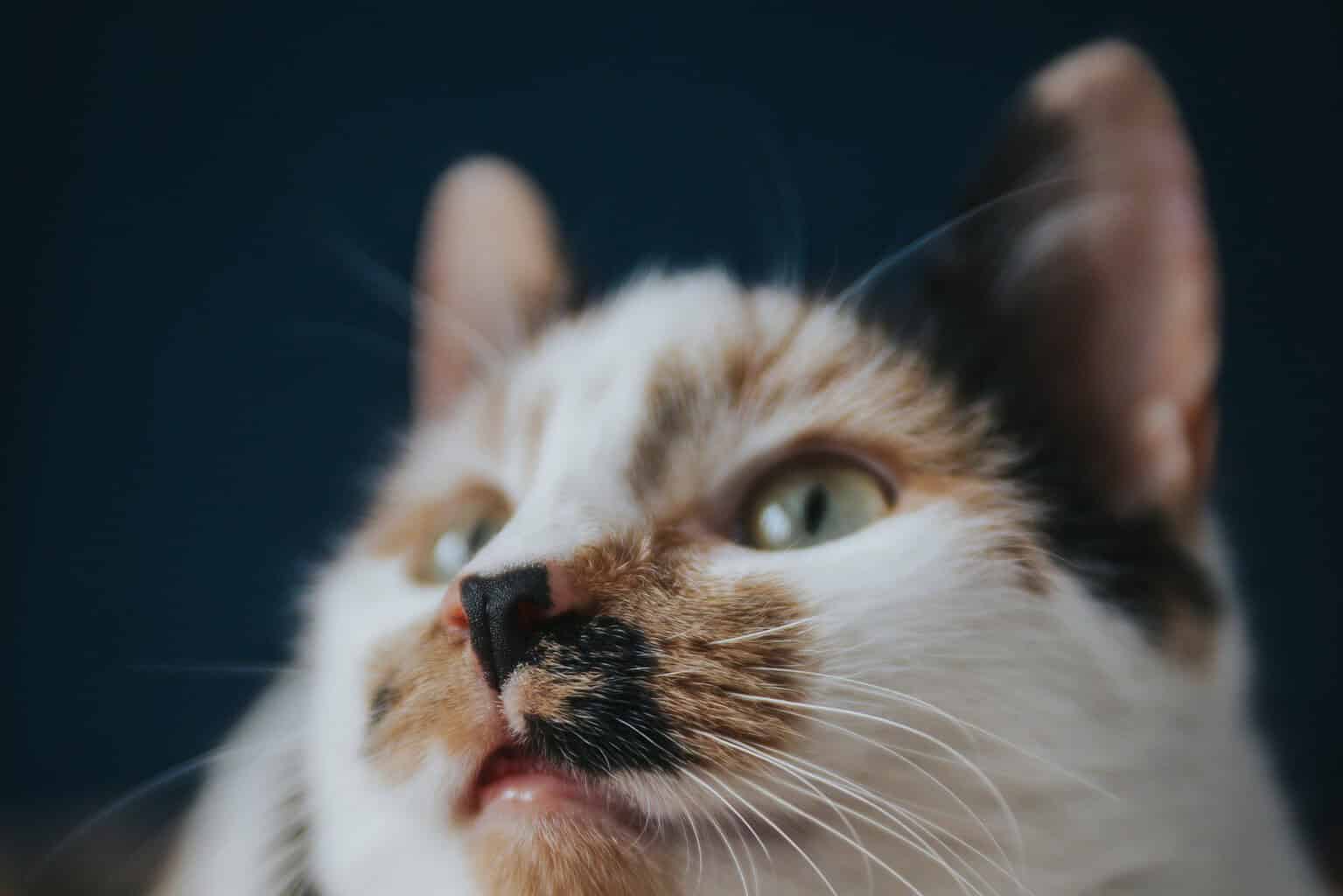
Cats have whiskers because they are precision touch sensors that help them measure gaps, move in the dark, protect their eyes and pin down prey they cannot see clearly up close. Each whisker sits in a deep follicle packed with nerves and blood vessels, so leave them alone: never trim, pluck or pull them. Shedding a whisker or two is normal. Sudden heavy loss, broken whiskers on both sides or newly wavy whiskers deserve a vet visit.
Last updated: November 2025
Why do cats have whiskers?
Whiskers are not just a cute frame for your cat’s face. They are a set of specialized sensory hairs that give a cat information its eyes and nose cannot. Cats Protection, the UK’s largest cat charity, sums up their jobs simply: whiskers help cats sense objects up close, navigate in the dark, judge distance and communicate their mood.
The scientific name is vibrissae, from the Latin vibrio, meaning “to vibrate.” That name explains the basic trick. When air moves or an object brushes a whisker, the whisker vibrates and stimulates nerves in the follicle at its base. VCA Animal Hospitals notes that this lets whiskers pick up subtle changes in air currents and pass along information about the size, shape and speed of nearby objects.
Whiskers matter so much partly because cat eyesight has a blind spot right where it would seem most useful. Cats see well at a distance and in low light, but Cats Protection explains that they struggle to focus on anything closer than about 30 centimeters (12 inches). The food bowl, the toy between their paws and the mouse they just caught all sit inside that zone. Whiskers fill the gap.
They also work as a safety system. A speck of dust landing on a whisker above the eye makes a cat blink or shake its head, and a brush against a thorny branch tells it to back off before the eye gets poked. And because a cat can move its whiskers, they double as a mood signal you can learn to read, which we cover below.
Where do cats have whiskers, and how many are there?
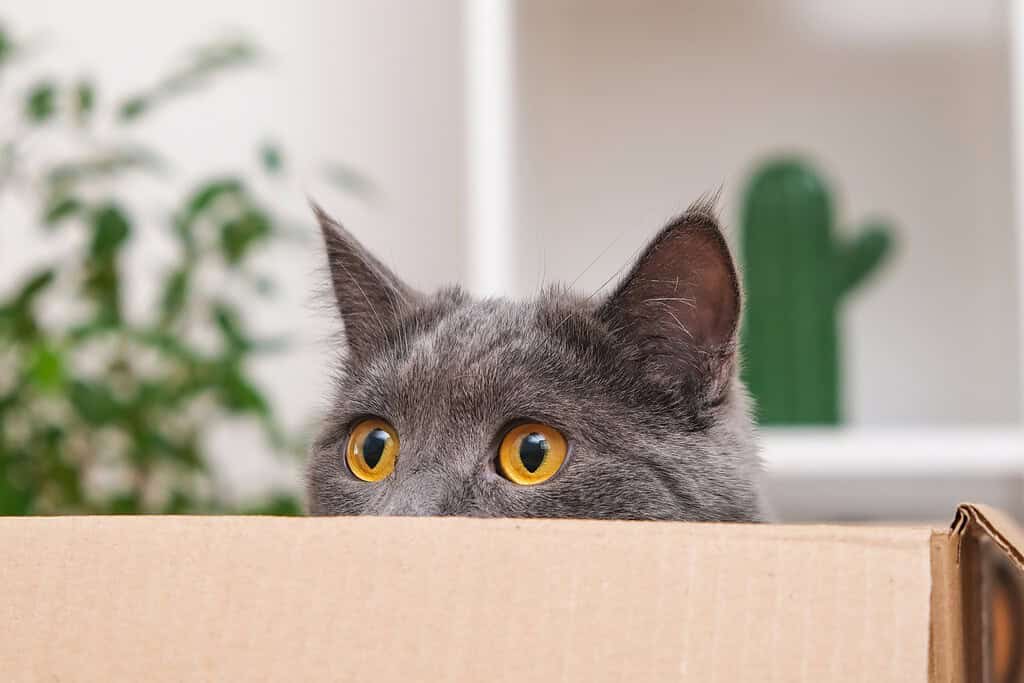
Most people picture only the long whiskers on the muzzle, but cats have several sets. Veterinarian Dr. Melody Conklin, writing for Zoetis Petcare, lists whiskers on the upper lip, the chin, above each eye, toward the back of the cheeks and on the back of the front legs. VCA adds that the exact pattern varies by breed.
| Whisker set (scientific name) | Where and how many | Main job |
|---|---|---|
| Muzzle (mystacial) | Upper lip; usually 12 per side in four rows, about 24 total | Measuring gaps, sensing air currents, guiding the bite |
| Eyebrow (superciliary) | Above each eye; at least two per eye | Triggering a protective blink |
| Chin (mandibular) | Under the chin; a few | Touch sensing near the mouth and chin |
| Cheek (genal) | Back of the cheeks, between lip and eyes; a few | Spatial awareness around the head |
| Wrist (carpal) | Back of each front leg; a few, hard to see | Feeling prey held in the paws, help when climbing |
The muzzle count is the most consistent. VCA, Zoetis and Cats Protection all describe 12 whiskers per side in four rows. Cat behaviorist Pam Johnson-Bennett adds a neat detail: the top two rows can move independently of the bottom two. For the smaller sets, sources give only rough counts, so treat “a few” as the honest answer.
Length varies too. Cats Protection puts the average whisker at roughly 5 to 10 centimeters (2 to 4 inches), and Zoetis notes that kittens are born with short whiskers that lengthen as they grow.
How do cat whiskers actually work?

A whisker looks like an oversized hair, and in one sense it is. Whiskers are made of keratin, the same protein in fur and claws. The difference is what lies under the skin, and that hidden part is what turns a stiff hair into a sensor.
Deep roots packed with nerves
Whiskers grow from follicles that, according to VCA, sit about three times deeper than those of ordinary hair. Those follicles are packed with blood vessels and nerves, which is why VCA describes a cat’s whiskers as being as sensitive as a human’s fingertips. Researchers call the whole structure a follicle-sinus complex, and the whisker study discussed later describes nerve fibers running from it to the brainstem to process sensory information from the face.
Here is the surprising part: the whisker shaft itself has no nerves. Dr. Leonie Richards of the University of Melbourne’s veterinary hospital explains that the shaft does not “feel” anything. The sensing happens where it is embedded, at a root packed with nerve endings and fed by a strong blood supply. Think of the whisker as a lever and the follicle as the gauge that reads every tiny movement of that lever.
Muscles that aim the sensors
Each whisker connects to muscle, so a cat can sweep its whiskers forward, fan them out or pull them flat against the face. Veterinarian Dr. Marty Becker notes that cats push their whiskers forward to work out where to place a bite on prey they are holding, or to find and pick up objects with the mouth. Being able to aim the sensors, rather than just carry them around, is what makes whiskers so useful.
Proprioceptors and balance
VCA and Cats Protection both describe special sensory organs called proprioceptors at the base of the whiskers. These send the brain information about the position of the body and limbs. Cats Protection adds that they can detect which way gravity is pulling on a whisker, which helps a cat tell which way is up. Both sources say this is part of why cats are so good at landing on their feet.
Reading the air in the dark
As a cat walks, it stirs up air that bounces back off walls, furniture and other solid objects. Whiskers pick up those faint changes. VCA compares this to radar, and Pam Johnson-Bennett compares it to holding your arms out so your fingers can feel your way through a dark room. Cats see well in dim light, but Zoetis points out that they do not see well in heavy darkness, which is when whisker input takes over for getting around without bumping into things.
The built-in tape measure
The muzzle whiskers span roughly the width of the cat’s body. If a cat pokes its head into a gap and the whiskers touch both sides, it knows the opening is too tight. Dr. Richards adds a practical warning: in a very overweight cat, whisker span no longer matches body width, so the measure is less useful.
Hunting up close
Once prey is right under the nose, the eyes cannot focus on it, so the whiskers take over. Zoetis explains that the movement of prey against the whiskers helps a cat decide how to grab it and where to land the bite. The carpal whiskers on the back of the front legs help here too. According to Johnson-Bennett, they sense whether prey held in the paws is still moving and help with climbing, a point Dr. Richards echoes.
What do whisker positions say about your cat’s mood?
Cats do not have very expressive faces, so the whiskers are one of the clearer signals they give. Combined with the ears, eyes and tail, whisker position tells you a lot. Here is how the sources describe the main positions.
- Relaxed, slightly curved and spread out: a calm, content cat. Dr. Richards calls relaxed, droopy whiskers a good pointer to a happy cat.
- Pushed forward: interest, curiosity or excitement, according to Cats Protection. VCA adds that a threatened cat pulls the muzzle whiskers taut, flares them and points them toward the threat. Dr. Richards notes that straight forward can mean anger.
- Pinned back flat against the face: fear, anxiety or stress.
- Straight, bunched together and moved forward in a cat that seems quiet or withdrawn: possible pain.
That last point comes from research, not just observation. The Feline Grimace Scale, developed at the Université de Montréal and published in Scientific Reports in 2019, scores five facial features to detect acute pain in cats, and whisker position is one of them. A score of zero is “whiskers loose and curved.” The highest score is “whiskers straight and moving forward.” The scale’s developers say cat owners can use it too.
To read the whole cat, pair whiskers with our guides to cat tail language, what a slow blink means and why your cat stares at you.
Is whisker fatigue real?
“Whisker fatigue” or “whisker stress” is the idea that whiskers repeatedly brushing the sides of a narrow, deep bowl overstimulate a cat and put it off eating. Many respected sources accept the idea. VCA recommends flatter food and water dishes so repeated contact does not overwhelm the cat, and Zoetis says the follicle “can be overstimulated.” But the actual evidence is thin.
The only controlled study we could find is “Evaluation of whisker stress in cats” by Jennifer Slovak and Taylor Foster, published online in the Journal of Feline Medicine and Surgery in 2020. The authors noted that, until then, the term appeared only in commentary and opinion pieces. Forty indoor cats were enrolled and 38 finished. After a 12-hour fast, owners filmed each cat eating from its normal dish for up to five minutes, counting food eaten and kibble dropped. After a week on a commercially advertised whisker-friendly dish, they repeated the test.
The result: no evidence that the whisker-friendly dish increased time spent eating, reduced dropped food or increased the amount eaten. In a side-by-side test, though, 24 of 38 cats (63%) chose the whisker-friendly dish, nine chose their usual bowl and five showed no preference.
The authors were candid about the limits. The test covered only five minutes, hungry cats may ignore mild whisker discomfort, owners knew which dish was which, and the left-right position of the dishes was not controlled, so some cats may simply have picked the closer or newer one. Tufts University veterinary nutritionist Dr. Lisa Freeman summarized it as negative results and compared it to cat water fountains: some cats love them, some do not care and some refuse them.
Should you ever trim a cat’s whiskers?
No. Every veterinary source we read agrees on this. Zoetis answers the question with “Absolutely not,” explaining that whiskers do not overgrow and never need trimming. Cats Protection says there is no benefit to cutting them. Dr. Marty Becker goes further and tells owners to say no if a groomer wants to trim them to neaten the face.
The reason is not mainly pain. Cutting the shaft does not hurt, because the shaft has no nerves. The problem is what the cat loses. Without whiskers it cannot measure gaps or sense its surroundings as well, and Dr. Richards, who has had to trim them for medical reasons, describes the effect plainly.
“It makes them disorientated, it’s harder for them to assess where their surroundings are.”
Dr. Leonie Richards, head of general practice, University of Melbourne U-Vet Veterinary Hospital, quoted in Pursuit by the University of Melbourne (2016)
She adds that it can leave cats a little frightened until the whiskers grow back, and notes that whiskers matter when cats judge whether they can safely leap onto a small or narrow landing spot.
Plucking or pulling is worse than cutting. That tugs on the nerve-rich follicle, and VCA warns that it is painful. When you pet your cat’s face, VCA suggests touching the whiskers gently and only along the grain.
The one exception is a vet’s decision. Zoetis says the only reason to trim whiskers is at your veterinarian’s direction for a medical issue, and Dr. Richards gives an example: clearing the area around a cheek abscess. If something sticky is matted into your cat’s whiskers, wipe it gently with a damp cloth rather than reaching for scissors.
Help a finder read your cat, too
Whiskers help your cat find its way around, and a Shiloh’s House Smart Tag helps a stranger get your cat home. One tap with any phone opens your cat’s live profile, with one-tap call, text and directions plus the behavior notes you add.
Is it normal for cats to shed whiskers?
Yes. Finding a stray whisker on the couch or next to the food bowl is normal. Whiskers go through a growth and shedding cycle like the rest of the coat. Zoetis notes that cats usually lose just one or two at a time, and Cats Protection says the same.
A shed whisker is replaced. Cats Protection says regrowth usually takes six weeks to three months, as long as the follicle is not damaged, and Zoetis puts it at two to three months. Because whiskers fall out one or two at a time, you will rarely notice a gap.
A few everyday things can shorten whiskers without signaling illness. Cats that groom each other sometimes nibble a housemate’s whiskers short, and kittens playing rough do it too. Breed matters as well. Dr. Becker notes that Devon Rex and Cornish Rex cats often have short, kinked or curly whiskers, which is simply part of their coat type.
When do broken or curly whiskers need a vet?
Whisker problems are usually a sign of something else going on, so they are worth noticing. Zoetis advises talking to your vet if your cat sheds more than a couple of whiskers at a time or if whiskers keep breaking off. Possible causes it lists include parasites, skin conditions, allergies, chin acne and abscesses. Cats Protection adds that a lot of whiskers lost at once, or whiskers that do not grow back, can point to illness or injury.
The pattern of damage can offer clues. A veterinary dermatology lecture published by dvm360 notes that broken whiskers on both sides of the face are common in cats with itchy faces from allergies or parasites, often alongside chin acne, and usually show split ends. Whiskers cut too cleanly suggest someone used scissors. Curled tips can mean the cat brushed against a stove or another heat source.
Newly wavy whiskers deserve particular attention. In a 2023 study in BMC Veterinary Research, Japanese researchers examined 358 cats and found that 50 of the 56 cats with wavy whiskers (89.3%) tested positive for feline leukemia virus (FeLV). The sign was specific but missed many infections, catching only about two-thirds of FeLV-positive cats. The authors say blood testing is still the preferred way to screen.
How can you protect your cat’s whiskers every day?
Most whisker care comes down to leaving them alone and noticing changes. A few habits help:
- Never trim, pluck or pull whiskers, and tell groomers and children the same.
- Pet the face gently and on your cat’s terms, stroking along the grain.
- Try a wide, shallow food dish if your cat seems fussy at a deep bowl.
- Keep your cat at a healthy weight so its whiskers still match its body width.
- Keep cats away from open flames and hot stovetops, which can singe whiskers.
- Watch for sudden shedding, broken whiskers or waviness, and mention it at checkups.
Whiskers help your cat navigate its own world, but they cannot guide it home if it slips out an open door. Every cat, including indoor cats, should wear identification. Our guide to cat ID tags explains what to include, and our comparison of breakaway cat collars covers safe options to hang a tag on.
If you use a Shiloh’s House Smart Tag, the free Lohji app (App Store, Google Play) is where you set up your cat’s profile. Add medical notes and behavior notes, such as “shy, hides when scared” or “flattens whiskers and hisses at strangers but is not aggressive,” so a finder knows how to approach. You can list up to three contacts for one-tap calling, texting and directions, and record up to three short voice messages to calm your cat while help arrives. Lohji can also turn a photo of your cat, whiskers and all, into a cartoon character for stickers and phone wallpapers.
Frequently asked questions
How many whiskers does a cat have?
Most cats have about 24 whiskers on the muzzle, 12 on each cheek arranged in four rows. On top of those, cats have at least two whiskers above each eye, a few on the chin, a few toward the back of the cheeks and a small tuft on the back of each front leg. The exact pattern varies from cat to cat and by breed, so do not worry if your count is a little different.
Does it hurt a cat to cut its whiskers?
Cutting the whisker shaft is not painful because the shaft has no nerves. That does not make it acceptable. Trimmed whiskers leave a cat less able to judge gaps and sense its surroundings, and vets say it can make cats disoriented or a little frightened until the whiskers regrow. Pulling or plucking a whisker is different: it tugs on the nerve-rich follicle and does hurt.
Do cat whiskers grow back?
Yes, as long as the follicle is healthy. Cats Protection says whiskers usually take six weeks to three months to regrow, and Zoetis puts it at two to three months. Cats naturally shed a whisker or two at a time and replace them, so a stray whisker on the floor is nothing to worry about. Whiskers that do not regrow, or many lost at once, are worth showing your vet.
What does it mean when a cat’s whiskers point forward?
Forward whiskers usually mean the cat is focused on something. That can be curiosity or excitement during play, hunting focus or, according to VCA, a response to a threat. Whiskers that are straight, bunched together and forward are also one of the signs scored on the Feline Grimace Scale for pain. Look at the ears, eyes, posture and tail together before deciding what your cat is feeling.
Do cats need whisker-friendly bowls?
Not necessarily. The one controlled study, published in 2020, found that a whisker-friendly dish did not change how long cats ate, how much they ate or how much they dropped. About 63% of cats did choose the shallow dish in a side-by-side test, though that result has caveats. A wide, shallow bowl is a cheap, harmless thing to try, but it will not solve a real appetite problem.
Why are my cat’s whiskers curly or wavy?
Some breeds, such as the Devon Rex and Cornish Rex, naturally have curly or kinked whiskers. Whiskers can also curl after brushing against a heat source like a stove. However, a 2023 study found that most cats with newly wavy whiskers tested positive for feline leukemia virus. If straight whiskers start turning wavy and your cat is not a Rex breed, ask your vet about FeLV testing.
Sources
- Journal of Feline Medicine and Surgery (via PubMed), Slovak JE and Foster TE, Evaluation of whisker stress in cats (2020)
- Cummings School of Veterinary Medicine at Tufts University, Petfoodology, Whisker worry: Are cats’ whiskers a key to their eating pleasure? (2021)
- Cats Protection, Why do cats have whiskers? (2024)
- VCA Animal Hospitals, Why Do Cats Have Whiskers? (undated)
- Zoetis Petcare, Dr. Melody R. Conklin, Cat Whiskers 101 (undated)
- Pursuit by the University of Melbourne, Why a cat’s whiskers are the bee’s knees (2016)
- Scientific Reports, Evangelista MC et al., Facial expressions of pain in cats: the development and validation of a Feline Grimace Scale (2019)
- BMC Veterinary Research, Morishita M et al., Wavy changes in the whiskers of domestic cats are correlated with feline leukemia virus infection (2023)
- Vetstreet, Dr. Marty Becker, How Dog and Cat Whiskers Work (2013)
- Cat Behavior Associates, Pam Johnson-Bennett, Your Cat’s Whiskers (2014)
- dvm360, Feline facial skin diseases (Proceedings) (2011)