Why Does My Cat Attack My Feet? How to End the Ankle Ambush
 Shiloh’s House Team
·
·
15 min read
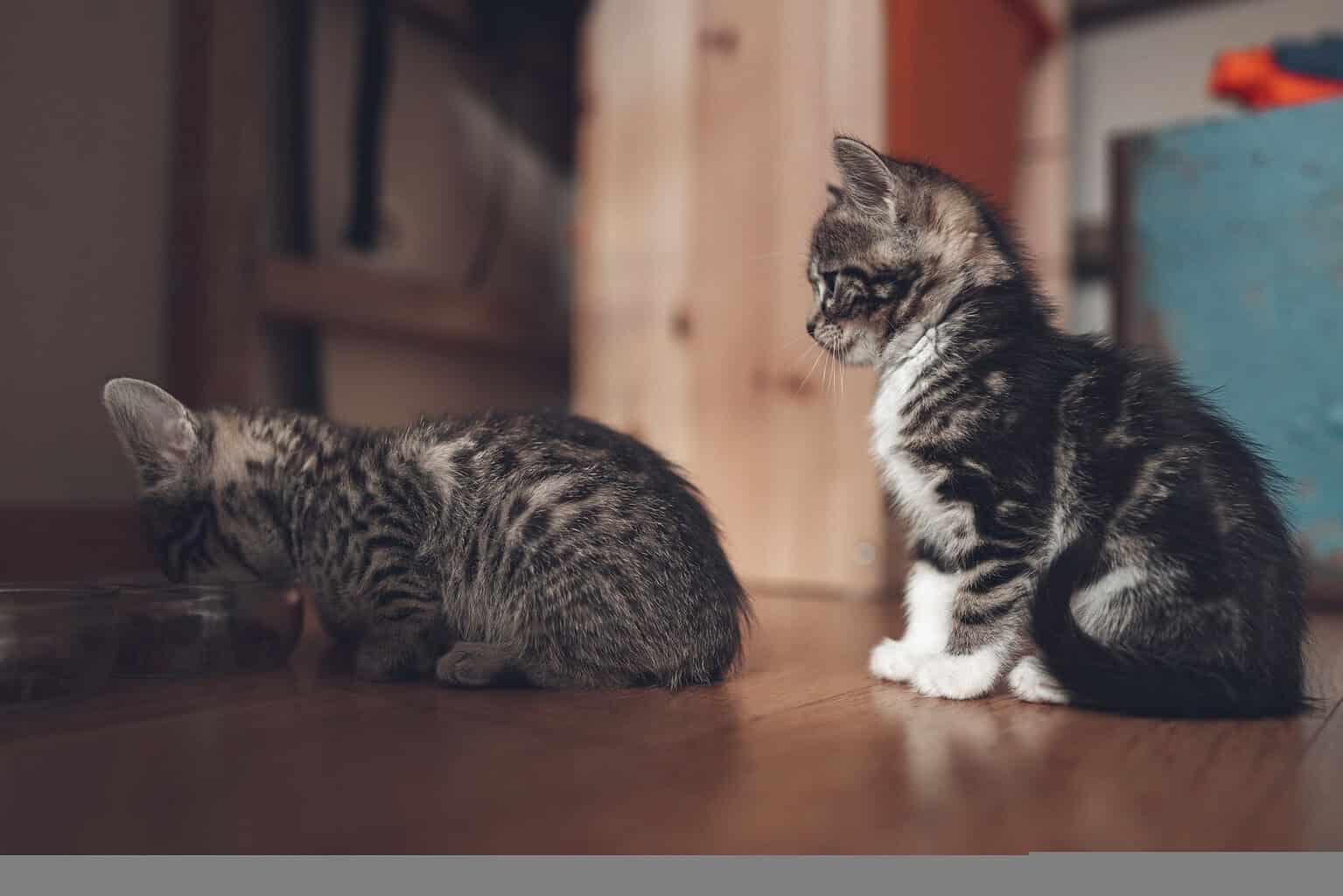
A cat who attacks your feet is almost always hunting, not fighting. Moving ankles look like prey, and a young, bored or under-played cat will stalk, ambush and grab them exactly the way it would a mouse. Behaviorists call it play aggression or misdirected predatory behavior, and it is the most common kind of aggression cats aim at their owners. The fix is not punishment. It is giving the cat something better to hunt, on a schedule, and making your feet a boring target.
Why feet, and why now
Cats are built around a hunting sequence: watch, stalk, chase, pounce, grab, bite. Feline behavior specialists Marta Amat and Xavier Manteca, writing in the Journal of Feline Medicine and Surgery, describe the typical attack on a person as silent and triggered by movement, with legs shifting under a bed sheet or someone climbing the stairs as classic triggers. Feet are the part of you that moves most like a small animal: low to the ground, darting, disappearing around corners. To a cat with nothing else to hunt, a passing ankle is the best game in the house.
The ASPCA calls play aggression the most common type of aggressive behavior cats direct at their owners, and notes that rough play is normal in kittens and cats under about two years old. Cornell’s Feline Health Center adds that the cats most likely to do it are young cats and kittens that were not raised with littermates, or that lack opportunities to play. Littermates teach bite inhibition by ending the game when it gets too rough; a kitten raised alone never gets that lesson, so it arrives in your home with full-strength teeth and no sense of when to stop.
If you are reading this in January with a cat parked under the hall table, the timing is not your imagination. Cats are crepuscular, most active around dawn and dusk, and in deep winter dusk falls at about the hour everyone comes home and starts walking around. The cat’s prime hunting window now lines up with your busiest hallway traffic.
Play attack or real aggression
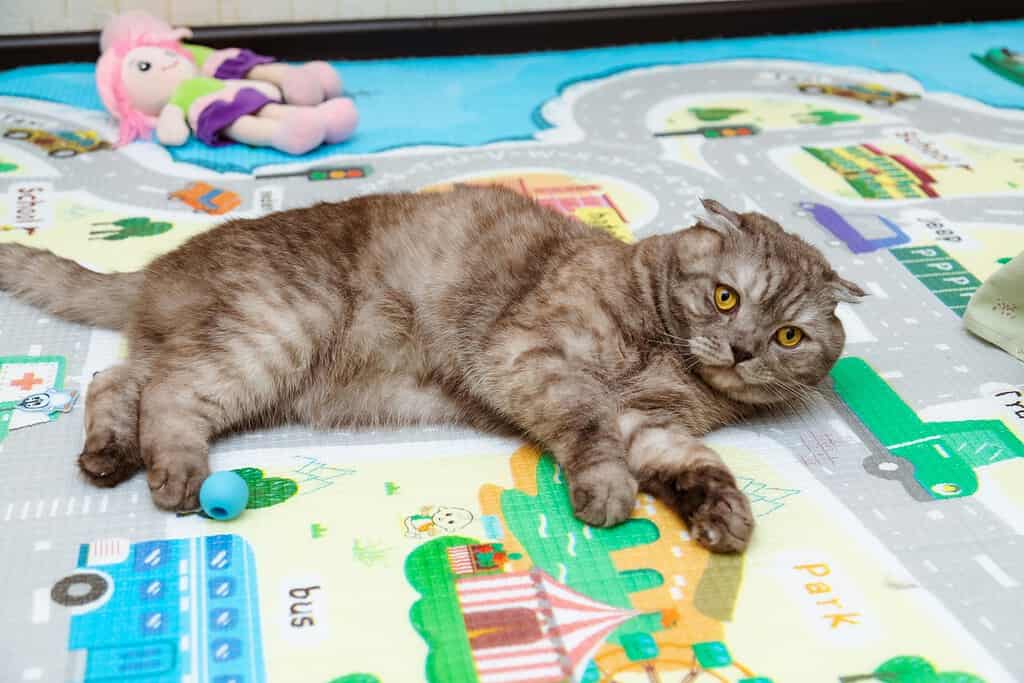
Most foot attacks are play, but it is worth knowing the difference, because the handling is different. A play-motivated cat looks like a hunter. Cornell describes the warm-up as a thrashing tail, ears pinned, dilated pupils, then a stalk and a pounce from a hiding place as the target passes by. The grab is often paws wrapped around your foot with an inhibited bite, and the cat may bounce away afterwards looking pleased with itself. Sharon Crowell-Davis, a veterinary behaviorist at the University of Georgia, describes the pattern in the Compendium as a cat that follows you, stares, hides behind furniture or a door with its tail twitching, then runs out and attacks. In mild cases the cat just runs past and bats your leg.
Fear or pain-driven aggression looks and sounds different. The ASPCA’s list of defensive postures includes crouching with the head tucked, ears flattened sideways or back, open-mouthed hissing or spitting, and strikes with the front paws when approached. A cat like that is not hunting you; it wants you to go away. And a cat that has suddenly started attacking as an adult, with no history of rough play, needs a vet before a behavior plan. Cornell lists hyperthyroidism, osteoarthritis, dental disease and central nervous system problems among the conditions that can cause aggression, and the ASPCA’s list runs from abscesses to arthritis to sensory decline in older cats.
There is a third pattern worth knowing. Redirected aggression happens when a cat is wound up by something it cannot reach, a strange cat outside the window or a loud noise, and unloads on whoever is nearest. Amat and Manteca note that by some accounts it makes up as much as half of the aggression cases seen in referral practices, that it can be violent, and that the cat may stay aroused for anywhere from half an hour to days. If your cat went for your legs right after staring down a neighborhood cat through the glass, that is a different problem from play, and the first move is to give the cat space and block the view.
What makes it worse
The single biggest contributor is one most of us are guilty of: playing with the cat using our hands or feet. It is adorable in a ten-week-old kitten and much less adorable in a four-year-old cat with adult teeth. Crowell-Davis puts it plainly: people encourage kittens to attack their hands and feet because the claws are too short to hurt, and the kitten learns that hands and feet are toys. The numbers back her up. A 2025 survey of 3,500 cat owners in the Polish Journal of Natural Sciences found that 42 percent of respondents played with their cat using their hands, and that owners who did were far more likely to report their cat attacking their hands or legs: 56 percent of hand-players versus 35 percent of everyone else.
The second contributor is too little play, or play that never ends properly. Under-stimulation, unused energy and a lack of appropriate play outlets are the common thread in every veterinary description of play aggression. Cats Protection’s behavior team points out that a cat showing this behavior often simply does not have much else to do, which is why it is so common in bored indoor cats. The same Polish survey found something more specific: the way play ends matters. Owners who put the toy away when the session finished reported the lowest total aggression, while leaving the toy out for a few minutes afterwards was associated with more attacks on arms and legs. The cat is left mid-hunt with the prey lying there, and your ankle becomes the next thing that moves.
The third contributor is the household’s reaction. Jumping, yelping and running are exactly what prey does, so a dramatic response makes the game better. Crowell-Davis describes the appeal from the cat’s side: leap onto the owner’s leg, sink teeth and claws into flesh, and watch the owner jump around and scream. The cat does not think it is causing harm. To the cat, it is just a game.
If you do not provide a cat with an acceptable way to play, it will find an unacceptable way to play.
Sharon Crowell-Davis, DVM, PhD, DACVB, Compendium on Continuing Education for the Practicing Veterinarian
How to stop a cat attacking your feet
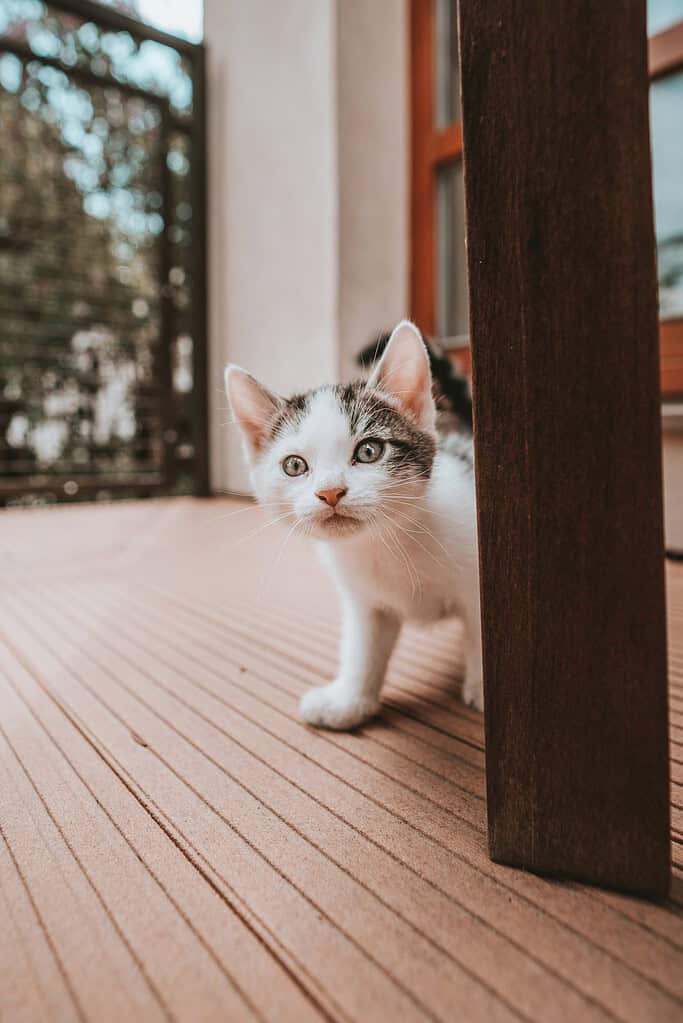
The plan has three parts, and all three have to run at once: give the cat a better hunt, make yourself a worse target, and stop rewarding the ambush. Here is how the veterinary sources lay it out.
Schedule the hunt before the ambush
Start a journal for a week. VCA Animal Hospitals suggests noting the time and location of every attack, because most cats have a pattern, and once you know it you can beat the cat to it. If your cat goes for your ankles at 6 p.m. in the hallway, run a proper play session at 5:40 p.m. in the hallway. VCA calls this beating the cat to the punch, and recommends aerobic sessions, the kind that end with a cat flopped on its side and panting slightly, timed for when the cat is most wound up.
Use a wand toy, a fishing-rod toy or something you can throw, never your hands. Cats Protection recommends toys that keep the game well away from your body and that mimic prey, and stresses letting the cat catch and kill the toy regularly so it does not end the session frustrated. Short bursts work better than marathons for most cats. Cats Protection suggests games of one to two minutes repeated through the day, with older cats happy at three or four sessions and younger cats wanting ten or more, while a survey of 277 cat owners by veterinary behaviorists Beth Strickler and Elizabeth Shull found that owners who played in bouts of five minutes or more reported fewer behavior problems than those who played for a minute at a time. The practical middle ground is several short sessions daily, the longest ones at dawn and dusk, each one ending with a catch.
End the session on purpose. Put the wand away where the cat cannot see it, and consider offering a small meal or a few pieces of kibble from a puzzle feeder afterwards, which finishes the hunting sequence the way a real hunt would. Rotate toys so they stay interesting; our best cat toys roundup covers wands, kickers and self-play options worth keeping in the drawer.
Make your feet boring
This is the part people skip, and it matters. Crowell-Davis recommends that during the early weeks of a behavior plan the household stop walking around barefoot and bare-legged. For most cats, long sturdy pants such as denim jeans and closed shoes that cover the whole foot are enough; for severe cases she suggests soccer shin guards from a secondhand sporting goods store. She also notes that some clothing is irresistible to a play-aggressive cat, particularly long skirts that swish as you walk. The point is not to armor up forever. It is that a cat that ambushes a denim leg and gets no reaction learns the game has stopped paying out, and Cats Protection suggests weaning the protective clothing off gradually as the cat shifts its attention to toys.
When the cat does grab you, freeze. Amat and Manteca are specific that moving during an attack is what fuels it, because the movement of your body is the trigger, so standing still may stop the attack or at least reduce its intensity. Cats Protection says the same: keep perfectly still and very quiet so there is nothing exciting to chase, do not pick the cat up in that state, and if someone else is home, have them distract the cat with a toy so you can walk away. Then ignore the cat for a few minutes. Cornell notes that walking away from a cat engaged in play aggression teaches it that inappropriately rough play results in no play at all.
Take away the launch pads
Ambushers need a hide. Cornell and VCA both recommend identifying the spots the cat launches from, under the bed, behind the sofa, the gap beside the fridge, and blocking access to them, at least for a while. A breakaway collar with a bell helps you know where the cat is before you round the corner, and Cornell suggests it specifically for signaling a cat’s whereabouts before and during attacks. If the collar carries ID as well, so much the better; indoor cats who bolt through an open door during a chase are the ones least likely to be wearing any.
Give the cat vertical territory and a window to work. A cat tree near a window or a window perch gives a bored cat an hour of bird television instead of an hour of hallway surveillance. Just be aware that a strange cat on the other side of the glass can trigger redirected aggression; if that happens, Cornell’s advice is to pull the shade and deter the outdoor cat.
Interrupt early, and never with your hands
Timing is everything with an interruption. Crowell-Davis writes that it has to happen while the cat is first showing intent, crouching with a twitching tail and staring at a moving ankle, and that trying to interrupt a cat already in the middle of a highly aroused attack is likely to make things worse. Her favorite tool is not punishment at all but distraction: keep old pieces of cloth or small pillows around the house and toss one near, not at, the cat the moment it locks on. The cat redirects its pounce onto the cloth. Amat and Manteca add a caution: throwing a toy once the attack has already started can read as you joining the game, and reward it.
If you do use a startle, keep it mild and hands-free. Cornell suggests a hiss or a quick puff from a can of compressed air within a couple of seconds of the behavior, with the goal of distracting the cat rather than scaring it. The one thing every source agrees on is what not to do. Cornell says never to physically punish or even touch the cat during these moments, because it can make the cat fearful of people or be read as play, which rewards the attack. A 2021 study of 262 adult cats adopted as kittens found that owners who used positive punishment reported more severe aggressive behavior, not less.
When a second cat helps, and when it does not
A common suggestion for a play-aggressive only cat is to get it a friend, and there is some logic to it. VCA notes that play aggression persists most in cats under two with no feline companions, and a well-matched young cat gives a hunter a sparring partner who will end the game when it gets too rough. But it is not a quick fix. Adult cats do not always play together, a badly matched introduction creates a different aggression problem, and a second cat does not excuse you from the daily play schedule. If you are already thinking about it, read our guide to why cats bite first, since it covers the overstimulation and redirected biting that often gets mistaken for play, and consider a kitten of similar age and energy rather than a calm senior who will be bullied.
What does reliably help is more and better play from you. A 2023 study of 1,591 cat guardians across 55 countries, published in Animal Welfare, found that longer daily play, a greater variety of games, and play initiated by both cat and guardian were all associated with stronger cat-guardian relationships, and that guardians reported behavior changes linked to distress when play was absent. Ten minutes a day with a wand toy is not spoiling the cat. It is the job.
Not tagged yet?
A cat mid-chase does not stop at an open door. A Shiloh’s House smart tag on a breakaway collar lets anyone who finds your cat tap it with any phone, no app needed, to see your contact info and your cat’s notes. No battery, no subscription, and your number is laser-engraved on the back as a backup.
Frequently asked questions
Why does my cat attack my feet at night or in bed?
Feet moving under a blanket are one of the classic triggers behaviorists list for misdirected predatory play, because they move like a hidden animal. Add that cats are most active around dusk and dawn and you get a cat hunting your toes at bedtime and 5 a.m. The fix is a vigorous play session with a catch and a small meal right before bed, keeping the cat out of the bedroom for a few weeks if it will not stop, and never wiggling your feet to play. Our guide to night-time zoomies covers the rest of the overnight routine.
Why does my cat attack my feet when I walk past?
Walking past is the moment your feet look most like prey: fast, low and about to disappear. A cat lying in wait under a table or behind a door is ambushing, which is a normal piece of hunting behavior with nowhere else to go. Block the hiding spot, carry a toy to toss ahead of you through that doorway, and schedule play for the time of day the ambushes cluster.
Why does my cat bite my feet but not my hands?
Usually because your feet move more like prey and your hands are the thing that pets and feeds it. Some cats also learned specifically that feet are fair game from a toe-wiggling game in kittenhood. If the cat bites hands too, especially during petting, that is more often overstimulation than play; our cat biting guide explains how to tell them apart.
Is it play or aggression if my cat attacks my feet?
Look at the body language. A playful hunter stalks, pounces from a hide, grabs with paws and bites with some restraint, and often bounces off afterwards. A fearful or defensive cat hisses or spits, flattens its ears, crouches with its head tucked and strikes when you approach. Play is managed with scheduled hunting and boring feet; fear or pain needs a vet first.
Will my cat grow out of attacking my feet?
Many do calm down after their second birthday, which is why veterinary sources describe play aggression as most common in cats under two. But cats that have learned feet are toys can keep it up for life, and Crowell-Davis notes that play aggression can start at any age. Changing the game now is faster than waiting it out.
Should I squirt my cat with water when it attacks my feet?
Not as a first step. Water bottles disrupt some cats, frighten others and excite a few, and if the timing is late they can make the attack worse. Veterinary behaviorists prefer prevention (play before the ambush, block the hide, wear shoes) and distraction (toss a cloth near the cat as it locks on). Physical punishment of any kind has been linked to more severe aggression and should never be used.
Sources
- Feline Behavior Problems: Aggression — Cornell Feline Health Center, Cornell University College of Veterinary Medicine
- Aggression in Cats — ASPCA
- Common feline problem behaviours: Owner-directed aggression — Marta Amat and Xavier Manteca, Journal of Feline Medicine and Surgery, 2019
- Human Feet Are Not Mice: How to Treat Human-Directed Feline Aggression — Sharon L. Crowell-Davis, Compendium on Continuing Education for the Practicing Veterinarian, August 2007
- Influence of improper play with the cat on the frequency of aggressive behaviour — Wojtaś, Garbiec, Kaleta, Decowska and Kapustka, Polish Journal of Natural Sciences, 2025
- An owner survey of toys, activities, and behavior problems in indoor cats — Beth L. Strickler and Elizabeth A. Shull, Journal of Veterinary Behavior, 2014
- Cats just want to have fun: Associations between play and welfare in domestic cats — Henning, Nielsen, Fernandez and Hazel, Animal Welfare, 2023
- Risk factors for aggression in adult cats that were fostered through a shelter program as kittens — O’Hanley, Pearl and Niel, Applied Animal Behaviour Science, 2021
- Play and Predatory Aggression in Cats — VCA Animal Hospitals
- Cats and Play — Cats Protection behaviour advice
- Play Aggression (Cats) — San Francisco SPCA
- Understanding “play aggression” in cats — Ontario SPCA and Humane Society, 2025