Yes, cats can eat a small piece of plain, cooked, boneless turkey breast as an occasional treat. Cats are obligate carnivores, so lean poultry suits them, but the holiday bird is rarely plain. Skip the skin, drippings, bones, stuffing, gravy and anything cooked with onion or garlic, never offer raw turkey, and pass on deli slices, which are loaded with sodium. For most cats, a tablespoon or two of white meat uses up the whole day’s treat budget.
Last updated: November 2025
Can cats eat turkey?
Yes. Plain turkey meat is not toxic to cats, and it is one of the better human foods you can share. PetMD notes that cats are obligate carnivores, which means they are built to thrive on meat, and that plain, fully cooked turkey provides lean protein, vitamins, minerals and taurine.
The Cornell Feline Health Center takes a careful line. It says it is likely OK to give a cat a very small piece of lean turkey as a special treat, but that it is generally best to avoid feeding cats human food at all, and to keep them out of the garbage.
The risk comes from how a holiday bird is prepared: brined, buttered, seasoned, stuffed with onions and tied with string. Here is the quick version:
- Yes, in small amounts. Plain roasted white meat with the skin removed.
- Not a good idea. Skin, fatty dark meat, drippings and deli turkey.
- No. Bones, raw turkey, stuffing, gravy, and anything with onion, garlic, leeks or chives.
- Emergency. Swallowed string, twine or bones, or any meal with onion or garlic.
Our guide to foods cats can’t eat covers the rest of the table. Have a dog too? Our post on whether dogs can eat turkey covers their rules.
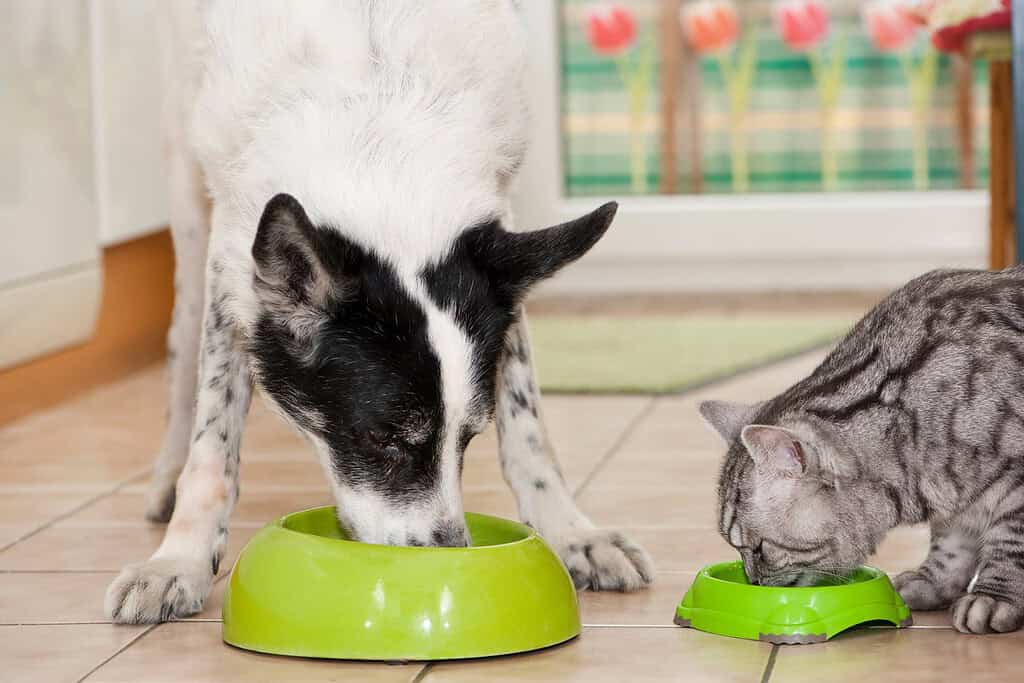
Which parts of a Thanksgiving turkey can cats eat?
White breast meat with the skin pulled off is the best choice. It is the leanest part of the bird. PetMD says a small amount of dark meat is fine too, but it carries more calories and fat, so it should be fed sparingly.
The numbers show why the skin and the deli tray are the problem parts. This table compares USDA FoodData Central values per 100 grams, about 3.5 ounces.
| Turkey (per 100 g) | Calories | Fat | Sodium | For cats |
|---|---|---|---|---|
| Breast, meat only, roasted | 136 | 2.0 g | 114 mg | Best choice, tiny portions |
| Breast, meat and skin, roasted | 164 | 5.3 g | 114 mg | Remove the skin first |
| Deli turkey breast, low salt | 109 | 0.8 g | 772 mg | Still too salty |
| Deli turkey breast, sliced, prepackaged | 106 | 3.8 g | 898 mg | Skip it |
Leaving the skin on more than doubles the fat in breast meat, by our math from the USDA figures, and that is before any butter or basting. Whole roasted breast meat works out to about 40 calories per ounce in the USDA data, which matters once you see how small a cat’s treat budget is.
Giblets, the neck and the carcass belong in the trash, not the bowl.
Is turkey skin or fat bad for cats?
Yes, it is a poor choice, though the reason is a little different for cats than for dogs.
The everyday problem is the stomach. PetMD warns that skin, fatty dark meat and greasy drippings can lead to vomiting or diarrhea. Skin also soaks up whatever the bird was cooked with, including butter, garlic, onion and herb rubs.
Pancreatitis is less clear-cut. The Cornell Feline Health Center says eating fat from meats can predispose cats to pancreatitis. At the same time, the Merck Veterinary Manual’s 2025 review explains that most cases in both dogs and cats are idiopathic, meaning no clear cause is found. It lists dietary indiscretion as a common risk factor in dogs, and notes that very high blood triglycerides are a risk factor in dogs but not in cats. It adds that in cats, dietary fat content may not be as important as in dogs, though high-fat diets are usually avoided.
So a fatty meal is a weaker trigger for feline pancreatitis than it is in dogs, but it is not a free pass. Merck also notes that most cats with pancreatitis have vague, nonspecific signs, so trouble is easy to miss during a busy holiday.
If your cat does vomit after a holiday treat, our guide on why cats throw up explains when it can wait and when it is an emergency.
Can cats eat turkey bones or the string from the roast?
No to both. Bones and string are among the most serious Thanksgiving hazards for cats, because they cause injuries that often need surgery.
Bones. PetMD explains that cooked turkey bones splinter easily, which can cause serious injuries in the mouth, esophagus, stomach and intestines. Cornell adds that eating poultry bones, or any bones, can cause blockages in the gut. Tufts veterinary nutritionists list bones, raw or cooked, among the foods to keep away from pets.
String and twine. The kitchen twine used to truss a turkey soaks up meat juices, which can make it tempting to a cat. Tufts names the string used to tie roasts as very dangerous to pets if eaten. Veterinarians call string, yarn, ribbon and tinsel linear foreign bodies. One end can catch, often under the tongue or in the stomach, while the gut keeps trying to move the rest along. The intestines bunch up around it and can be cut through.
UC Davis School of Veterinary Medicine says that cats often get strings wrapped around their tongues, that you should not try to pull the string out, and that surgery is often the best treatment, which makes it a veterinary emergency. PetMD also advises against making your cat vomit at home.
Cut the twine off the bird and put it straight into a lidded trash can with the netting and carcass.
Can cats eat stuffing, gravy or turkey cooked with onion and garlic?
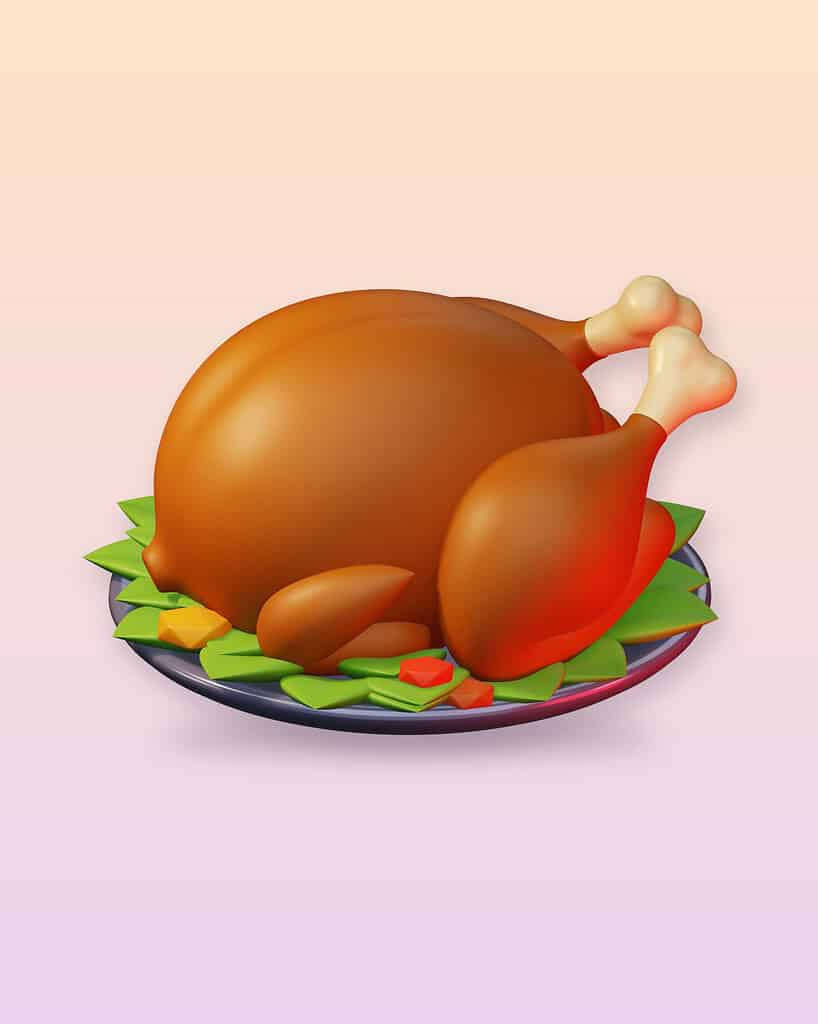
No. This is the most important rule on the holiday table, because the ingredients that make stuffing and gravy taste good are the ones that hurt cats the most. Onions, garlic, leeks, chives and shallots all belong to the Allium family, and cats react to them more strongly than any other common pet.
The Merck Veterinary Manual is direct about it. It says cats are the most susceptible species to onion and garlic poisoning, followed by dogs. Poisoning has been reported in cats after eating less than a teaspoon of cooked onions, or about 5 grams of raw onion per kilogram of body weight. Garlic is 3 to 5 times more toxic than onion. For a 10-pound cat, that raw onion figure works out to roughly 23 grams, or less than an ounce, by our math. Concentrated forms are the most common culprits, and Merck names dehydrated flakes, powders and dry onion soup mix in particular. Those are exactly the forms found in stuffing mixes, gravy packets, and seasoning rubs.
Here is what happens inside the body. Sulfur compounds in these plants damage red blood cells. Merck explains that the damage forms tiny clumps called Heinz bodies inside the cells and can also cause methemoglobinemia, a change that reduces how well blood carries oxygen. The damaged cells break apart, which leads to a type of anemia. Heinz bodies begin forming within about 24 hours, but the red cells typically break down 3 to 5 days after the meal. That delay is what fools owners. A cat that sneaked some stuffing on Thursday may look fine all weekend and then become weak on Monday.
Cooking does not make these foods safe. Merck says cats and dogs have been affected after eating raw, cooked, dehydrated or granulated onions and garlic. PetMD lists the signs to watch for in cats as weakness and depression, yellowed gums or skin, dark urine, rapid or deep breathing, loss of appetite, belly pain and diarrhea. It also notes that cats do not have to eat a lot of these foods to get very sick.
Several Thanksgiving dishes hide alliums where you might not expect them:
- Stuffing and dressing, which almost always contain onion and celery sautéed in butter.
- Gravy, which is often made from drippings, onion and garlic powder, flour and salt.
- The turkey itself, if it was stuffed with onions, rubbed with garlic butter or brined with seasoning.
- Green bean casserole, creamed onions and many mashed potato recipes.
- Pan drippings and broth, which carry both fat and seasoning.
Gravy is also mostly fat and salt, so it is a poor treat even when made without alliums.
The safest approach is to treat every seasoned dish as off limits and give your cat only meat you set aside before any seasoning touches it. If your cat does eat stuffing, gravy or seasoned turkey, call your veterinarian, the ASPCA Animal Poison Control Center at 888-426-4435 or the Pet Poison Helpline at 855-764-7661 the same day, even if your cat seems normal. A consultation fee may apply. Have the recipe or label ready.
Is raw turkey safe for cats?
No. Raw or undercooked turkey can carry germs that make cats sick, and it puts the people in your home at risk too.
The familiar risks are bacteria. PetMD warns that raw or undercooked turkey increases the risk of foodborne illness, and recommends baking, boiling or broiling it thoroughly. NBC News reported in early 2025 that both the CDC and the American Veterinary Medical Association discourage feeding uncooked meat diets to companion animals because of the pathogens they can carry.
Bird flu added a newer concern. In January 2025, the FDA required makers of cat and dog food that use uncooked or unpasteurized poultry or cattle ingredients to include H5N1 avian influenza in their food safety plans. The agency said it was tracking cases of H5N1 in domestic and wild cats in California, Colorado, Oregon and Washington State that were linked to eating contaminated food. It warned that cats in particular can experience severe illness or death from infection, and on September 30, 2025, it reissued the reminder ahead of fall bird migration.
The FDA notes that heat treatment inactivates H5N1 in meat, milk and egg products. One infectious disease expert put it plainly to NBC News.
“It’s better than nothing, but if you want to be really confident, cooking is the only sure thing.”
J. Scott Weese, professor, Ontario Veterinary College, and director, Centre for Public Health and Zoonoses, University of Guelph, NBC News (2025)
Guests at the door? Keep your cat’s ID one tap away
Cats slip out when the doorbell keeps ringing. Shiloh’s House Smart Tags let anyone who finds your cat tap the tag with a phone, no app needed, to call or text you and read notes like “no table food, sensitive stomach.”
Can cats eat deli turkey?
It is not a good idea. Deli turkey looks like a lean shortcut, but it is a processed meat, and the main issue is salt.
In the USDA data, sliced prepackaged turkey breast has 898 milligrams of sodium per 100 grams, compared with 114 milligrams in plain roasted breast meat. That is nearly 8 times as much, by our math, and even the low-salt deli version has 772 milligrams. A single 1-ounce slice of regular deli turkey carries about 255 milligrams of sodium, which is a lot for an animal that may weigh 10 pounds.
PetMD lists deli turkey, turkey bacon and turkey sausage among the forms that are unsafe for cats, because they often contain sodium, preservatives, nitrates and other ingredients cats do not need. PetMD also notes that some pre-cooked or seasoned turkeys contain garlic and onion, which bring back the anemia risk described above. Tufts veterinary nutritionists point out that the high sodium in many holiday foods is a particular concern for pets with heart disease, and that cats with kidney disease need to be careful with sodium and phosphorus.
If your cat is a fan of other people foods, our guide to whether cats can eat tuna covers another favorite with similar rules about portions and salt.
How much turkey can a cat eat?
Less than most people expect. Tufts veterinary nutritionists recommend that treats and table food make up less than 10 percent of a cat’s daily calories, with the rest coming from a complete and balanced cat food. They estimate that a 10-pound cat typically needs just over 200 calories a day, so no more than about 20 calories from treats.
The World Small Animal Veterinary Association publishes daily calorie ranges for healthy adult cats at an ideal body condition. Using those ranges, here is how the treat budget converts to plain roasted turkey breast at about 1.5 calories per gram, or about 12 calories per level tablespoon according to Tufts.
| Cat’s weight | Daily calories (WSAVA) | 10% treat budget | Turkey breast that uses the whole budget |
|---|---|---|---|
| 6.6 lb (3 kg) | 200 to 210 | 20 to 21 calories | about 14 g (1.5 tbsp) |
| 8.8 lb (4 kg) | 225 to 250 | 23 to 25 calories | about 16 g (2 tbsp) |
| 9.9 lb (4.5 kg) | 240 to 270 | 24 to 27 calories | about 17 g (2 tbsp) |
| 12.1 lb (5.5 kg) | 260 to 310 | 26 to 31 calories | about 19 g (2.5 tbsp) |
| 15.4 lb (7 kg) | 280 to 370 | 28 to 37 calories | about 22 g (2.5 to 3 tbsp) |
These are our calculations from the WSAVA, Tufts and USDA figures, and they are ceilings, not targets. Overweight or less active cats should get less, and other treats that day count too.
Tufts offers a useful comparison: a portion of turkey that seems small to a person can equal one third to one half of a pet’s daily calories. One ounce of roasted breast, about 40 calories, is roughly two days of treats for a 10-pound cat. Our cat feeding chart by weight can help you check your cat’s regular portions too.
How do you keep a cat off the counter on Thanksgiving?
Tufts veterinary nutritionists say it is not unusual for emergency rooms to see a dog, or cat, that stole the holiday turkey while it was waiting to go into the oven or back into the refrigerator.
- Give your cat a quiet room. Cornell recommends a space away from guests with water, food, a litter box and a bed your cat can reach easily.
- Never leave food out unattended. Cover the bird while it rests, and put leftovers away promptly.
- Secure the trash. Use a lidded can, or take bones, twine and drippings outside right away.
- Brief your guests. Tufts suggests telling visitors your house rules about treats, especially if your cat has a medical condition.
- Watch the door. Cornell advises being mindful of where your cat is whenever you open the door to welcome guests.
Escapes are a real holiday risk, and our guide on how to keep an indoor cat from escaping covers door dashing in detail. It also helps to update your cat’s safety profile in the free Lohji app (App Store or Google Play) before guests arrive. You can add medical and behavioral notes and up to 3 guardians, and anyone who taps your cat’s Smart Tag sees them. While you are in there, Lohji’s seasonal stickers include a Thanksgiving design starring your cat’s Lohji character. For more holiday planning, see our Thanksgiving with pets guide.
Does turkey make cats sleepy?
Not because of tryptophan. The idea that turkey causes a food coma is a myth for people and cats alike.
McGill University’s Office for Science and Society explains that turkey does contain tryptophan, an amino acid the body uses to make serotonin and melatonin. But chicken, beef, lamb and salmon contain comparable amounts per gram, and cheddar and parmesan contain more. A typical tryptophan supplement dose for sleep is around 4 or 5 grams, while an entire 11-pound turkey holds only about 12 grams in total.
A cat napping after a holiday treat is just being a cat, especially after a morning of strangers, noise and kitchen smells. If your cat is weak or off food in the days after, call your vet, since that can signal onion poisoning or a swallowed string.
Turkey’s everyday cousin works much the same way. Our guide to whether cats can eat chicken covers raw chicken and bird flu, bones, skin and a daily amount by weight.
Frequently asked questions
Can cats eat turkey every day?
It is better as an occasional treat. Treats and table food should stay under 10 percent of daily calories, which for a 10-pound cat is about 20 calories, or under 2 tablespoons of breast meat. Turkey alone is not a complete diet, so daily portions can crowd out the balanced food your cat needs.
Can kittens eat turkey?
A tiny piece of plain, cooked, boneless breast meat is generally fine for a healthy kitten that is already eating solid food. Kittens need complete kitten food for growth, so keep the portion very small. Skip skin, seasoning and bones entirely, and introduce any new food slowly to avoid an upset stomach.
What should I do if my cat ate turkey bones?
Call your veterinarian or an emergency clinic right away, even if your cat seems fine. Cooked poultry bones can splinter and injure the mouth, throat, stomach or intestines, or cause a blockage. Do not try to make your cat vomit at home. Watch for gagging, drooling, vomiting, refusing food, hiding or a tense belly, and tell your vet how much was eaten.
Can cats eat turkey skin?
It is best to avoid it. Turkey skin is where most of the fat sits, and USDA figures show breast meat with skin has more than twice the fat of skinless meat. Fatty foods can cause vomiting and diarrhea in cats, and Cornell notes that fat from meats can predispose cats to pancreatitis.
Is turkey gravy safe for cats?
No. Most gravy is made with pan drippings, onion or garlic powder, flour and salt. Onion and garlic can damage a cat’s red blood cells, and the Merck Veterinary Manual says cats are the most sensitive species. If your cat licked a plate of gravy, call your vet or a pet poison hotline the same day and have the ingredients ready.
Can cats eat turkey cat food during the holidays?
Yes, and it is the easiest way to include your cat in the celebration. Commercial cat foods and treats made with turkey are formulated for cats, rather than seasoned for people. Serve a small spoonful in your cat’s own bowl, and count any extra food or treats toward the 10 percent treat budget for the day.
Sources
- PetMD, Can Cats Eat Turkey? Benefits, Risks, and Feeding Tips, Sandra C. Mitchell, DVM (2022)
- PetMD, What Thanksgiving Foods Can Cats Eat?, Jennifer Coates, DVM (2024)
- Cornell Feline Health Center, Beware Holiday Hazards
- Tufts Petfoodology, The Most Popular Holiday Foods That Your Pet Should Avoid, Lisa M. Freeman, DVM, PhD (2023)
- WSAVA, Calorie Needs for an Average Healthy Adult Cat in Ideal Body Condition (2020)
- USDA FoodData Central, SR Legacy turkey breast records, roasted and deli (2019)
- Merck Veterinary Manual, Garlic and Onion (Allium spp) Toxicosis in Animals (2024)
- Merck Veterinary Manual, Pancreatitis in Dogs and Cats, Jörg M. Steiner (2025)
- FDA, Cat and Dog Food Manufacturers Required to Consider H5N1 in Food Safety Plans (2025)
- NBC News, FDA Recommends Pet Food Companies Revisit Safety Plans Amid Bird Flu Outbreak (2025)
- UC Davis School of Veterinary Medicine, Guide to Pet Emergencies (2025)
- McGill University Office for Science and Society, Turkey Doesn’t Make You Sleepy (2024)