Why Does My Dog Sniff Everything on Walks? The Science of the Sniff
 Shiloh’s House Team
·
·
16 min read
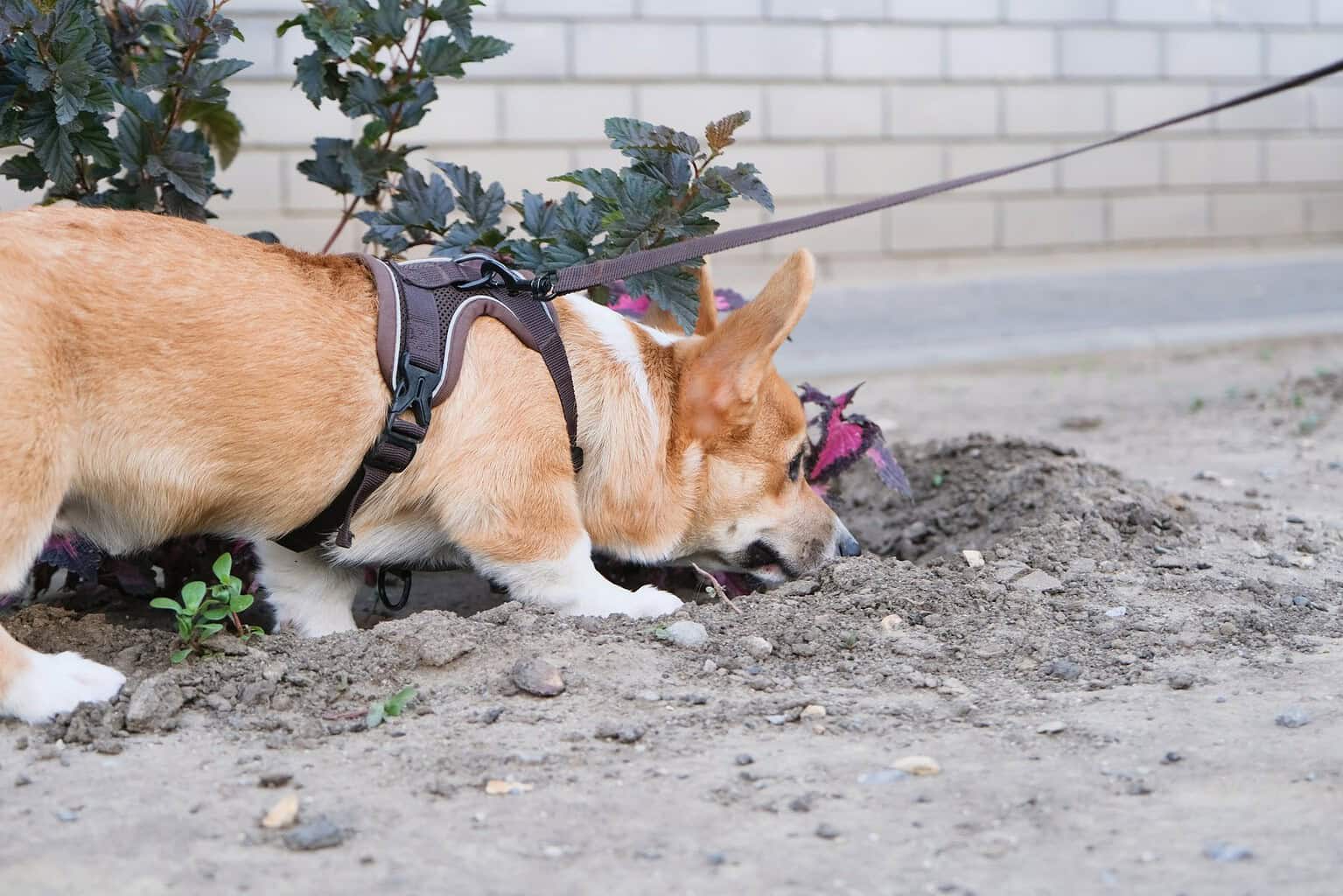
Your dog sniffs everything on walks because smell is how dogs read the world, the way we use our eyes. A dog’s nose carries well over 200 million scent receptors to our roughly 5 to 6 million, and sniffing is normal, enriching and calming. Let your dog sniff on at least part of every walk. The exception is sudden, obsessive focus on one body part or one patch of ground, especially with sneezing, discharge or confusion, which can point to something medical.
Last updated: October 2025
Why does my dog sniff everything on walks?
Picture walking down your own street with your eyes closed, opening them for three seconds every block. That is roughly what a sniff-free walk feels like to a dog. For a dog, a walk is something she smells, and every tree trunk, lamppost and tuft of grass is a page of information: who passed by, how long ago, whether they were stressed, whether they are looking for a mate.
So when your dog plants her feet at the same hydrant for the fourth day running, she is not stalling. She is catching up on the news. Canine cognition researcher Alexandra Horowitz of Barnard College told NPR in 2016 that a dog reading the strength of an odor is “seeing not only what it is but how long ago it was left.” Fresh urine smells strong; yesterday’s smells faint. One sniff gives a dog a timeline.
There is a second reason sniffing matters: welfare. Research suggests that dogs who get to use their noses are measurably more optimistic, and that sniffing lowers a dog’s pulse even while she walks. The honest caveat is that sudden, repetitive sniffing of one spot, especially with confusion or sneezing, is something different, and it gets its own section below.
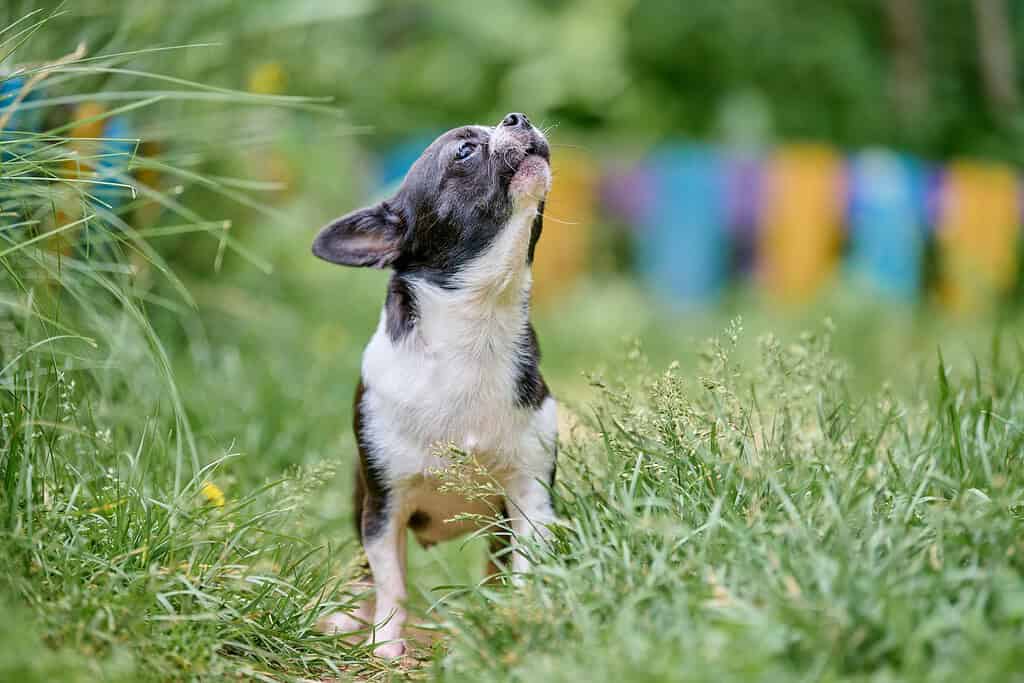
How much better is a dog’s nose than mine?
A lot better, though the numbers you see online vary. Dr. Michael Nappier of the Virginia-Maryland College of Veterinary Medicine told PetMD that dogs have “up to 300 million” olfactory receptors, versus about 6 million for us. A 2018 review in Frontiers in Veterinary Science says more than 220 million. Both are estimates, so we use the conservative one and treat 300 million as the upper end.
Receptor count is only part of it. A 2021 review in the journal Animals describes how a dog’s nose splits each breath: about 12 to 13 percent goes straight to the olfactory region at the back of the nose, where odor molecules settle and build up instead of being breathed back out. Dogs also sample each nostril separately, which helps them locate a smell.
Then there is the brain. VCA Animal Hospitals notes that the part of a dog’s brain devoted to analyzing odors is about 40 times larger, proportionally, than ours. Signals travel to the olfactory bulb, which filters background smells and sharpens detection, then on to regions involved in memory and emotion.
Finally, dogs have a second scent organ we barely use. The vomeronasal organ, or Jacobsen’s organ, sits above the roof of the mouth and connects to it through a duct behind the upper front teeth. It specializes in pheromones and other heavy chemicals, which is why a dog may lick a spot of urine or chatter her teeth after a deep sniff.
| Feature | Dog | Human | Source |
|---|---|---|---|
| Olfactory receptors | More than 220 million (up to about 300 million) | About 5 to 6 million | Jenkins et al. 2018; PetMD 2020 |
| Share of each sniff held in the scent region | About 12 to 13 percent | Air mostly passes through | Kokocińska-Kusiak et al. 2021 |
| Brain area for analyzing odor | About 40 times larger, proportionally | Baseline | VCA Animal Hospitals |
| Vomeronasal organ | Functional, tuned to pheromones | Largely vestigial | Kokocińska-Kusiak et al. 2021; VCA |
Does sniffing actually make dogs happier and calmer?
Two lines of evidence say yes. The stronger one is a 2019 study in Applied Animal Behaviour Science by Charlotte Duranton and Alexandra Horowitz, titled “Let me sniff! Nosework induces positive judgment bias in pet dogs.” Twenty pet dogs learned that a bowl in one spot always held food and a bowl in another never did, then were shown a bowl in an ambiguous middle position; how fast a dog trots to it is a standard measure of optimism. Half the dogs then did two weeks of daily nosework at home, the other half heelwork. Afterward, the nosework dogs reached the ambiguous bowl significantly faster, from an average of 4.74 seconds to 3.40, while the heelwork dogs did not change. The authors concluded that nosework “makes them more optimistic” and suggested natural sniffing on walks as another route.
The second is a field study, not a peer-reviewed paper, so weigh it accordingly. French trainers Cristina and Aurélien Budzinski, working as Dog Field Study, fitted 61 dogs with pulse monitors and walked each for five minutes on a 1.5-meter leash, five on a 5-meter leash and five off leash. Their summary reports that dogs on the longer leash spent two to three times longer sniffing, regardless of age, size, sex or pulling. Coverage of the study reported averages of about 37 seconds of sniffing per five minutes on the short leash, 103 on the long leash and 119 off leash, with pulse rates falling while dogs sniffed, even on the move.
The first three rows below are the Budzinski figures as reported; the rest is our suggestion, based on those findings and the Duranton and Horowitz result.
| Measure | Short-leash exercise walk | Long-line sniff walk |
|---|---|---|
| Leash length in the study | 1.5 m (about 5 ft) | 5 m (about 16 ft), flat, not retractable |
| Sniffing per 5 minutes (as reported) | About 37 seconds | About 103 seconds (119 off leash) |
| Pulse trend (as reported) | Higher, less sniffing | Lower during sniffing, even while moving |
| Our suggested length | 20 to 40 minutes | 20 to 30 minutes; distance does not matter |
| Our suggested frequency | Most days | At least 3 per week, or 10 minutes of sniffing in every walk |
Total walking needs depend on age, breed and health (see how often you should walk your dog), but time spent standing at a bush is not wasted. It may be the most useful part of the outing.
What is my dog reading in all that pee?

If you had to pick the one thing dogs sniff most on a walk, it would be other dogs’ urine. Trainers call it pee-mail, and the joke is more accurate than it sounds. Urine carries information about the dog who left it, including sex, reproductive status and, many researchers believe, something about health and stress. A dog who stops at a post is checking the inbox.
The classic experiment on this was done by one man and one dog. Ethologist Marc Bekoff of the University of Colorado spent five winters scooping up patches of urine-soaked snow, which he called yellow snow, and moving them down the trail so his dog Jethro would come across them later. He published the results in Behavioural Processes in 2001. Jethro spent far less time sniffing his own displaced urine than other dogs’, and his interest in his own scent faded with time while his interest in others’ stayed steady. He also marked over other males’ urine more often than females’. Bekoff called one dog a pilot study, but the pattern lines up with older work. In a 1981 experiment, Ian Dunbar and Marie Carmichael found that male dogs spent nearly twice as long investigating urine from a familiar male as their own, and more than four times as long on urine from a stranger.
That explains a lot about your walk. A dog who sniffs a tree for two seconds has probably read a familiar signature. A dog who glues her nose to one spot has found someone new, and the new dog in the neighborhood is worth a long read.
Then comes the reply. Scent marking is different from ordinary peeing. Bekoff defines it as sniffing first, then directing a small amount of urine at the spot just sniffed or at a nearby target. That is why your dog can seem to run dry by the fifth lamppost yet still lift a leg; the point is to leave a message, not to empty the bladder. Betty McGuire, a behavioral ecologist at Cornell University, has walked and filmed nearly a thousand shelter dogs to study this. Her team noticed that small dogs mark more often than large dogs, and in a 2018 paper in the Journal of Zoology they showed that small males also raise their legs at a steeper angle, placing marks higher than their size would predict. One interpretation, which McGuire offers cautiously, is that small dogs exaggerate their size to avoid confrontations, since a mark can be read long after the dog has gone. Another is that a small dog simply has to aim high to cover a big dog’s mark.
Covering someone else’s mark, called overmarking, is its own layer of the conversation. So is adjacent marking, where a dog pees a few feet from another dog’s spot rather than on it. Researchers are still working out what each pattern means.
What we do know is that your dog is doing more than smelling. She is identifying individuals, estimating how long ago they passed, deciding whether to answer, and composing a reply that other dogs will read for days. If that sounds like a lot for a lamppost, remember how much you learn from one glance around a crowded room. For a dog, the sidewalk is the crowded room, and the walk is her only time in it. Pulling her away mid-sniff is like closing a book two pages before the end of the chapter.
Why does my dog sniff other dogs’ rears, and sometimes me?
The rear-end greeting that embarrasses so many owners is anatomy, not bad manners. Every dog has two small anal sacs, one on each side of the anus, that produce a strong-smelling secretion. VCA Animal Hospitals explains that the odor is unique to each dog and works as identification; a quick sniff tells one dog whether she has met the other before, along with sex, mood and health. VCA also notes that the ritual seems to settle dogs, a calming mechanism as much as an introduction.
People get sniffed for the same reason. Asked on NPR’s Fresh Air why dogs go for the crotch, Horowitz answered plainly: it is where we give off the most scent, along with the armpits and mouth, and the dog “is trying to get information.” For guests who would rather skip that greeting, she suggests letting the dog smell a hand or your face, where we also have scent glands.
“Let them stay and sniff that rose/fireplug. Let your dogs smell one another: that’s how they meet and get information about one another. Just because it’s impolite for us to stick our noses in one another’s rumps, we shouldn’t project that onto dogs.”
Alexandra Horowitz, professor and head of the Dog Cognition Lab, Barnard College (Library Journal, 2016)
Not every dog wants to be sniffed. Watch the dog on the receiving end: backing away, a tucked tail, a freeze or a lip lift means “enough,” and it is fair to call your dog off before the other dog has to. Sniffing you, by contrast, is one of the quieter ways your dog stays connected, in the same family as following you everywhere and leaning on you.
Why does my dog sniff something and then roll in it?
The sequence is unmistakable: a long, intense sniff, a small head shake, one shoulder drops, and your freshly bathed dog is grinding her neck into whatever that was. Scent rolling is common in wild carnivores too, and nobody has proven why they do it.
The American Kennel Club lays out the main theories. One is camouflage: a wolf that smells like a carcass might sneak up on prey. Behavior consultant Rachel Lane points out the holes; wolves are not ambush hunters, and most prey rely more on sight and movement than scent. Another is communication, carrying a smell back so packmates can follow it to the source. A third is that dogs are claiming the object, though dogs already have urine for that.
The explanation most behaviorists now add is the least satisfying and probably the truest: strong, novel smells are rewarding, and rolling in one feels good. The 2021 Animals review calls it “hedonistic pleasure” and notes that no consensus exists. The roll almost always starts with a sniff, so a dog on a loose long line gives you a few seconds of warning. If her favorite target is the worst one, see why dogs roll in poop. And if the sniffing ends in a mouthful of lawn instead, why dogs eat grass explains when that is normal.
When is sniffing a red flag?
Ordinary sniffing is varied and easy to redirect once the dog has read what is there. The sniffing that should get your attention looks different, and it usually comes with company.
The first pattern is sudden, frantic attention to the nose itself. If your dog comes in from a walk sneezing in fits, pawing at her face, or with discharge from one nostril, think foreign body. The Merck Veterinary Manual says pawing at the face plus one-sided discharge “often suggests the presence of a foreign object,” and in much of the United States the culprit is a grass awn, or foxtail. UC Davis veterinarians note that a foxtail’s barbed shape means it cannot back out on its own and can migrate deeper, so persistent sneezing after a walk through dry grass warrants a prompt visit. Discharge that becomes two-sided or bloody needs a workup. A dry nose alone is a gentler story, covered in why your dog’s nose is dry.
The second pattern is a dog who fixates on one area of her own body, sniffing then licking the same paw, flank or tail base over and over. That is usually pain, itch or a wound; the sniff is the dog investigating a problem she can feel.
The third is subtler and shows up in older dogs: aimless, repetitive ground sniffing paired with pacing, getting stuck behind furniture, staring at walls or waking at night. Those are items on the DISHAA checklist veterinarians use to screen for cognitive dysfunction syndrome, the canine condition closest to dementia. The 2023 AAHA senior care guidelines list repetitive behaviors and even a disturbed sense of smell among signs of early decline. A compulsive sniffing loop in a dog of any age, one that cannot be interrupted and crowds out eating or rest, deserves a behavior consult.
How do I give my dog better sniff walks?
Not every walk has to be a sniffari. Some of them should be.
Try a decompression walk
The dog sets the route and pace, ideally on grass or trail, on a long line of 15 to 30 feet; you keep the line loose and follow. Horowitz describes her version: “I just let the dog choose what we’re going to do and where we’re going to go and how long we’re going to stay there.”
Use a long line, not a retractable
The Budzinski study used a flat 5-meter line, specifically not a retractable. Retractables keep constant tension on the collar, which tells the dog to keep moving; a flat long line lets her range and read. Shorten it near roads.
Teach a “go sniff” cue
Say “go sniff” brightly, loosen the leash and walk toward the nearest interesting patch. After a week the words become a release. A cue in the other direction, such as “let’s go” followed by a treat, lets you end a sniff politely instead of yanking.
Bring the nose indoors
Nosework at home is what the Duranton and Horowitz dogs did. Start with find-it: toss a treat onto a rug and say “find it,” then hide treats behind furniture or in a box. A snuffle mat, a fleece mat that hides kibble in its folds, turns a two-minute meal into a ten-minute search.
One safety note. A dog deep in a scent trail is not listening, and a dog on a long line can back out of a loose collar when she hits the end of the lead. Check the fit and keep the ID current. Our Shiloh’s House smart tags carry an engraved name and phone number on the front and an NFC chip on the back, so a finder can read the tag or tap it with a phone to reach your live profile. In the free Lohji app, that profile has a behavioral notes field for what a finder of a nosy dog needs to know, such as “friendly, will follow a scent,” plus up to three contacts and medical notes. Get the Lohji app on the App Store or Google Play.
For the dog who follows her nose a little too far
Shiloh’s House smart tags pair a laser-engraved name and number with a tap-to-open profile for behavioral notes, medical notes and up to three contacts. $38 one-time, no subscription, no battery, made in the USA.
Frequently asked questions
Should I let my dog sniff on every walk?
Yes, for at least part of it. Sniffing is how dogs take in information, and the research we have suggests it lowers pulse rate and improves mood. Try a brisk stretch for exercise, then a loose-leash stretch where your dog chooses what to investigate.
Why does my dog sniff the same spot every day?
Because it changes every day. A popular tree or post is a message board where many dogs mark, and your dog can tell who has visited since yesterday from the strength and mix of odors. Bekoff and Dunbar both found dogs spend far longer on unfamiliar urine than their own, so a long read usually means someone new.
Is a sniff walk real exercise?
It is real mental exercise and mild physical exercise. Most dogs still need brisk walking or play for fitness, so treat sniff walks as an addition, not a replacement. Many owners find a 20-minute decompression walk leaves a dog more settled than a longer fast walk.
Why does my dog sniff me when I get home?
You smell like everywhere you have been and everyone you have met. Dogs read scent most heavily from the groin, armpits and mouth, which is why greetings land where they do. Horowitz suggests offering a hand, or letting your dog sniff near your face, so she gets her information comfortably.
Why does my dog chatter her teeth after sniffing pee?
She is likely using her vomeronasal organ, a second scent organ above the roof of the mouth that connects to it through a duct behind the upper front teeth. Licking a scent and then chattering moves heavy molecules such as pheromones toward it. It looks odd but is normal unless paired with drooling or pain.
Is excessive sniffing a sign of anxiety?
It can be. Many dogs sniff the ground as a displacement behavior when they feel conflicted, for example when another dog approaches, and that is a healthy way to self-soothe. The sniffing to worry about is sudden, repetitive and hard to interrupt, or focused on one spot on the dog’s own body.
Sources
- When the Nose Doesn’t Know: Canine Olfactory Function Associated With Health, Management, and Potential Links to Microbiota, Eileen K. Jenkins, Mallory T. DeChant and Erin B. Perry, Frontiers in Veterinary Science (2018)
- Canine Olfaction: Physiology, Behavior, and Possibilities for Practical Applications, Agata Kokocińska-Kusiak et al., Animals (2021)
- How Dogs Use Smell to Perceive the World, VCA Animal Hospitals (accessed 2025)
- 8 Dog Nose Facts You Probably Didn’t Know, PetMD (2020)
- Let me sniff! Nosework induces positive judgment bias in pet dogs, Charlotte Duranton and Alexandra Horowitz, Applied Animal Behaviour Science (2019)
- Pulse Study “At the heart of the walk”, Dog Field Study (Cristina and Aurélien Budzinski) (2019)
- Are You Depriving Your Dog of Its Natural Sniffing Instinct?, Bark & Whiskers (2023)
- Observations of scent-marking and discriminating self from others by a domestic dog: tales of displaced yellow snow, Marc Bekoff, Behavioural Processes (2001)
- The response of male dogs to urine from other males, Ian Dunbar and Marie Carmichael, Behavioral and Neural Biology (1981)
- Small dogs aim high, Cornell Chronicle (2018)
- Why Dogs Sniff Rear Ends, VCA Animal Hospitals (accessed 2025)
- Why do dogs sniff each other’s butts?, Live Science (2024)
- From Fire Hydrants To Rescue Work, Dogs Perceive The World Through Smell, NPR Fresh Air (2016)
- Q&A: Alexandra Horowitz, Author of Being a Dog, Library Journal (2016)
- Why Do Dogs Roll in Smelly Stuff?, American Kennel Club (2018)
- Rhinitis and Sinusitis in Dogs, Merck Veterinary Manual (2018)
- Foxtails and Dogs, UC Davis School of Veterinary Medicine (2023)
- Managing Cognitive Dysfunction and Behavioral Anxiety, 2023 AAHA Senior Care Guidelines, American Animal Hospital Association (2023)